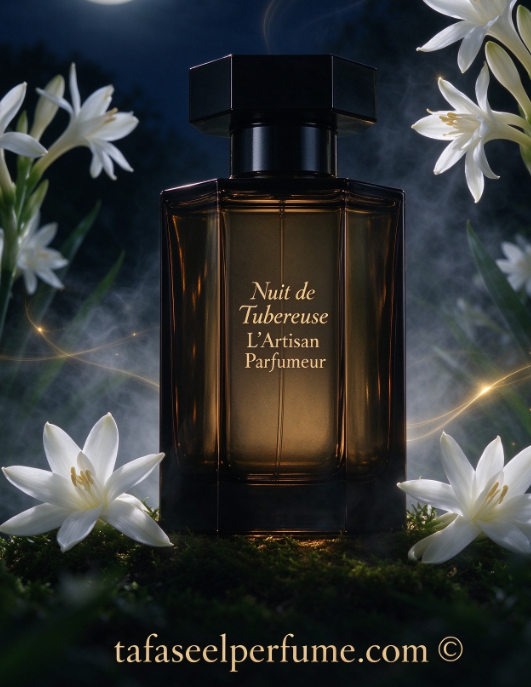
- Nuit de Tubéreuse by L'Artisan Parfumeur: A Spiced, Woody Reinterpretation of the Night-Blooming Flower: Quick Intro: Nuit de Tubéreuse (2010) by L'Artisan Parfumeur, composed by Bertrand Duchaufour, dismantles the expected sweetness of tuberose and rebuilds it with pink pepper, clove, green mango, and a rooty, woody base. It is a tuberose for people who thought they hated tuberose.
Full Introduction: When a fragrance house releases a perfume with "tuberose" in its name, experienced noses brace for the usual suspects: creamy, narcotic, sometimes bubblegum-sweet white floral opulence. Nuit de Tubéreuse refuses that script. Bertrand Duchaufour, working with L'Artisan Parfumeur in 2010, chose instead to explore the flower's darker, greener, and earthier facets . The opening is an immediate surprise—pink pepper and clove crackle with dry spice before a tart green mango introduces an unexpected tropical acidity . The tuberose itself is present from start to finish, but it never dominates; it is woven into a structure of angelica root, sandalwood, and resins that feels botanical rather than glamorous . Community reception has been generally positive, with wearers noting its suitability for autumn evenings and its moderate to long-lasting wear . For those who appreciate the house's more intellectual, ingredient-focused compositions, Nuit de Tubéreuse sits comfortably alongside the brand's broader catalog of unconventional scents. If you are exploring the broader world of niche perfumery, you may also enjoy browsing the Unisex Perfume category or reading more detailed Perfume reviews.
1. The Scent Profile: Spice, Mango, and a Restrained Tuberose
2. How It Wears: Longevity, Sillage, and Seasonality
3. Who It Is For: Beyond the White Floral Stereotype
4. Context and Comparisons: L'Artisan Parfumeur's Niche Identity
5. Practical Considerations: Availability and Value
1. The Scent Profile: Spice, Mango, and a Restrained Tuberose
The opening of Nuit de Tubéreuse is built on a foundation of spice rather than sweetness. Pink pepper provides a bright, almost effervescent tingle, while clove adds a warm, camphoraceous depth that immediately signals this will not be a conventional floral experience . Cardamom and black pepper appear in supporting roles, contributing a dry, aromatic texture that persists well into the heart. The mango note is perhaps the most divisive element; described by some as a "tart and green" tropical freshness that lifts the composition, and by others as an unwelcome "slimy acidity" that distracts from the florals . The tuberose itself emerges gradually, supported by orange blossom and ylang-ylang, but it remains deliberately muted—a "hidden" tuberose rather than a soloist . As the fragrance dries down, angelica root introduces an earthy, slightly mushroomy facet that grounds the composition, while sandalwood and palisander provide a creamy, woody finish . This is a fragrance that asks for patience; its true character reveals itself in the base, not the first spray.
2. How It Wears: Longevity, Sillage, and Seasonality
Community data suggests Nuit de Tubéreuse performs solidly for an Eau de Parfum from a niche house. Longevity is commonly reported in the six-to-ten-hour range, with some wearers noting it lasts through an evening without reapplication . Sillage is described as moderate—present enough to be noticed by those close to you, but unlikely to fill a room or overwhelm an office environment . Seasonally, wearer votes lean toward autumn (32%) and spring (29%), with summer and winter receiving fewer endorsements . The spice and wood facets feel most natural in cooler weather, though the green mango and citrus opening gives it enough lift for mild spring days. For daytime versus evening wear, the split is nearly even (50% day / 50% night), suggesting versatility depending on application amount and personal chemistry . Those with dry skin may find the opening sharper and the projection lower; moisturizing before application can help smooth the transition. If you are building a wardrobe of spice-forward or woody compositions, exploring Perfume Brands with a similar aesthetic may offer useful reference points.
3. Who It Is For: Beyond the White Floral Stereotype
Nuit de Tubéreuse is explicitly marketed as a unisex fragrance, and its structure supports that designation. The spice and wood dominance, combined with the restrained floral heart, makes it accessible to wearers who typically avoid white florals. Men who enjoy dry, peppery compositions with a subtle creamy undertone will find this far more approachable than classic tuberose-heavy feminines like Fracas or Carnal Flower. Women who appreciate green, rooty, and botanical fragrances—perhaps fans of Angelica-based or vetiver-adjacent scents—will also find much to explore here. It is not, however, a safe blind buy. The mango note in particular has polarized reviewers, and the bitter angelica drydown may alienate those who prefer rounder, sweeter finishes . Sampling is strongly advised. For those who enjoy discovering under-the-radar compositions, the Perfume Ranking and Top Lists section may provide useful context on how this fragrance compares to better-known alternatives.
4. Context and Comparisons: L'Artisan Parfumeur's Niche Identity
Bertrand Duchaufour’s work for L'Artisan Parfumeur has consistently favored intellectual, ingredient-driven compositions over crowd-pleasing accessibility. Nuit de Tubéreuse fits this mold. It invites comparison to the house’s other unconventional florals—particularly Dzongkha, which shares a similar dry, woody, and slightly austere sensibility. One early reviewer noted a “certain filiation” between the two, describing Nuit de Tubéreuse as Dzongkha “purged of its earthy and powdery embarrassing notes” . Compared to tuberose-centered fragrances from other houses, this one deliberately avoids the creamy, buttery, lactonic qualities that define the note for many perfumers. Instead, Duchaufour leans into the flower’s green, rooty, and medicinal aspects, creating something that feels closer to a botanical study than a romantic bouquet . For wearers interested in exploring how different houses interpret the same ingredient, browsing curated Beauty Tips and Guides or ingredient-focused articles can help contextualize these choices.
5. Practical Considerations: Availability and Value
Nuit de Tubéreuse was launched in 2010 and has since become increasingly difficult to find through mainstream retail channels. Some retailers list it as out of stock, and availability varies by region . The original retail pricing placed it in the accessible-niche range (approximately €75 for 50ml, €100 for 100ml at launch), but secondary market prices may fluctuate depending on scarcity . For collectors of discontinued or hard-to-find L'Artisan Parfumeur releases, this may add a layer of urgency. For those simply seeking a well-composed spicy-woody tuberose, sampling first through decant services or discovery sets is the prudent approach. If you are considering gifting a fragrance of this character, the Perfume Gift Sets category may offer curated options, though availability of this specific scent within such sets is not guaranteed. Ultimately, Nuit de Tubéreuse rewards wearers who approach it without preconceptions about what a tuberose perfume “should” be.


