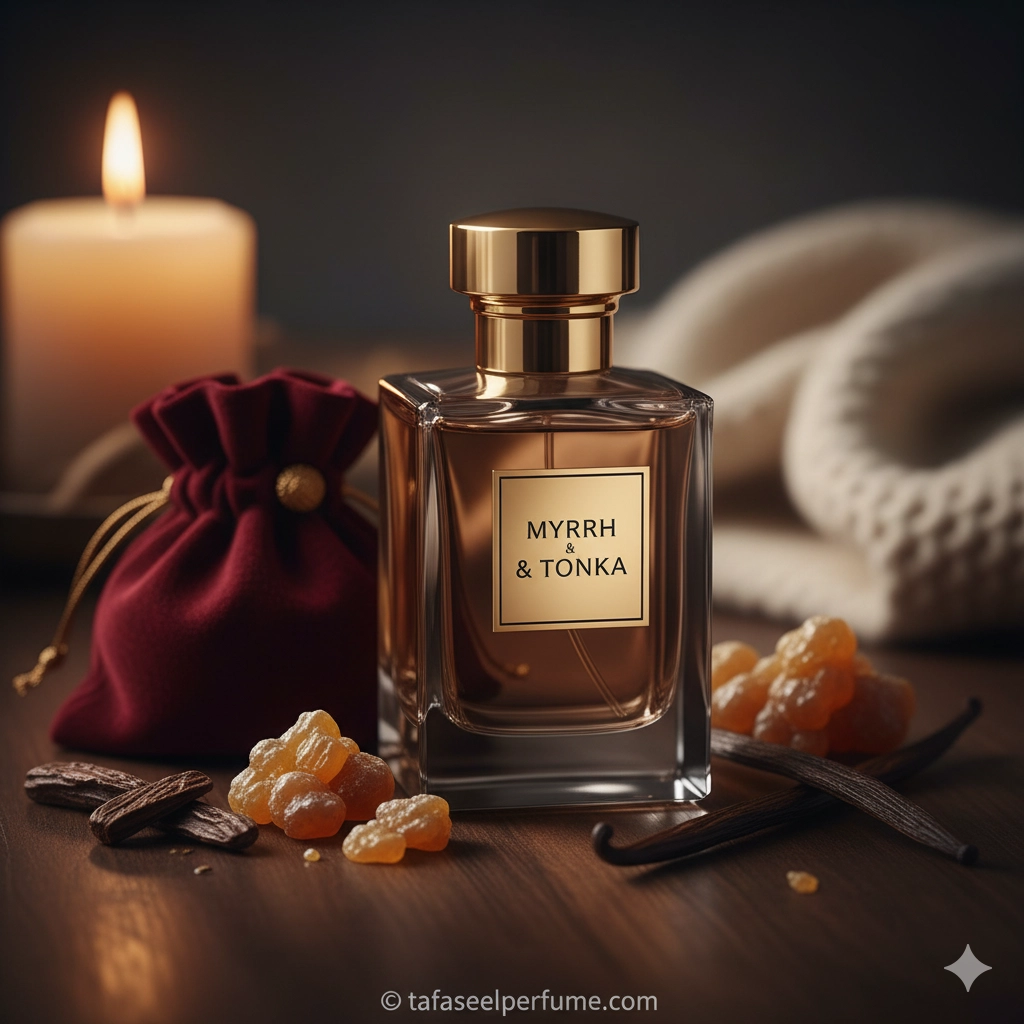
- Myrrh and Tonka: The Enchanting Duo in Modern Perfumery: Introduction: Welcome to an exploration of myrrh and tonka, two exquisite ingredients that have captivated the fragrance world with their rich, warm, and complex aromas. This article delves into their history, composition, and enduring appeal in luxury scents.
Short Intro: Myrrh and tonka are key notes in many high-end perfumes, offering a blend of resinous depth and sweet, vanilla-like warmth that creates unforgettable olfactory experiences.
Long Intro: In the realm of perfumery, myrrh and tonka bean stand out as timeless ingredients that evoke a sense of mystery and sophistication. Myrrh, derived from the resin of the Commiphora tree, has been used for centuries in incense and traditional medicine, lending a balsamic, slightly medicinal quality to fragrances. Tonka bean, sourced from the Dipteryx odorata tree, provides a creamy, coumarin-rich scent reminiscent of vanilla, almonds, and tobacco. Together, they form a harmonious pair that adds depth, longevity, and a touch of exotic elegance to both masculine and feminine scents. This article will guide you through their origins, how they are blended in modern perfumes, and why they remain staples in the fragrance industry. Along the way, we'll connect to related topics, such as Dolce Gabbana Brown Perfume, to illustrate their application in popular products.
The History of Myrrh and Tonka - Discover the ancient roots and cultural significance of these aromatic treasures.
The Scent Composition - Learn how myrrh and tonka interact to create complex fragrance profiles.
Popular Fragrances Featuring Myrrh and Tonka - Explore iconic scents that showcase this dynamic duo.
Benefits and Uses in Modern Perfumery - Understand why these ingredients are prized for their versatility and depth.
The Future of Myrrh and Tonka in Fragrance - Look ahead at trends and innovations in their use.
The History of Myrrh and Tonka
Myrrh has a storied history dating back to ancient civilizations, where it was valued not only for its aromatic properties but also for its use in religious rituals and traditional medicine. Originating from regions like Somalia and Arabia, myrrh was often traded along spice routes and mentioned in historical texts, including the Bible, as a symbol of wealth and sanctity. Its resinous, slightly bitter scent made it a popular choice for incense and embalming, while in perfumery, it adds a warm, earthy base note that grounds more volatile top notes. Tonka bean, on the other hand, has its origins in South America, particularly in countries like Venezuela and Brazil. Indigenous peoples used it for its medicinal qualities, and it gained popularity in Europe during the 18th century as a vanilla substitute. The bean's sweet, hay-like aroma, rich in coumarin, quickly became a favorite in tobacco flavoring and gourmet perfumes. Over time, both ingredients evolved from traditional uses to become staples in luxury fragrances, symbolizing a bridge between ancient wisdom and modern artistry. For those interested in how such ingredients influence contemporary scents, How to Choose Your First Cologne offers insights into selecting fragrances that incorporate these timeless elements.
The Scent Composition
The composition of myrrh and tonka in perfumery is a delicate art that balances their distinct characteristics to create harmonious and long-lasting scents. Myrrh typically presents as a middle to base note, offering a resinous, slightly smoky, and medicinal quality that adds depth and complexity. It often pairs well with spicy or woody notes, such as frankincense or sandalwood, enhancing the fragrance's longevity on the skin. Tonka bean, acting as a base note, contributes a sweet, creamy profile with nuances of vanilla, almond, and tobacco, which softens the sharper edges of myrrh and adds a comforting, gourmand touch. In modern perfume formulations, chemists and perfumers extract essential oils or use synthetic analogs to achieve consistent results, ensuring that the blend remains stable across different climates and skin types. This combination is particularly effective in oriental and amber fragrances, where the warmth of tonka complements the earthy myrrh, resulting in scents that are both inviting and sophisticated. Understanding this composition can help fragrance enthusiasts appreciate why certain perfumes, like those discussed in The Bright Allure of Citrus Notes, might contrast with these deeper aromas for a balanced olfactory experience.
Popular Fragrances Featuring Myrrh and Tonka
Many iconic fragrances have embraced the myrrh and tonka duo to create memorable and luxurious scents that appeal to a wide audience. For instance, in unisex and niche perfumes, this combination often forms the heart of warm, spicy compositions that exude elegance and depth. Brands like Jo Malone and Byredo have crafted scents where myrrh provides a resinous anchor, while tonka adds a sweet, lingering finish, making them perfect for evening wear or cooler seasons. In more mainstream offerings, such as some from Dolce & Gabbana, the blend might be subtler, used to enhance the richness of leather or woody accords without overpowering the overall profile. Another example can be found in Perfume by Tory Burch, where the interplay of myrrh and tonka can add a layer of sophistication to feminine fragrances, balancing floral notes with a warm, ambery base. Additionally, scents like Maison Francis Kurkdjian's Baccarat Rouge 540 incorporate tonka prominently, showcasing its versatility in both high-end and accessible perfumes. Exploring these popular options reveals how myrrh and tonka adapt to various styles, from opulent to everyday, and why they remain a favorite among perfumers seeking to create depth and longevity. For a broader perspective on fragrance selection, Discover the Best Cologne Shops Nearby can guide you to stores where you can sample these captivating blends firsthand.
Benefits and Uses in Modern Perfumery
The benefits of using myrrh and tonka in modern perfumery extend beyond their captivating scents to include practical advantages that enhance fragrance quality and wearability. Myrrh, with its fixative properties, helps to prolong the life of a perfume on the skin by slowing the evaporation of more volatile top notes, ensuring that the scent remains consistent for hours. Its anti-inflammatory and antimicrobial qualities, derived from traditional uses, also add a subtle therapeutic aspect, making it a popular choice in aromatherapy and wellness-focused fragrances. Tonka bean, rich in coumarin, imparts a warm, sweet aroma that acts as a natural bridge between different notes, smoothing out harsh transitions and adding a creamy, addictive quality that encourages repeated use. In contemporary formulations, these ingredients are often used in Eau de Parfum and extrait concentrations to maximize their impact, particularly in genres like oriental, gourmand, and woody fragrances. Moreover, their versatility allows them to be blended with a wide range of accords, from citrus to floral, as seen in products like MMM By the Fireplace, where tonka's warmth complements smoky notes for a cozy effect. This adaptability makes myrrh and tonka invaluable for perfumers aiming to create complex, multi-layered scents that resonate with diverse preferences, while also aligning with trends toward natural and sustainable ingredients in the beauty industry.
The Future of Myrrh and Tonka in Fragrance
As the fragrance industry evolves, the future of myrrh and tonka looks promising, driven by innovations in sustainability, biotechnology, and consumer demand for unique, story-driven scents. With growing interest in natural and ethically sourced ingredients, perfumers are exploring sustainable harvesting methods for myrrh and tonka to prevent over-exploitation and support local communities. Advances in synthetic biology may also lead to lab-created alternatives that mimic their aromas without environmental impact, ensuring consistent supply in the face of climate change. In terms of trends, myrrh and tonka are likely to feature more prominently in gender-fluid and personalized fragrances, as their warm, versatile profiles appeal to a broad audience seeking individuality and depth. Additionally, the rise of digital platforms, such as those highlighted in Perfume Brands Website, will make it easier for consumers to discover and customize scents incorporating these notes, using AI and virtual testing tools. Looking ahead, we can expect to see more experimental blends that pair myrrh and tonka with unexpected accords, like aquatic or metallic notes, pushing the boundaries of traditional perfumery. This innovation, combined with a renewed appreciation for artisanal and niche brands, ensures that myrrh and tonka will continue to inspire captivating fragrances for years to come, much like the enduring appeal of classics reviewed in Is the Original Tommy Bahama Cologne Still the Ultimate Island-Inspired Scent, which often incorporate similar warm bases.


