- Lacoste L.12.12: The Iconic Polo Shirt That Redefined Elegant Sportswear: Lacoste L.12.12 is far more than just a polo shirt. It is the original. Invented by René Lacoste in 1933, the L.12.12 was the first polo shirt ever created, born from a tennis champion’s need for freedom of movement on the court. The name itself tells a story: L for Lacoste, 1 for the revolutionary petit piqué cotton fabric, 2 for the short-sleeved design, and 12 for the final prototype number that René selected. Nearly a century later, the L.12.12 remains a symbol of timeless style, worn by eve
What makes the L.12.12 truly extraordinary is its uncompromising craftsmanship. Each shirt requires approximately 20 kilometers of thread knitted under two different levels of tension to create the signature breathable texture, and the iconic crocodile logo is embroidered with exactly 2,367 stitches. From the mother-of-pearl buttons to the ribbed collar and side splits, every detail is designed for both performance and polish. Whether you are drawn to the classic white, the deep navy, or one of the many seasonal colors, the L.12.12 is not simply a garment — it is a piece of living history that continues to define what it means to dress well.
1. The Origin Story: How René Lacoste Invented the Polo Shirt
The story of the Lacoste L.12.12 begins with a simple problem: René Lacoste, a legendary French tennis player nicknamed “The Crocodile,” was tired of the stiff, long-sleeved shirts worn on the court in the 1920s. They restricted his movement and made playing uncomfortable. His solution was radical for the time — he cut the sleeves off his shirt and added a buttoned collar to keep it in place during matches. This improvised garment caught attention, and in 1933, Lacoste partnered with André Gillier to manufacture the first Original L.12.12 polo shirt.
The name “L.12.12” was not a marketing gimmick; it was a factory code. The “L” stood for Lacoste. The “1” referred to the petit piqué — a special knitted cotton fabric that was lightweight, breathable, and incredibly comfortable. The “2” indicated the short-sleeved model, and the “12” was the number of the final prototype that René approved for production. This meticulous approach to naming reflected the same precision René brought to his tennis game, and it set the tone for a brand that would always prioritize quality and function over fleeting trends.
What René Lacoste understood — perhaps instinctively — was that sportswear did not have to sacrifice elegance for utility. The L.12.12 proved that a garment could be both. It was worn by tennis players, golfers, and sailors, but it also found its way into the wardrobes of stylish men who wanted to look refined without looking formal. By the 1950s, the polo shirt had become a staple of American prep culture, and the crocodile logo — the first logo ever to appear on the outside of a sports garment — was instantly recognizable.
2. The Petit Piqué Fabric: Engineering Comfort and Durability
At the heart of every Lacoste L.12.12 is the petit piqué fabric. This is not ordinary cotton. Petit piqué — French for “small quilted” — is a knitted cotton with a distinctive textured surface, created by knitting two layers of yarn under different tensions. This unique construction gives the fabric several remarkable properties. First, it is exceptionally breathable, allowing air to circulate through the tiny channels in the knit. Second, it is remarkably durable, resisting the stretching and sagging that often plague lesser cotton shirts. Third, it has a subtle sheen and texture that make it look more refined than a standard jersey knit.
The piqué fabric used in the L.12.12 is made from Nominated Cotton, which meets Lacoste’s rigorous sourcing standards for fiber quality and traceability. The fabric weight is a substantial 185 GSM, giving the shirt a satisfying heft without being heavy or hot. If you have ever wondered why a Lacoste polo feels different from a cheaper alternative, the answer lies in the yarn, the tension, and the knitting process. Lacoste has been perfecting this fabric for nearly a century, and the formula has not been broken.
An interesting detail for those who appreciate craftsmanship: each L.12.12 polo requires approximately 20 kilometers of thread to produce. The crocodile logo, famously designed in 1933 after René’s nickname, is embroidered with 2,367 individual stitches before being appliquéd to the chest. These are not arbitrary numbers — they reflect the density and precision required to create a logo that withstands decades of wear without fraying or fading.
3. Design Details: What Makes the L.12.12 Instantly Recognizable
The Lacoste L.12.12 follows a design language that has remained remarkably consistent since 1933. The ribbed collar is one of its most distinctive features. Unlike the flimsy collars found on many modern polos, the L.12.12 collar is knit with ribbing that gives it structure and prevents it from curling or losing shape over time. The same ribbed finish is applied to the sleeve cuffs, creating a polished look whether you wear the shirt buttoned up or open at the neck.
The button placket is another hallmark. The L.12.12 uses a two-button placket with genuine mother-of-pearl buttons — a nod to traditional men’s shirtmaking that adds a subtle touch of luxury. The buttons are slightly domed and have a natural iridescence that sets them apart from plastic alternatives. The placket itself is cut with precision, ensuring that the shirt lies flat whether it is buttoned or open.
Other details worth noting include the side splits at the hem, which allow the shirt to move with the body and prevent it from bunching when tucked in. The classic fit is cut with comfortable sleeves and a straight silhouette that flatters a wide range of body types without being boxy. The embroidered crocodile — always positioned on the left chest — is a small but potent symbol. It is not a graphic print or a patch; it is thread stitched directly into the fabric, a quiet declaration of authenticity.
4. The L.12.12 Fragrance Collection: A Scent Wardrobe Inspired by the Polo
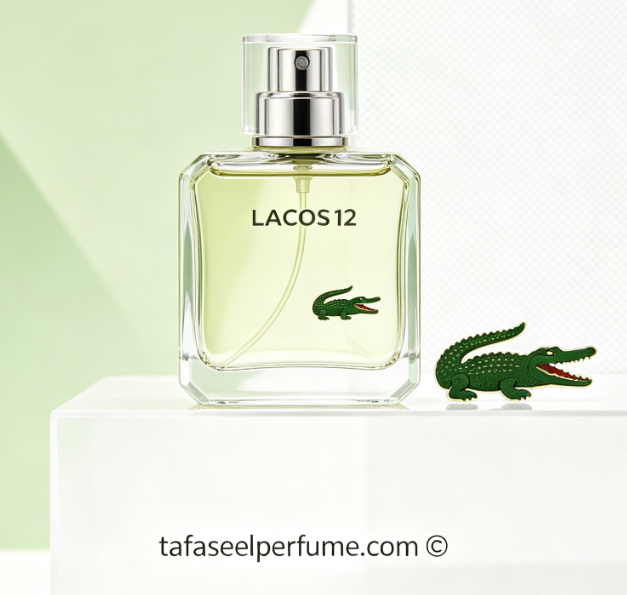
The success of the L.12.12 polo shirt eventually inspired Lacoste to extend the name into a completely different dimension: fragrance. The L.12.12 fragrance collection was designed to embody the same spirit as the polo — fresh, elegant, and versatile — through a spectrum of scents that function like a wardrobe for the senses. Each fragrance in the collection is named after a color, just as the original polo shirts came in a range of shades.
L.12.12 Blanc is perhaps the most classic interpretation. It is a woody aromatic fragrance with notes of juicy grapefruit, spicy cardamom, vetiver, and soft suede. It feels clean, masculine, and effortlessly refined — the olfactory equivalent of a crisp white polo shirt. L.12.12 Bleu, launched more recently, offers a different mood entirely. It opens with the zesty freshness of frozen yuzu and ginger, moves into a heart of lavandin and geranium, and settles into a base of cedarwood and vetiver. The perfumer, Yann Vasnier, described his intention as capturing “the energy of this iconic navy blue polo shirt, both elegant and sporty, through an electric contrast”.
Other variations include L.12.12 Noir, a darker and more intense interpretation, Silver Grey, Rose for a more feminine expression, and Jaune for something brighter and more playful. The bottles themselves echo the polo shirt’s design, featuring the petit piqué texture and the embroidered crocodile. Together, the L.12.12 fragrances allow you to wear the spirit of the polo shirt even when you are not wearing the shirt itself.
5. How to Style and Care for Your L.12.12 Polo Shirt
The beauty of the Lacoste L.12.12 lies in its versatility. Because of its clean lines and classic proportions, it transitions seamlessly between contexts. For a smart-casual look, wear it buttoned up with tailored chinos and loafers. For a more relaxed vibe, leave the top button undone and pair it with denim or shorts. The L.12.12 works equally well under a blazer for a business-casual setting, or as a standalone piece on a summer day. The key is to let the shirt speak for itself — it does not need loud accessories or aggressive styling.
Caring for your L.12.12 is straightforward, but there are a few rules worth following. Lacoste recommends machine washing at a maximum of 30 degrees Celsius on a very gentle or normal setting. Do not bleach. Do not tumble dry — instead, line dry the shirt to preserve the shape and texture of the piqué fabric. If ironing is necessary, use a low temperature (maximum 110 degrees Celsius for some models, 150 for others) and avoid pressing directly on the embroidered crocodile.
One practical tip from Lacoste’s own size guides: if you find yourself between two sizes, choose the smaller size. The petit piqué fabric has a natural give, and the classic fit is designed to be comfortable rather than tight. Washing the shirt according to the care label will help it maintain its shape for years — many L.12.12 owners report that their polos look better after several washes, as the cotton softens while the piqué structure remains intact.
6. The Enduring Legacy: Why the L.12.12 Still Matters
Very few garments can claim to have invented a category. The Lacoste L.12.12 did exactly that. Before 1933, there was no such thing as a polo shirt — there were tennis shirts, and there were dress shirts, and they served entirely different purposes. René Lacoste’s innovation was to merge the two, creating a garment that was comfortable enough for sport but elegant enough for society. That idea seems obvious today, but it was revolutionary at the time.
What is perhaps most remarkable is how little the L.12.12 has changed. While fashion trends have come and gone — through the preppy 80s, the minimal 90s, the logo-heavy 2000s, and the streetwear-dominated 2020s — the L.12.12 has remained essentially the same shirt. The proportions have been refined, the color palette has expanded, and the fit options now include everything from slim to loose, but the core design language is intact. The crocodile is still embroidered with thousands of stitches. The piqué is still knitted under tension. The buttons are still mother-of-pearl.
This consistency is not nostalgia; it is confidence. Lacoste understands that the L.12.12 works, and that changing it for the sake of novelty would be a mistake. The shirt has been worn by tennis champions and Hollywood icons, by world leaders and college students, by grandfathers and their grandsons. It is one of the rare pieces of clothing that genuinely transcends age, class, and occasion. When you wear a Lacoste L.12.12, you are not just wearing a shirt — you are wearing a piece of design history that continues to prove its relevance every single day.
Frequently Asked Questions About Lacoste L.12.12
What does L.12.12 stand for?
The name is a factory code created by René Lacoste. The “L” stands for Lacoste. The “1” represents the petit piqué fabric. The “2” indicates the short-sleeved model. The “12” refers to the number of the final prototype that René Lacoste personally selected for production.
Is the Lacoste L.12.12 the same as the “Original” polo?
Yes. The “Original L.12.12” and “L.12.12 Original” are the same shirt. Lacoste uses these terms interchangeably to refer to the first polo shirt invented in 1933. When you see a product listed as “Classic Fit L.12.12 Original Polo Shirt,” it is the direct descendant of René Lacoste’s original design.
What is petit piqué fabric?
Petit piqué is a knitted cotton fabric with a distinctive textured surface. It is created by knitting two layers of yarn under different tensions, which gives the fabric its breathability, durability, and subtle sheen. It is the signature fabric of the L.12.12 polo shirt and has been since 1933.
How should I choose my size for a Lacoste L.12.12?
Lacoste recommends that if you are between two sizes, you should choose the smaller size. The classic fit is designed to be comfortable rather than tight, and the petit piqué fabric has some natural give. That said, if you prefer a looser fit, you may want to size up. The L.12.12 is also available in loose fit and slim fit variations for different preferences.
Does the L.12.12 come in a long-sleeved version?
Yes. Lacoste offers the Original L.12.12 Long Sleeve Cotton Polo Shirt. It features the same petit piqué fabric, ribbed collar, mother-of-pearl buttons, and embroidered crocodile as the short-sleeved version, but with long sleeves and ribbed cuffs. It is a warmer option for cooler weather while maintaining the same classic aesthetic.
Are Lacoste L.12.12 fragrances related to the polo shirt?
Yes, directly. The L.12.12 fragrance collection was inspired by the iconic polo shirt. Each fragrance is named after a color, just as the polo shirts come in various colors. The bottles feature the petit piqué texture and the embroidered crocodile, creating a sensory extension of the polo shirt’s design language.
How do I care for my L.12.12 polo shirt to make it last?
Machine wash at a maximum of 30 degrees Celsius on a gentle setting. Do not bleach. Do not tumble dry — line dry instead. Iron at low to medium temperature if needed, and avoid pressing directly on the embroidered crocodile. Following these care instructions will help your L.12.12 maintain its shape, color, and texture for many years.


