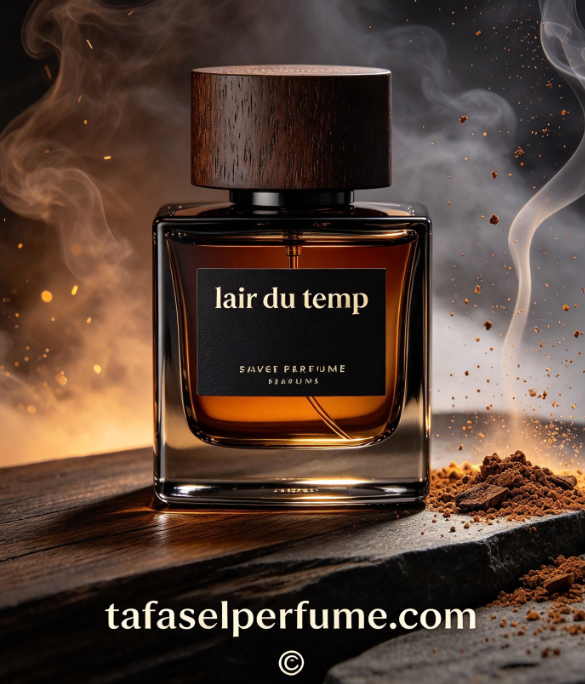
- L'Air du Temps: The Timeless Fragrance That Captures the Spirit of Every Era: L'Air du Temps is one of the most iconic fragrances in perfumery history—a scent that has transcended decades, trends, and generations. Created by Nina Ricci in 1948, this floral-spicy masterpiece was born in the aftermath of World War II, when the world was hungry for beauty, hope, and renewal.
L'Air du Temps is one of the most iconic fragrances in perfumery history—a scent that has transcended decades, trends, and generations. Created by Nina Ricci in 1948, this floral-spicy masterpiece was born in the aftermath of World War II, when the world was hungry for beauty, hope, and renewal. Its name translates from French as "the air of the time" or "the spirit of the era," and that is precisely what it has always embodied: a delicate balance between timeless elegance and the evolving mood of the moment.
What makes L'Air du Temps so extraordinary is not just its scent—a luminous blend of gardenia, jasmine, rose, carnation, and sandalwood—but its cultural weight. The iconic Lalique dove bottle, designed by Marc Lalique, has become a symbol of peace and femininity. Over the years, the fragrance has been reinterpreted, celebrated, and collected by perfume lovers worldwide. Whether you are discovering it for the first time or revisiting a cherished classic, L'Air du Temps invites you to breathe in a piece of history that still feels effortlessly modern.
In this guide, we will explore the many dimensions of L'Air du Temps: its origins, its notes, its cultural significance, how to wear it, and why it remains relevant in 2026. We will also answer the most common questions about this legendary fragrance. Whether you are a seasoned collector or a curious newcomer, this article will help you understand why L'Air du Temps is more than just a perfume—it is a mood, a memory, and a masterpiece.
1. The Origins of L'Air du Temps: A Post-War Symbol of Hope
2. The Iconic Lalique Dove Bottle: Design That Tells a Story
3. L'Air du Temps Notes: A Floral-Spicy Symphony
4. How L'Air du Temps Has Evolved Through the Decades
5. L'Air du Temps vs. Modern Floral Fragrances: A Timeless Comparison
6. How to Wear L'Air du Temps: Occasions, Seasons, and Pairings
7. Collecting L'Air du Temps: Vintage Bottles and Limited Editions
8. L'Air du Temps in Pop Culture: Film, Fashion, and Fame
9. Why L'Air du Temps Still Matters in 2026
1. The Origins of L'Air du Temps: A Post-War Symbol of Hope
In 1948, the world was still recovering from the devastation of World War II. Nina Ricci, the Italian-French couturier known for her romantic and feminine designs, wanted to create a fragrance that would lift the spirits of women everywhere. She turned to her son, Robert Ricci, and the talented perfumer Francis Fabron to craft a scent that would feel like a breath of fresh air—literally and figuratively.
The name L'Air du Temps was chosen to reflect the optimistic spirit of the post-war era. It was a time when people were looking forward, rebuilding, and rediscovering joy. The fragrance was an instant success, not only because of its beautiful scent but because it captured a collective emotion. Women who had endured years of hardship embraced a perfume that felt like a return to elegance, softness, and hope.
Interestingly, the fragrance was also a tribute to peace. The dove motif on the bottle—designed by Marc Lalique—was a deliberate reference to the symbol of peace that had become so meaningful after the war. The intertwining doves on the cap and the frosted glass bottle were not just decorative; they were a message. L'Air du Temps was, and remains, a fragrance with a soul.
In the years that followed, L'Air du Temps became a global phenomenon. It was sold in over 100 countries, and its popularity only grew with each passing decade. Today, it is considered one of the classic floral fragrances that every perfume lover should experience at least once. If you are exploring the world of Women's Perfume, L'Air du Temps is a quintessential starting point.
2. The Iconic Lalique Dove Bottle: Design That Tells a Story
The bottle of L'Air du Temps is almost as famous as the fragrance itself. Designed by Marc Lalique, the son of the legendary glassmaker René Lalique, the bottle features two delicate doves in flight, their wings intertwined in a graceful embrace. The doves are etched into the glass, creating a frosted, ethereal effect that perfectly mirrors the airy, floral nature of the scent.
The Lalique dove bottle has gone through several iterations over the years. The original 1948 design was a simple, elegant flacon with a glass stopper. In the 1950s, the iconic "Lalique dove" cap was introduced, and it became an instant symbol of the fragrance. Over the decades, limited editions and collector's items have featured different colors, finishes, and artistic interpretations of the dove motif.
What makes the bottle so special is its symbolism. The doves represent peace, love, and freedom—themes that resonated deeply with the post-war generation. But they also represent the duality of the fragrance: soft yet strong, classic yet modern, delicate yet enduring. The bottle is a work of art in its own right, and many collectors display it as a decorative object even after the perfume is gone.
If you are interested in perfume bottle design, you might also enjoy exploring other iconic designs in our Perfume Articles and Reviews section. But for many, the Lalique dove remains the most beautiful of all.
3. L'Air du Temps Notes: A Floral-Spicy Symphony
L'Air du Temps is classified as a floral-spicy fragrance, but that simple label does not do justice to its complexity. The scent opens with a burst of bergamot, neroli, and rosewood, creating a bright, sparkling introduction that feels like a breath of fresh air. As it settles, the heart reveals a lush bouquet of gardenia, jasmine, rose, carnation, and orris root. This is the soul of the fragrance—a rich, romantic floral blend that is both opulent and refined.
In the base, sandalwood, amber, musk, and cedar provide warmth and depth. The sandalwood is particularly notable, giving the fragrance a creamy, smooth finish that lingers on the skin for hours. The carnation note is also distinctive; it adds a spicy, clove-like nuance that sets L'Air du Temps apart from other floral fragrances.
One of the most remarkable things about L'Air du Temps is its balance. It is neither too sweet nor too powdery, neither too heavy nor too light. It is a timeless fragrance that feels appropriate for any occasion, from a daytime office meeting to a romantic evening dinner. The sillage is moderate—it won't fill a room, but it will leave a beautiful trail wherever you go. The longevity is impressive, often lasting 6–8 hours on the skin and even longer on clothing.
If you enjoy floral-spicy fragrances, you might also appreciate other classics like Valentino Perfume Man: The Ultimate Guide to Bold, Elegant & Unforgettable Masculine Fragrance, which offers a different take on spicy elegance. But L'Air du Temps remains in a class of its own.
4. How L'Air du Temps Has Evolved Through the Decades
Since its launch in 1948, L'Air du Temps has undergone several reformulations and reinterpretations. The original formula, created by Francis Fabron, was rich and complex, with a higher concentration of natural ingredients. In the 1980s and 1990s, like many fragrances, it was reformulated to comply with new regulations and to reduce costs. Some purists argue that the modern version is a shadow of its former self, while others appreciate the updates for making the fragrance more wearable and accessible.
In the 2000s, Nina Ricci introduced a series of limited editions and flankers, such as L'Air du Temps Eau de Toilette and L'Air du Temps L'Original. These variations often feature lighter, fresher takes on the original, with additional notes like green tea, peony, or citrus. There have also been collector's editions with specially designed bottles, often featuring the Lalique doves in new colors or finishes.
One of the most significant changes came in 2018, when Nina Ricci released a new version of L'Air du Temps that aimed to stay true to the original while modernizing the packaging and marketing. The dove bottle was updated with a more streamlined design, and the fragrance was slightly tweaked to appeal to a new generation. While some longtime fans were skeptical, the new version has been generally well-received, proving that L'Air du Temps can adapt without losing its identity.
If you are interested in vintage fragrances, you might also enjoy reading about Men's Cologne 4711: The Timeless Blue-Gold Icon of Refreshing Masculinity, another classic that has evolved over time. But L'Air du Temps remains one of the most fascinating case studies in fragrance history.
5. L'Air du Temps vs. Modern Floral Fragrances: A Timeless Comparison
In a world of gourmands, oud, and niche fragrances, L'Air du Temps stands out as a reminder of a different era. While modern floral fragrances often emphasize sweetness, fruitiness, or bold synthetic notes, L'Air du Temps is a classic floral with a spicy, woody backbone. It does not try to be trendy; it simply is what it is—a beautiful, well-crafted perfume that has stood the test of time.
Compared to contemporary floral fragrances like Marc Jacobs Daisy or Chloé Eau de Parfum, L'Air du Temps feels more mature and complex. It has a vintage quality that some may find old-fashioned, but others find timelessly elegant. The carnation note, in particular, is rare in modern perfumery, giving L'Air du Temps a unique character that is hard to replicate.
If you are used to light, airy florals, L'Air du Temps might feel heavier at first. But give it time, and you will discover its nuanced beauty. It is a fragrance that rewards patience and appreciation for the classics. For those who love retro-inspired scents, it is an absolute must-try.
You might also enjoy comparing it to other classic fragrances in our Perfume Brands section, where you can explore the heritage of houses like Nina Ricci, Guerlain, and Chanel. But L'Air du Temps holds a special place in the pantheon of timeless perfumes.
6. How to Wear L'Air du Temps: Occasions, Seasons, and Pairings
L'Air du Temps is incredibly versatile, but like any fragrance, it shines brightest in certain contexts. Because of its floral-spicy nature, it works beautifully in spring and autumn, when the weather is mild and the air is crisp. In summer, it can feel a bit heavy, so a lighter application is recommended. In winter, it adds a touch of warmth and elegance, especially for evening wear.
For occasions, L'Air du Temps is perfect for romantic dates, weddings, and formal events. It is also appropriate for office wear, as long as you apply it lightly—its sillage is moderate, so it won't overwhelm your colleagues. For casual days, a single spritz on the wrists or neck is enough to feel elegant and put-together.
When it comes to pairing, L'Air du Temps pairs well with floral or woody body lotions. Avoid using it with heavily scented products, as they can clash with the fragrance. If you want to enhance its spicy aspect, you can layer it with a sandalwood or amber oil. If you want to bring out its floral side, a jasmine or rose body cream works wonders.
For more tips on fragrance layering and application techniques, check out our Beauty Tips and Guides section. But remember: with L'Air du Temps, less is often more. Its beauty lies in its subtlety.
7. Collecting L'Air du Temps: Vintage Bottles and Limited Editions
For perfume collectors, L'Air du Temps is a treasure trove. The fragrance has been released in countless bottles, flacons, and limited editions, many of which are highly sought after. The Lalique dove bottle alone has seen dozens of variations, from crystal editions to hand-painted designs. Some of the most valuable are the 1948 original, the 1950s "Lalique dove" cap, and the 1980s "L'Air du Temps Lalique" collection.
In addition to the bottles, there are also promotional items, advertisements, and ephemera that collectors covet. Vintage L'Air du Temps ads from the 1950s and 1960s are particularly beautiful, often featuring illustrations by famous artists. These items offer a glimpse into the cultural history of the fragrance and its role in fashion and advertising.
If you are interested in collecting vintage perfumes, you might also enjoy exploring Delroba Perfume Review: The Ultimate Guide to This Mysterious Oriental Fragrance in 2026, which offers a different kind of collecting experience. But L'Air du Temps remains one of the most collectible fragrances of all time, thanks to its artistic bottles and enduring legacy.
8. L'Air du Temps in Pop Culture: Film, Fashion, and Fame
L'Air du Temps has appeared in numerous films, TV shows, and books, often as a symbol of elegance, nostalgia, or femininity. In the 1950s and 1960s, it was associated with Hollywood glamour, worn by actresses like Grace Kelly and Audrey Hepburn. More recently, it has been referenced in Mad Men, The Marvelous Mrs. Maisel, and other period pieces, where it helps set the mood of a bygone era.
In the fashion world, L'Air du Temps has been celebrated by designers and stylists for its timeless appeal. It has been featured in Vogue, Harper's Bazaar, and Elle, and has inspired countless fragrance reviews and retrospectives. The Lalique dove bottle has also been exhibited in museums, including the Musée Lalique in France.
If you enjoy fragrance and pop culture, you might also like reading about Sol Brazilian Crush: The Ultimate Guide to This Iconic Summer Fragrance, which has its own cultural moment. But L'Air du Temps is in a league of its own when it comes to cultural longevity.
9. Why L'Air du Temps Still Matters in 2026
In 2026, the fragrance world is dominated by niche houses, celebrity brands, and viral TikTok scents. Yet L'Air du Temps remains relevant. Why? Because it represents something that never goes out of style: grace, elegance, and history. It is a reminder that a perfume can be more than just a pleasant smell—it can be a work of art, a piece of history, and a personal statement.
For younger generations discovering L'Air du Temps for the first time, it offers a connection to the past and a way to stand out from the crowd. For longtime fans, it is a comforting presence that has been with them through the decades. In a world of constant change, L'Air du Temps is a constant—a fragrance that truly captures the air of the time, no matter what time it is.
Whether you are a collector, a perfume enthusiast, or someone simply looking for a beautiful, timeless scent, L'Air du Temps deserves a place in your collection. It is more than a fragrance; it is a legend. And legends never go out of style.
If you are ready to explore more classic and contemporary fragrances, visit our Perfume Ranking and Top Lists to see how L'Air du Temps compares to other iconic scents. You might also enjoy our Perfume Gift Sets for a beautifully packaged introduction to the world of Nina Ricci. Whatever you choose, let L'Air du Temps inspire you to embrace the beauty of every era.
Frequently Asked Questions About L'Air du Temps
What does L'Air du Temps mean?
L'Air du Temps is French for "the air of the time" or "the spirit of the era." It reflects the post-war optimism and elegance of 1948, when the fragrance was first launched by Nina Ricci.
Who created L'Air du Temps?
The fragrance was created by Nina Ricci and her son Robert Ricci, with the perfume composed by Francis Fabron. The iconic bottle was designed by Marc Lalique.
What are the main notes in L'Air du Temps?
Top notes: bergamot, neroli, rosewood. Heart notes: gardenia, jasmine, rose, carnation, orris root. Base notes: sandalwood, amber, musk, cedar.
Is L'Air du Temps still available?
Yes, L'Air du Temps is still in production and widely available. However, the formula has been reformulated over the years. Vintage versions are sought after by collectors.
What is the difference between L'Air du Temps Eau de Toilette and Eau de Parfum?
The Eau de Toilette is lighter and fresher, while the Eau de Parfum is richer and longer-lasting. The original 1948 version was an Eau de Toilette, but modern concentrations vary.
Who should wear L'Air du Temps?
L'Air du Temps is suitable for anyone who appreciates classic floral-spicy fragrances. It is often considered a feminine scent, but like many classics, it can be worn by anyone who loves it.
How long does L'Air du Temps last?
On average, L'Air du Temps lasts 6–8 hours on the skin and longer on clothing. The sillage is moderate, making it appropriate for office and daytime wear.
What is the best season to wear L'Air du Temps?
Spring and autumn are ideal, but it can be worn year-round. In summer, apply lightly; in winter, it adds warmth and elegance.
Are there any limited editions of L'Air du Temps?
Yes, Nina Ricci has released many limited editions and collector's bottles, often featuring the Lalique doves in new designs. These are highly prized by collectors.
Where can I buy L'Air du Temps?
L'Air du Temps is available at many department stores, perfume retailers, and online shops. You can also find it on Women's Perfume and other fragrance websites.
Is L'Air du Temps a good gift?
Absolutely. L'Air du Temps is a timeless gift for anyone who loves classic fragrances. It is also a popular choice for Mother's Day, birthdays, and anniversaries. Consider a Perfume Gift Set for a complete experience.
What makes L'Air du Temps different from other floral fragrances?
Its spicy carnation note, sandalwood base, and iconic Lalique bottle set it apart. It is a classic that has influenced countless other fragrances.
Can men wear L'Air du Temps?
Yes, fragrance has no gender. While L'Air du Temps is marketed as a feminine scent, many men enjoy its floral-spicy complexity. Wear what you love.
Is L'Air du Temps vegan or cruelty-free?
Nina Ricci does not explicitly label L'Air du Temps as vegan or cruelty-free. For specific information, contact the brand directly.
What is the history of the Lalique dove bottle?
Designed by Marc Lalique in 1948, the dove bottle symbolizes peace and love. It has become one of the most recognizable perfume bottles in history.
How can I tell if my L'Air du Temps is vintage?
Check the batch code, bottle design, and packaging. Vintage bottles often have Lalique markings and older typography. Consult collector guides or online forums for more details.
Does L'Air du Temps smell different on different people?
Yes, like all fragrances, L'Air du Temps interacts with your body chemistry. It may smell slightly different on you than on someone else.
What is the best way to store L'Air du Temps?
Store it in a cool, dark, dry place, away from direct sunlight and temperature fluctuations. Keep the bottle tightly closed to prevent evaporation.
Are there any similar fragrances to L'Air du Temps?
If you love L'Air du Temps, you might also enjoy Chanel No. 5, Guerlain L'Heure Bleue, or Estée Lauder Beautiful. Each offers a different take on classic floral elegance.
Why is L'Air du Temps considered a masterpiece?
It is a masterpiece because of its perfect balance, cultural significance, and enduring beauty. It has remained relevant for over 75 years, which is a testament to its quality and timelessness.


