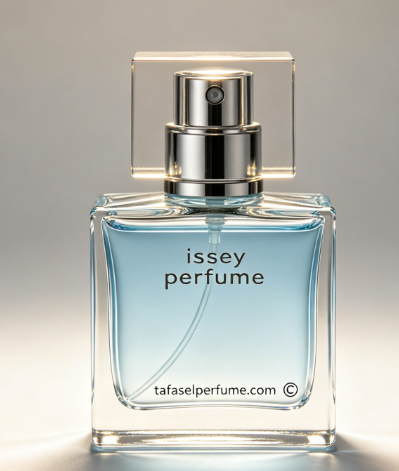
- Issey Perfume · The Ethereal Code of Watery Woods & the Luminous Calm: ✦ brief — Issey Perfume is not merely a fragrance; it is a distilled moment of clarity. Born from the vision of Japanese minimalism, it transforms aquatic aldehydes, yuzu zest, and transparent woods into a second skin—clean, contemplative, and quietly unforgettable.
✧ contents — the issey chapters
1. The Genesis: Water as an Olfactory Element
2. Yuzu, Lotus & the Japanese Aesthetic
3. The Masculine Counterpart: Issey Pour Homme
4. Flankers and the Art of Reinvention
5. The Chemistry of Transparency: Calone & Aldehydes
6. Issey Perfume in the Modern Wardrobe
1. The Genesis: Water as an Olfactory Element
When Issey Perfume debuted in 1992, it was a radical departure from the heavy, opulent florals and spicy orientals that dominated the era. The brief was simple: “a perfume that smells like water.” Not marine, not ozonic, but water—the sensation of coolness, clarity, and weightlessness. Jacques Cavallier achieved this by using a high dose of calone, a synthetic molecule that imparts a fresh, melon-like aquaticcy, and juxtaposing it with a transparent floral heart of lotus, freesia, and carnation. The result was a scent that felt almost ethereal, as if it had been splashed on rather than sprayed. This genesis not only birthed a bestseller but also created a new olfactory category: the aquatic floral. Today, almost every major house has attempted its own water-inspired fragrance, but Issey remains the archetype—the one that captured the poetry of a raindrop on a lily pad.
Behind the molecule, there was a cultural shift: the 1990s craved minimalism, both in fashion and in scent. Issey Perfume became the olfactory uniform of a generation that valued authenticity over excess. Its bottle, designed by the visionary Fabien Baron, mirrored the Eiffel Tower’s silhouette from above—a nod to the brand’s Parisian atelier—while its juice remained unmistakably Japanese in spirit. The fusion of East and West was not a marketing gimmick; it was a philosophy. Every spritz invites a moment of zen, a pause in the noise of daily life.
2. Yuzu, Lotus & the Japanese Aesthetic
At the heart of the original Issey Perfume lies a trinity of ingredients that are deeply rooted in Japanese culture: yuzu, lotus, and shiso. Yuzu, a citrus fruit with a tart, almost grapefruit-like brightness, provides an electric opening that is both invigorating and serene. Lotus, the flower of purity in Buddhist symbolism, adds a watery, powdery softness that evokes still ponds in temple gardens. And though shiso is more subtly present, its minty, herbaceous nuance ties the composition to the land of the rising sun.
This olfactory palette is not accidental; it is a deliberate homage to the concept of “miyabi”—an aesthetic ideal that values refinement, elegance, and simplicity. Unlike Western citrus fragrances that often lean sharp or candied, the yuzu in Issey Perfume is muted, softened by the aquatic notes, creating a sensation of dappled sunlight on water. The lotus, meanwhile, is not indolic or heavy; it is diaphanous, like a whisper. This combination makes Issey Perfume a masterclass in restraint: it never shouts, but it lingers with an almost hypnotic presence. For many wearers, it becomes a meditative ritual—a way to center oneself before facing the world.
3. The Masculine Counterpart: Issey Pour Homme
In 1994, two years after the women’s launch, Issey Pour Homme was introduced—and it redefined what a masculine aquatic could be. While many men’s fragrances of the time were heavy with oakmoss, patchouli, or lavender, Issey Pour Homme took a different path. It opened with a blast of citrus and rosemary, then unfolded into a heart of nutmeg and cinnamon, before settling into a base of cedar, sandalwood, and amber. The genius lay in the contrast: the top notes were crisp and Mediterranean, while the drydown was warm, woody, and almost creamy.
Critics called it “a breeze in a bottle,” and it quickly became a bestseller among men who wanted sophistication without the weight. Over the years, flankers like Issey Pour Homme Intense and Issey Pour Homme Sport have expanded the range, but the original remains a benchmark. It is a fragrance that feels equally at home in a boardroom or on a coastal walk, and its sillage—moderate but unmistakable—has made it a signature for countless men. The contrast between the freshness of the top notes and the sensuality of the base woods mirrors the complexity of modern masculinity: soft yet strong, reflective yet decisive.
4. Flankers and the Art of Reinvention
Issey Perfume has spawned a constellation of flankers, each exploring a different facet of the “watery” theme. Among the most notable are L’Eau d’Issey Pure, which amplifies the floral aspects with rose and peony; Nuit d’Issey, a darker, more sensual interpretation with leather and incense; and Fleur de Bois, which adds a woody, almost smoky dimension. Each flanker is a conversation with the original—sometimes a whisper, sometimes a provocative retort.
What makes these reinventions remarkable is that they never lose the core identity: the transparency, the luminosity, the sense of air and light. Even the darkest flanker, Nuit d’Issey, retains a certain weightlessness, as if the night sky itself had been captured in a flask. This consistency is a testament to the house’s dedication to its aesthetic vision. For collectors, the flankers offer a journey through moods and seasons, from the bright, optimistic Eau d’Été to the introspective Bois de Cèdre. Each one is a chapter in the ongoing story of Issey Perfume—a story that continues to evolve without ever betraying its origins.
5. The Chemistry of Transparency: Calone & Aldehydes
Behind the ethereal aura of Issey Perfume lies a sophisticated chemistry that few other fragrances have managed to replicate. The key molecule is calone, a synthetic compound discovered in the 1960s that produces a fresh, oceanic scent reminiscent of watermelon and sea breeze. In Issey Perfume, calone is used not in a briny or marine way, but rather to create a “cool” effect—a sensation of wet stones and fresh air.
Complementing calone is a blend of aldehydes, which add sparkle and lift, preventing the composition from becoming too watery or flat. These aldehydes, often associated with classic floral perfumes, are used here with a light hand, giving the scent a crystalline clarity. The base is anchored by white musk and cedar, which provide a clean, almost soapy finish that feels like fresh laundry on a sunny day. This chemical interplay is why Issey Perfume feels so modern even decades after its launch: it anticipates the current trend toward “skin scents” and minimalist compositions. It is a fragrance that whispers, never shouts, and its chemistry is a big part of that quiet power.
6. Issey Perfume in the Modern Wardrobe
In 2026, Issey Perfume occupies a unique space in the fragrance wardrobe. It is neither a vintage relic nor a fleeting trend; it is a timeless classic that has adapted to contemporary tastes. Many young perfume enthusiasts rediscover it as a counterpoint to the sweet, gourmand fragrances that dominate social media. Its lightness and freshness make it ideal for layering, and it pairs beautifully with woody or musky scents to create a custom blend.
Stylists and influencers often recommend Issey Perfume for daytime wear, particularly in spring and summer, but its woody base also lends itself to cooler months. It is unpretentious yet distinctive—a fragrance that draws compliments without being intrusive. For those who seek a signature scent, Issey Perfume offers a versatility that few others can match: it works equally well for a yoga session, a gallery opening, or a relaxed dinner. Its longevity, while moderate, ensures that it stays close to the skin, creating an intimate aura that invites others to lean in.
Pro tip: For a more intense experience, layer it with a drop of sandalwood oil on the pulse points—the woods will amplify the base, creating a richer, more sensual drydown.
7. Collecting Issey: Vintage vs. Current Formulations
Like many iconic fragrances, Issey Perfume has undergone subtle reformulations over the years. Vintage bottles from the 1990s and early 2000s are prized by collectors for their higher concentration of oakmoss and natural ingredients, which give a more complex, slightly mossy character. Current formulations, while still excellent, are more streamlined and brighter, with a greater emphasis on the aquatic and citrus notes.
For the discerning collector, hunting down a vintage bottle can be a rewarding pursuit. Look for bottles with the original “L’Eau d’Issey” engraving and the classic frosted glass. These versions tend to have a longer-lasting drydown and a more pronounced woody spine. However, the current formulation is by no means inferior; it is simply a different interpretation, adapted to modern IFRA regulations and contemporary tastes. Both versions embody the same poetic vision, and many enthusiasts choose to own both—the vintage for special occasions, the current for everyday wear.
Regardless of the era, the essence of Issey Perfume remains intact: it is a fragrance that celebrates water, light, and the beauty of impermanence. Collecting it is not just about owning a scent; it is about preserving a piece of perfumery history.
8. The Silent Signature: Sillage & Memory
Perhaps the most enchanting quality of Issey Perfume is its sillage—the trail it leaves behind. Unlike heavy orientals that announce themselves from across the room, Issey Perfume has a soft, almost shy sillage. It lingers in the air like a half-remembered dream, a scent that you catch fleetingly and want to follow. This gentle presence makes it deeply personal; it becomes part of the wearer’s identity, a silent signature that others associate with calmness and elegance.
Moreover, Issey Perfume has a remarkable ability to evoke memories. For many, it recalls a rainy day in a Japanese garden, a summer afternoon by the sea, or a moment of quiet reflection. This emotional resonance is what transforms a fragrance into a classic. It is not just about smelling good; it is about feeling something. And that is the ultimate achievement of Issey Perfume: it has become a vessel for memory, a liquid poem that each wearer interprets in their own way. Whether you are new to it or a lifelong devotee, every spray is a fresh start, a new page in your own story.
✧ Issey Perfume — frequently asked questions
Issey Perfume (the original L’Eau d’Issey) smells like a luminous aquatic floral—a blend of yuzu, lotus, cyclamen, and white woods. It is crisp, clean, and slightly powdery, with a calming, almost meditative aura.
The women’s version (L’Eau d’Issey) is often worn by men who appreciate its transparency, while Issey Pour Homme is more woody and spicy. However, the house has a fluid approach to gender, and many consider both to be unisex in spirit.
On average, 4–6 hours with moderate projection. The longevity depends on skin type, but the woody base notes (cedar, musk) ensure a lingering drydown.
Yes. Vintage versions (1990s–2000s) contain more oakmoss and natural extracts, resulting in a slightly mossier, deeper profile. Current versions are brighter and more citrus-forward, but both are unmistakably Issey.
Absolutely. While it shines in warmer weather, the cedar and amber in the base make it suitable for autumn and winter, especially if you prefer fresh scents over heavy orientals.
Popular flankers include Nuit d’Issey (for an evening, leathery twist), Fleur de Bois (woody-floral), and L’Eau d’Issey Pure (more floral and rosy). Each offers a unique take on the original theme.
It is generally well-tolerated, but as with any fragrance, we recommend testing on a small patch of skin. The formula is alcohol-based, typical of eaux de toilette.
Purchase from reputable retailers, brand boutiques, or trusted online platforms. For vintage bottles, check auction sites or specialty fragrance forums, but always verify the seller’s credibility.
✧ issey perfume · the eternal dialogue between water and wood


