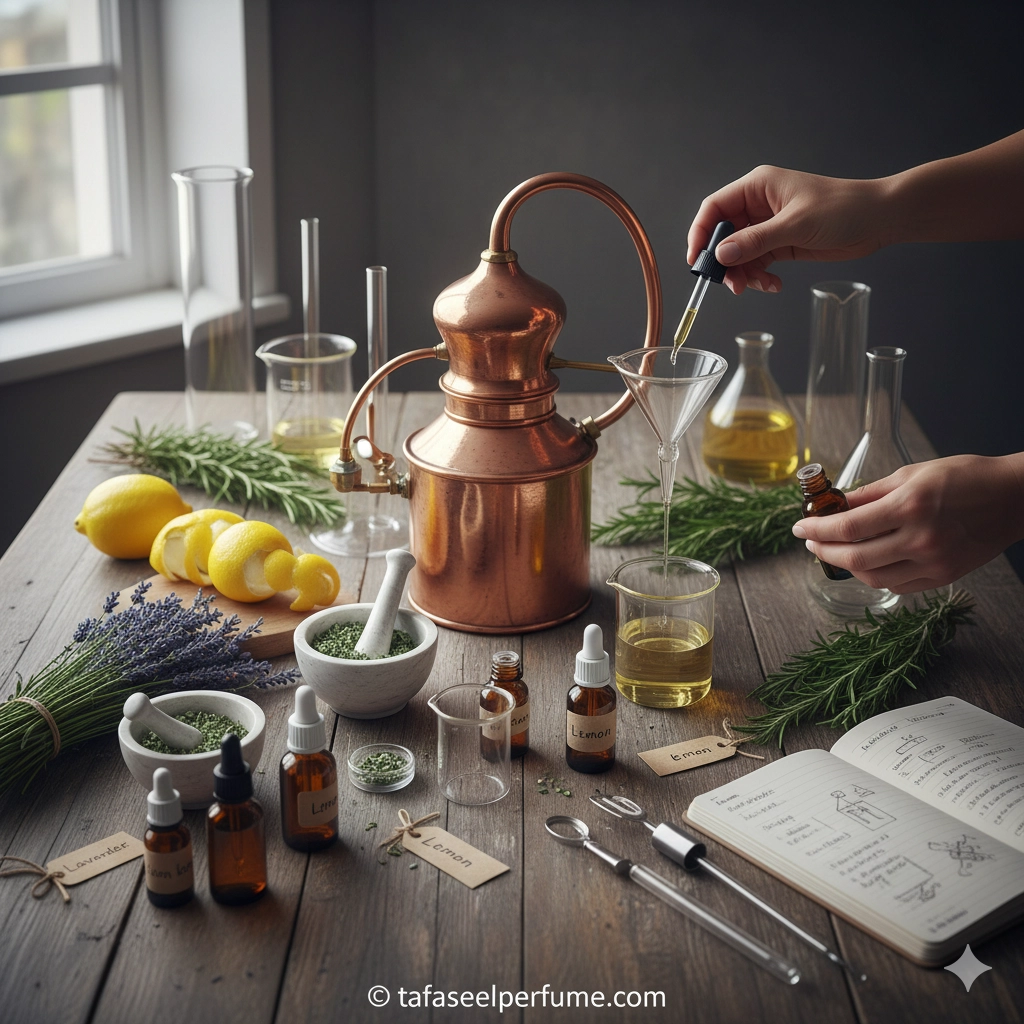
- How to Prepare Essential Oil: A Practical Guide for Beginners: How to Prepare Essential Oil: A Practical Guide for Beginners
Introduction: Preparing essential oils—whether you’re extracting them at home, diluting them for topical use, or blending them for aromatherapy—requires knowledge, care, and the right materials. This guide explains safe extraction concepts, dilution ratios, carrier oils, blending techniques, storage, and practical applications so you can work confidently and responsibly with essential oils. Along the way we’ll reference related fragrance and product ideas to help you connect aromatherapy with everyday scent choices.
1. Understanding Essential Oil Basics — What essential oils are and how they differ from fragrance oils.
2. Safe Methods for At-Home Extraction — Steam distillation, cold-press for citrus, and solvent-free approaches.
3. Choosing Carrier Oils & Dilution Ratios — How to dilute safely for skin applications and massage blends.
4. Blending Techniques & Creating Balanced Synergies — Top, middle, base note thinking applied to oils.
5. Storage, Shelf Life & Packaging — Maximizing longevity and preserving potency.
6. Practical Applications: Diffusers, Roll-Ons & Topical Uses — Recipes and use-cases for daily life.
7. Safety, Allergies & When to Consult a Professional — Avoiding common risks and responsible usage.
1. Understanding Essential Oil Basics
Essential oils are concentrated plant extracts that capture the volatile aromatic compounds of botanicals. Unlike synthetic fragrance oils used in many perfumes, essential oils are typically derived from real plant material using physical extraction methods and will vary by batch, terroir, and extraction technique. If you’re exploring how scent chemistry differs across formats, editorial discussions on fragrance composition can be helpful context; for instance, articles that profile perfume construction and ingredient choices—such as La Perla Let The Dance Begin and Ariana Grande Fragrance—illustrate how makers articulate brightness, sweetness, and depth in finished products. Remember: essential oils are potent and should be treated with respect—the concentrated chemistry that makes them powerful also increases the potential for skin sensitivity and phototoxicity in some citrus oils.
2. Safe Methods for At-Home Extraction
If you want to prepare small amounts of essential oil at home, there are a few approachable, solvent-free techniques. Steam distillation is the classic method for many botanicals—steam passes through plant material, vaporizes aromatic compounds, and the vapors are condensed into oil and hydrosol. For citrus peels, cold-press extraction (mechanical pressing) yields the fruit’s aromatic oil without heat, preserving bright top notes. Another gentle approach is enfleurage or maceration for delicate flowers, where fats absorb the scent over time and are later processed to extract the aromatic compounds. Note that home extraction rarely matches commercial yields or purity, so many hobbyists instead use high-quality purchased essential oils and focus on blending and application. For ideas on scent expression and product formats that pair well with essential oils, see explorations of fragrance oils and concentrated formats like Dirt Fragrance Oil which help clarify differences between oil types and their uses.
3. Choosing Carrier Oils & Dilution Ratios
Because essential oils are highly concentrated, they must be diluted before skin application. Carrier oils—such as jojoba, sweet almond, fractionated coconut, or grapeseed—are neutral bases that carry essential oils and modify absorption. Standard dilution guidelines for adults are often 1–2% for daily facial use (6–12 drops per 30ml of carrier) and 2–5% for general topical or massage blends. Lower concentrations (0.25–1%) are recommended for children, elderly, or sensitive skin. When creating blends intended as personal fragrances or grooming products, consulting resources about product formats and pairing options—like deodorants or fragrance gels—can inspire formulations; explore categories such as Deodorant & Antiperspirant and Fragrance Gels for ideas on how aroma integrates with bodycare.
4. Blending Techniques & Creating Balanced Synergies
Blending essential oils uses the same top/middle/base note thinking as perfumery: bright citrus or herbal top notes give immediate impact, floral or spicy middle notes provide body, and resinous woods, musks, or balsams form the lasting base. Start with a simple ratio such as 30% top, 50% middle, 20% base when designing a new blend, then adjust for desired character. Keep track of your formulations—document exact drop counts and carrier volumes—so successful blends can be replicated. For inspiration on how different scent families create moods and contexts, editorial features and perfume comparisons like Vetiver Paradise Carolina Herrera or mainstream masculine pieces such as Paco Rabanne Invictus can show how note architecture translates into perceived personality. When blending, always do a small skin patch test and allow mixes to rest (macerate) for a day or more—many blends mellow and harmonize with time.
5. Storage, Shelf Life & Packaging
Proper storage preserves an essential oil’s life and prevents oxidation. Use dark glass bottles (amber or cobalt) with tight-fitting caps to limit light and air exposure; avoid plastic for long-term storage as some oils degrade plastics. Store oils in a cool, dark place and label each bottle with the botanical name, extraction date, and batch information. Shelf life varies: citrus oils typically last 1–2 years, while woody resins and properly stored patchouli or vetiver can improve with age. If you use oils to create perfumery-style products, consider travel-size decants and sample vials to reduce repeated exposure of the primary bottle—this also mirrors practices in fragrance sampling and travel discussed in consumer guides such as Lost Cherry Travel Size. Good labeling and rotation help you use oils while they’re at their peak aroma.
6. Practical Applications: Diffusers, Roll-Ons & Topical Uses
Essential oils are versatile: diffuse blends to uplift or calm a space, create roll-on formulas for on-the-go application, or include them in bath and massage treatments with proper dilution. For a simple diffuser blend, combine a bright top note (like bergamot) with a floral middle and a grounding base (such as cedarwood) to create balance. For roll-ons, a 2–3% dilution in jojoba oil works well—perfect for pulse-point application and portable scent. When incorporating oils into grooming routines or gift sets, think about complementary categories—pair a calming lavender roll-on with a matching body lotion or include a small essential oil vial with a curated gift box much like perfume gift sets and mini collections highlighted in retail guides: Perfume Gift Sets and Mini Size & Gift Sets. If you’re transitioning between perfumery and aromatherapy, note that essential oils create a different sensory effect than synthetic fragrances and often interact with mood and wellbeing in complementary ways.
7. Safety, Allergies & When to Consult a Professional
Safety is paramount. Always perform a patch test before applying a new blend widely, avoid certain oils during pregnancy (e.g., some chemotypes of rosemary or fennel), and be mindful of phototoxic citrus oils like bergamot or lemon that can cause skin reactions in sunlight. If you have chronic conditions or are on medication, consult a qualified aromatherapist or healthcare provider before using therapeutic concentrations. For purchasing and vendor credibility when sourcing high-quality oils, use reputable suppliers and review investigative guidance on sellers and product authenticity—resources such as Is Perfumes America Legit explain how to vet sellers in related fragrance spaces. When in doubt, opt for lower concentrations and professional guidance to ensure safe, effective aromatherapy practice.
Column Intro: Preparing essential oils blends at home can be deeply rewarding: it connects you to plant aromatics, allows custom scent creation, and supports wellbeing practices. Use safe extraction knowledge, reliable carrier oils, methodical blending, and proper storage to create consistent, pleasant results. For broader fragrance ideas and pairing inspiration that bridge perfumery and aromatherapy, consult related editorials and category ideas such as Sexy Perfumes, Michael Bublé Perfume Rose Gold, and Cool Water Eau de Toilette Davidoff for contrasting scent directions that can inspire your blends.
Final thought: Start simple, document your formulas, respect dilution and safety guidelines, and enjoy the creative process. Whether you’re making a calming bedtime roll-on or a bright diffuser mix to lift the day, well-prepared essential oil blends are a personal and powerful way to shape your environment and self-care routine.


