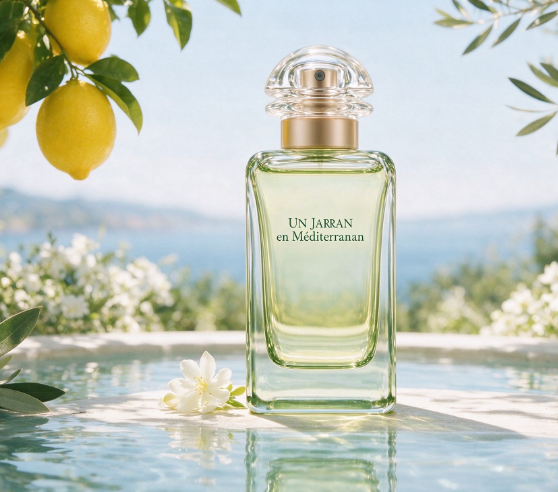
- Hermes Un Jardin en Mediterranee: The Fig-Leaf Garden That Smells Like Light, Salt, and Shade: Short Intro: A 2003 Jean-Claude Ellena creation for Hermès, Un Jardin en Méditerranée is not a loud perfume. It is a watercolor of a Tunisian secret garden—fig leaf, green lentisk, oleander, and a dry, sunlit breeze. If you have been searching for a fragrance that feels like a linen shirt on warm skin rather than a statement, this is where the conversation begins.
Long Intro: Long before “quiet luxury” became a marketing phrase, Hermès released the first fragrance in its Parfums-Jardins collection: Un Jardin en Méditerranée. Launched in 2003 and composed by Jean-Claude Ellena, it was inspired by a secret garden in Tunisia—a place of water, light, and shadow where fig trees, mastic trees, and red cedar mingle with bergamot, orange blossom, and white oleander. The result is a woody, green, fruity eau de toilette that sits closer to a memory of a garden than to a conventional “freshie”. It is unisex, understated, and quietly persistent—exactly the kind of scent that rewards patience and skin contact. In the pages below, we will unpack its notes, its performance, its place in the Hermès garden series, and how to decide whether it belongs in your rotation. If you are exploring beyond classic designer releases, you might also enjoy the sparkling rose-fruit tension of Delina by Parfums de Marly or the clean, woody everyday structure of Coach for Men Cologne—two very different answers to the same question: what does a modern signature actually smell like?
Table of Contents
1. The Garden Behind the Name: Inspiration and Olfactory Concept
2. Notes That Matter: Fig Leaf, Lentisk, and the Mediterranean Accord
3. How It Wears: Performance, Season, and Skin Chemistry
4. Un Jardin en Méditerranée in the Hermès Garden Series
5. Unisex, Not Neutral: Who It Flatters and How to Wear It
6. Buying, Layering, and the Smart Fragrance Wardrobe
1. The Garden Behind the Name: Inspiration and Olfactory Concept
Un Jardin en Méditerranée is not an abstract “sea breeze” fragrance. It is a specific place translated into scent. Hermès describes the inspiration as a secret garden in Tunisia, a green oasis that appealed to all the senses—sight, touch, and smell—and Jean-Claude Ellena built the composition around that multisensory memory. The official language is telling: “a fragrance of light and shadow,” “enveloping and sensual,” “woody, green, fruity”. That interplay of light and shade is the key to understanding why this perfume never becomes a simple citrus cologne. The citrus is there, but it is filtered through leaves, wood, and a faintly resinous Mediterranean air. It belongs to the same instinct that drives mood-driven, color-inspired fragrance rituals: the idea that a scent should evoke a place and a feeling before it announces a “note list.”
2. Notes That Matter: Fig Leaf, Lentisk, and the Mediterranean Accord
The note pyramid is deceptively simple. The top opens with bergamot, lemon, and mandarin—bright but not sharp, because the citrus is immediately pulled toward green and woody territory. The heart brings orange blossom and white oleander, which lends an ethereal, almost talc-like softness rather than a sweet floral rush. The base is where the fragrance becomes itself: sweet fig tree, green lentisk (mastic), and delicate laurel wood create a dry, sappy, slightly resinous foundation that feels like running a hand along a fig branch in the sun. Fragrantica users classify the dominant accords as aromatic, woody, citrus, green, and fresh spicy, with a sweetness that reads as “fruit sap” rather than dessert. One reviewer on Fragrantica.fr described the effect memorably: it smells like the Mediterranean—sea spray, sun, citrus, rosemary, and fig—but on some skin it can feel “too much like a walking salad”. That is not a flaw; it is the signature. If you want a fragrance that captures the green, unsweet garden rather than a floral bouquet, this is the accord you are looking for.
3. How It Wears: Performance, Season, and Skin Chemistry
This is an eau de toilette, and it behaves like one—but with more nuance than the “weak citrus” label suggests. Multiple wearers report 4 to 5 hours of noticeable life with 2–3 sprays, especially when layered over unscented lotion; after that, it becomes a skin scent rather than disappearing entirely. Sillage is consistently described as low to moderate: it sits close, which makes it office-safe and intimate, but it will not fill a room. Heat is its ally. Community comparisons note that it “works better in heat,” and the green-fig structure blooms in warm, humid weather rather than cold air. On some skin, the citrus top can read sharper or more acidic; on others, the fig and lentisk dominate from the opening. This is a fragrance that rewards sampling on skin rather than paper. If your skin tends to amplify sweetness, you may find the fruitier side; if it amplifies greens and woods, you will get the garden. For a different kind of fresh-woody conversation, the pear-cardamom-vetiver arc of Coach for Men offers a useful comparison point: both are clean and versatile, but Coach leans sporty-woody while Un Jardin leans green-botanical.
4. Un Jardin en Méditerranée in the Hermès Garden Series
As the first entry in the Parfums-Jardins line, Un Jardin en Méditerranée set the template: a place, a perfumer, and a watercolor rather than an essay. Later gardens moved in different directions. Un Jardin sur le Nil (2005) is often described as more overtly aquatic and sharp, with green mango and lotus; some wearers find its “watery sharpness” harder to wear in heat than the Mediterranean’s fig-leaf warmth. Le Jardin de Monsieur Li (2015) leans sweeter and more citrus-floral, with a soft, almost soapy clementine-mint profile. In community rankings, Méditerranée frequently lands as the “ideal grassy fig” of the series, while Nil is praised for its uniqueness and Monsieur Li for its tenderness. The practical takeaway: if you want the most botanical, shade-and-sun garden of the line, start here. If you want more obvious freshness and projection, sample Nil. If you want soft citrus comfort, sample Monsieur Li. None of them are redundant, but they are not interchangeable.
5. Unisex, Not Neutral: Who It Flatters and How to Wear It
Hermès classifies Un Jardin en Méditerranée as a fragrance for men and women, and the community voting supports that. It does not read “feminine” in a floral-aldehydic way, nor “masculine” in a fougère or woody-amber way. It reads botanical and human. That makes it an easy reach for anyone who prefers scents that feel like skin, linen, and outdoor air rather than a tailored statement. It pairs naturally with warm weather, white shirts, linen, and unstructured days. For a more explicitly floral-fruity feminine register, the lychee-rose-rhubarb structure of Delina is a useful counterpoint: Delina is luminous and extroverted; Méditerranée is shaded and introspective. If you are building a wardrobe around versatility, the broader unisex perfume category is the right place to compare this quiet-green profile against cleaner aquatics and softer woods.
6. Buying, Layering, and the Smart Fragrance Wardrobe
Because this is an EDT with moderate projection, buying strategy matters. If you love it, the 100 ml format is the most economical route, but only after you have tested it in heat and on your skin. Layering over unscented moisturizer is the most reliable way to extend its 4–5 hour window without changing its character. Avoid layering it with sweet gourmands or loud ambers; the green-fig structure is fragile and will be buried. It layers well with a neutral woody or a light musk if you want more trail, but the point of this perfume is closeness. For gift-oriented shopping, mini size and gift sets are a low-risk entry point, and the perfume gift sets category often includes discovery formats that let someone live with the scent before committing. If you are buying blind, read the community consensus carefully: this is not a “beast mode” fragrance, and it is not a sweet crowd-pleaser. It is a garden scent for people who like gardens—green, slightly resinous, and quietly memorable.
Frequently Asked Questions
Is Hermes Un Jardin en Mediterranee suitable for men?
Yes. Hermès markets it as a fragrance for men and women, and its green-woody-fig profile is not gender-coded in the conventional sense. Many men wear it as a warm-weather signature because it is clean, non-sweet, and office-appropriate.
How long does Un Jardin en Mediterranee last?
Most wearers report 4 to 5 hours of noticeable scent with 2–3 sprays, after which it becomes a close skin scent. Performance can be extended by applying over unscented lotion, but it is not designed for all-day projection.
Is it similar to Un Jardin sur le Nil?
They share a green-fresh DNA, but they are not substitutes. Méditerranée is warmer, more fig-centered, and more “shade and sun.” Nil is more aquatic, sharper, and often described as green mango and lotus. Many wearers find Méditerranée easier in high heat, while Nil feels more unusual and more overtly fresh.
What season is Un Jardin en Mediterranee best for?
Spring and summer are its natural habitat. Heat opens the fig and lentisk and softens the citrus. It can be worn in mild autumn, but in cold weather the green facets can feel thin. It is at its best when the air is warm and slightly humid.
Is it a safe blind buy?
Not entirely. It is a green, unsweet, fig-leaf fragrance with moderate projection. If you dislike green or resinous scents, or if you expect a sweet floral garden, sample first. If you already love fig, mastic, and Mediterranean botanicals, it is a very low-risk choice.


