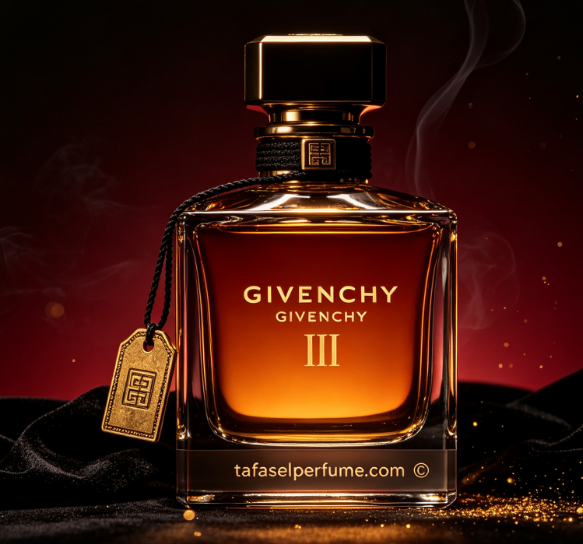
- Givenchy III · The Velvet Architecture of Prestige & the Sillage of Unspoken Grandeur: Short introduction: Givenchy III is not merely a perfume; it is a couture gesture in a flacon. Born in the golden era of French perfumery, this chypre-floral aldehyde composition weaves a tapestry of green notes, iris, and oakmoss – a signature of distinction that whispers rather than shouts. A fragrance for those who understand that true elegance is invisible.
Extended introduction: Conceived in 1970 by the house of Givenchy, the Givenchy III fragrance was a landmark – the first perfume from the house to bear the name of its founder. It was crafted by the legendary perfumer Jean-François Latty, who composed a scent that defied the floral-heavy trends of the time. Instead, he built a green, almost architectural structure: galbanum, hyacinth, and narcissus form a crisp, vegetal overture; a heart of iris, rose, and jasmine adds powder and petal; while the base of oakmoss, vetiver, and leather grounds it in earthy sensuality. Givenchy III is the olfactory equivalent of a black cashmere coat – severe, soft, and eternally modern. It was the perfume of the Parisian bourgeoise, the woman who read Le Monde and wore Yves Saint Laurent. Decades later, it remains a cult object, a relic of perfumery’s most daring decade, and a testament to the power of restraint.
↳ architecture of Givenchy III
1. The Aldehydic Overture – Green Light of the 70s
2. The Iris Heart – Powdered Elegance
3. Oakmoss & Leather – The Earthy Undercurrent
4. Givenchy III vs. Modern Chypres – A Comparative Study
5. The Sillage of Memory – Why It Endures
1. The Aldehydic Overture – Green Light of the 70s
The first spray of Givenchy III is like stepping into a greenhouse after rain – sharp, vegetal, and luminous. The aldehydes are not the soapy, sparkling kind of Chanel No. 5; they are drier, more metallic, like the glint of a silver spoon against a porcelain cup. Galbanum, the resinous green note, dominates with its bitter, almost rubbery freshness, while hyacinth adds a watery, stemmy floralcy. This is not a scent that pleads for attention; it asserts itself with architectural clarity. In the 1970s, this was radical – a perfume that smelled of leaves and wet stone rather than roses and vanilla. It was the fragrance of liberation, a nod to the women who were entering boardrooms and art galleries with newfound authority. The green accord is so vivid that it conjures the image of a crisp linen shirt worn with tailored trousers – effortless, but impeccably cut. As the aldehydes settle, they reveal a glimmer of citrus – bergamot and lemon – that cuts through the green like a ray of sunlight, but the overall impression remains cool, distant, and profoundly chic.
2. The Iris Heart – Powdered Elegance
As the top notes fade, the heart of Givenchy III unfolds with the quiet dignity of iris root. Here, iris is not sweet or candy-like; it is dry, powdery, and somewhat earthy, with a buttery texture that feels almost tactile. This is complemented by a delicate rose de mai and a hint of jasmine, but the flowers are muted, as if seen through a veil of tulle. The iris provides a soft focus to the composition, tempering the sharp green opening with a gentle, almost melancholic warmth. It is the olfactory equivalent of velvet curtains in a dimly lit salon – luxurious but reserved. The heart of Givenchy III is where the perfume reveals its feminine-masculine duality; it is neither girlish nor matronly, but rather ageless, like a well-preserved antique. The powderiness is often compared to the scent of old lipstick and face powder, but it is far more refined – a whisper of vintage glamour that never feels dated. This heart lasts for hours, lingering on the skin like a half-remembered dream, inviting those close enough to lean in and discover its nuances.
3. Oakmoss & Leather – The Earthy Undercurrent
The base of Givenchy III is where its true soul resides – a deep, mossy, leathery foundation that grounds the entire composition. Oakmoss, now restricted in modern perfumery, is used here in its full, unapologetic glory, lending a damp, forest-floor quality that is both rustic and sophisticated. Vetiver adds a smoky, rooty dryness, while patchouli contributes a subtle, earthy sweetness. The leather note is not the harsh, smoky leather of Russian leather; rather, it is a suede-like softness, like the inside of a pair of kid gloves. This base is the anchor that prevents the perfume from floating away into abstraction – it gives it weight, substance, and longevity. On the skin, the dry-down is a slow burn, revealing layers of amber and musk that emerge only after hours of wear. It is a crescendo of intimacy, a scent that becomes more personal and more compelling as it evolves. The oakmoss-leather accord is a signature of classic French perfumery, and in Givenchy III, it is executed with such finesse that it feels both timeless and utterly modern.
4. Givenchy III vs. Modern Chypres – A Comparative Study
In an era dominated by sweet gourmands and minimalist musks, Givenchy III stands as a vestige of a different philosophy. Modern chypres often rely on synthetic mosses and lighter patchouli to circumvent regulatory restrictions, resulting in a cleaner, more transparent profile. Givenchy III, however, is unapologetically dense and complex, with a bitter-green edge that contemporary perfumes shy away from. Compare it to the newer MMW × Givenchy – a fusion of streetwear and audacity – and the contrast is stark: where MMW is loud and graphic, Givenchy III is murmured and layered. It shares more in common with the chypres of the 1960s and 70s, like Diaghilev by Roja Dove, which also reveres the aldehyde-moss architecture. Yet Givenchy III is distinct in its vegetal intensity – it is greener, more austere, and more intellectual. In a blind test, a modern nose might find it challenging, even confrontational. But for the connoisseur, it is a masterclass in structure, a reminder that perfumery is not about instant gratification, but about prolonged dialogue between the skin and the scent.
5. The Sillage of Memory – Why It Endures
Despite being discontinued (and later reissued in a modified form), Givenchy III has achieved cult status among vintage fragrance enthusiasts. Its sillage is not a booming cloud; it is a discreet trail that announces presence without aggression – a whisper of sophistication that lingers in the air long after the wearer has left the room. This is the sillage of memory: it evokes the Paris of the 1970s, the Left Bank intellectualism, the style of Catherine Deneuve and Françoise Hardy. It endures because it tells a story that is not bound by time – a story of poise, mystery, and quiet rebellion. In an age where fragrances are often designed to be instantly recognizable, Givenchy III remains enigmatic. It does not shout its notes; it reveals them slowly, like the chapters of a novel. For those who wore it in its heyday, it is a olfactory time capsule; for those discovering it now, it is a portal to a lost era of perfumery. Its endurance is a testament to the power of subtlety – a quality that is increasingly rare in the modern fragrance landscape.
6. How to Wear Givenchy III Today – A Style Manifesto
To wear Givenchy III today is to make a statement of intentionality. It is not a casual, everyday fragrance; it demands a certain attitude – a curated nonchalance. Pair it with tailored wool, cashmere, or crisp poplin. It thrives on cool skin, so apply it to pulse points after a shower, but do not rub – let the aldehyde-green top note rise naturally. It is a fragrance for autumn and winter, for overcast days and intimate dinners. Wear it to a gallery opening, a bookshop, or a quiet evening by the fireplace. It is unisex in the truest sense – its structure appeals to anyone who appreciates dryness, texture, and depth. Do not be afraid to layer it with a simple musk oil or a leathery base to enhance its longevity. But above all, wear it with confidence, for Givenchy III is a fragrance that does not seek approval; it commands respect. In a world of loud perfumes, it is the quietest loud statement you can make.
7. The Flacon – Brutalist Poetry in Glass
The bottle of Givenchy III is as architectural as the scent itself. Designed by Pierre Dinand, it is a rectangular block of thick, clear glass, with sharp angles and a heavy, substantial feel. The faceted stopper, like a crystal obelisk, adds a touch of brutalist poetry. The label is minimal – a white, sans-serif typeface on a black background, echoing the austerity of the 1970s. This is a bottle that sits on a dressing table like a piece of sculpture, a monument to minimalism. It does not rely on ornate details or gaudy embellishments; its beauty lies in its purity of form. The flacon mirrors the fragrance: clean lines, hidden complexity, and a refusal to compromise. For collectors, the original bottle is as coveted as the juice itself, a symbol of an era when perfume was as much about design as about scent. To hold it is to hold a piece of perfume history – a tactile reminder of Givenchy's visionary approach to both fashion and fragrance.
Frequently Asked Questions
Givenchy III was discontinued in the 1990s, but it has been reissued in limited editions and vintage bottles remain highly collectible. The reformulated version (if available) may differ from the original, as oakmoss and other ingredients are now restricted. Purists often seek out vintage batches on the secondary market.
Givenchy III is a green chypre aldehyde with a prominent galbanum and hyacinth opening, an iris-rose heart, and a dry-down of oakmoss, vetiver, and leather. It is powdery, earthy, and austere – a fragrance of cool elegance rather than warmth or sweetness.
Absolutely. While originally marketed towards women, its dry, green, and leathery profile makes it a natural choice for men who appreciate classic chypres. It is often described as unisex and has been worn by men since its launch.
It is drier and greener than Chanel No. 19, with less floralcy; more austere than Paloma Picasso; and less animalic than Diaghilev by Roja Dove. Its aldehydic-green structure is unique, making it a reference point for the genre.
Vintage bottles can be found on auction sites, specialized perfume forums, and vintage perfume retailers. Be cautious of fakes and check for batch codes and packaging consistency. Prices vary widely depending on condition and concentration (EDT vs. Parfum).
It is an evening scent for cool seasons. Ideal for formal events, intellectual gatherings, or solitary moments of reflection. It is not a daytime casual fragrance, nor is it suitable for hot weather, as the mossy base can become overwhelming.
Discover more olfactory architectures: Vintage Lagerfeld Cologne · BOD Blue Surf · Kenneth Cole Black · Azzaro Pour Homme · Unisex Perfume · Men’s Perfume · Women’s Perfume · All Perfume Articles


