- Gio Women’s Perfume: The Complete Guide to Giorgio Armani’s Tuberose-Forward Floral Amber Classic: Short Introduction: Giò by Giorgio Armani is a 1992 women’s fragrance composed by Françoise Caron—a lush, tuberose-driven floral amber that remains one of the most distinctive and tenacious releases from the Italian house. Though often overshadowed by its fresher successor, Acqua di Giòia, Giò occupies a singular place for wearers who prefer a warm, spicy, and unapologetically classic floral profile with remarkable projection and longevity.
Long Introduction: Released in the early 1990s, Giò arrived at a moment when fruity florals were beginning to dominate the women’s market, yet it distinguished itself through a dense, resinous, and spice-laced construction that felt closer to the opulent tradition of the preceding decade. The name itself is affectionate—reportedly a nickname used by the designer’s friends—and the fragrance was classified by the house as a luxurious floral, built around green florals, gardenia, orange blossom, and a warm foundation of amber, wood, and vanilla. Over time, Giò has acquired a reputation as a “sleeper” classic: discontinued or difficult to find in many markets, yet fiercely defended by a devoted following who prize its uncompromising richness and its ability to fill a room with a single spray. This guide examines the scent’s architecture, its performance, practical wearing advice, its relationship to the broader Armani women’s line, and the realities of sourcing a bottle today.
In This Guide: 1. The Scent Architecture of Gio Women’s Perfume · 2. Performance Profile: Longevity, Sillage, and the “Unstoppable” Reputation · 3. How to Wear Gio: Seasons, Occasions, and Application · 4. Gio vs. Acqua di Giòia: Two Armani Women’s Legacies · 5. Sourcing and Buying Advice for a Discontinued Gem
1. The Scent Architecture of Gio Women’s Perfume
The opening of Giò is often described as sparkling, but the brightness is deceptive: within minutes, the composition reveals the dense, creamy, and slightly bitter heart that defines it. Perfume Finder lists a sprawling top accord of jasmine, hyacinth, Sicilian mandarin, red rose, Brazilian rosewood, bergamot, and violet, while the middle section moves into tuberose, gardenia, carnation, cloves, orange blossom, peach, ylang-ylang, myrrh, iris, orris root, and lily-of-the-valley. This is not a streamlined modern formula; it is a layered, classical construction in which each floral element contributes texture rather than competing for attention. The base—amber, sandalwood, styrax, vanilla, musk, and cedar—provides the warm, resinous, and slightly smoky cushion that gives Giò its staying power and its distinctly “grown-up” character.
User descriptions consistently return to the tuberose. One reviewer on Fragrantica describes “juicy tuberose in bitter-herbal honey” alongside clove so prominent that it “tickles the nose,” anchored by a classical base of amber, sandalwood, and wood. Another notes that the tuberose is “loud” and remains present from start to finish, initially within a large bouquet and eventually almost solo on the skin. The peach and gardenia contribute a rounded, slightly fruity softness, but Giò never becomes a sweet or gourmand fragrance; its sweetness is resinous, spicy, and textured. For wearers who find contemporary white florals too clean or too linear, Giò offers a denser, more old-school alternative—a floral amber with animalic and powdery undercurrents that reveal themselves slowly.
The overall accord is best understood as a white floral with warm spicy, woody, and amber facets. It is not a fresh floral, not a clean musk, and not a sheer skin scent. It is a fragrance that announces itself and then settles into a rich, honeyed, and slightly incense-like drydown. If you are exploring the warmer, more opulent side of the Armani catalogue, Giò sits at the opposite pole from the aquatic transparency of the Acqua line; you can browse the broader Women’s Perfume category to contextualize it alongside other floral ambers and orientals.
2. Performance Profile: Longevity, Sillage, and the “Unstoppable” Reputation
Performance is where Giò separates itself most dramatically from most modern feminine releases. Multiple long-term wearers describe longevity that borders on the extreme. One Fragrantica commenter calls it “practically indestructible,” warning that it is not a fragrance for discreet reconnaissance because “the chances of going unnoticed are close to zero”. Another states that the tenacity is “simply phenomenal” and that it cannot be washed out of clothing, recommending only micro-doses because a single drop can be sufficient. These are not isolated claims; the consensus across review platforms is that Giò is a powerhouse—a fragrance from an era when projection and persistence were expected rather than optional.
Sillage follows the same pattern. Wearers report a “strong floral trail” and an “endless” aura, with the scent expanding on the skin after thirty minutes to an hour and then remaining present for many hours thereafter. The base’s amber, styrax, sandalwood, and musk are largely responsible for this persistence: these materials are heavy, resinous, and slow to evaporate, and they cling to skin and fabric with remarkable efficiency. For practical wear, this means that one or two sprays are often enough for a full day, and that application on clothing—though effective for longevity—should be approached with caution, as the fragrance can survive laundering.
The trade-off is control. Giò is not a fragrance that rewards over-application; several sprays too many can overwhelm a room and obscure the layered floral nuances that make it worth wearing. The ideal approach is conservative application to pulse points and, if desired, a single spray on a scarf or collar that will not be washed frequently. For wearers who prefer lighter, closer-wearing fragrances, Giò may feel excessive; for those who value presence and endurance, it remains a benchmark. This performance profile also explains why Giò has retained a cult following despite limited availability: few contemporary feminine ambers deliver this level of tenacity without relying on sharp woody-amber materials.
3. How to Wear Gio: Seasons, Occasions, and Application
Giò is frequently described as a cold-weather fragrance, and there is good reason for that association. Its dense florals, spice, and resinous base bloom in cool air and on moisturized skin, while high heat and humidity can amplify the clove and tuberose to a point that feels oppressive to some wearers. The ideal window runs from late autumn through early spring, particularly on crisp, dry days when the amber and sandalwood facets feel warming rather than heavy. That said, the fragrance is not strictly seasonal: wearers in temperate climates report success on cool summer evenings, and the floral heart can feel refreshing when applied sparingly in warmer weather. The key variable is dose, not temperature alone.
For occasions, Giò leans formal or intentional. It is well suited to evening events, dinners, theatre, and cold-weather daytime wear where a visible fragrance signature is appropriate. It is less naturally suited to a minimalist office environment or to situations where close-quarter contact is unavoidable, not because it is inappropriate in character but because its sillage is difficult to contain. A single spray to the chest or the back of the neck—areas that are warm but not constantly exposed—can keep the fragrance closer to the body while still allowing it to radiate. For those building a wardrobe, Giò functions as a statement floral amber rather than a daily workhorse, and it pairs naturally with the more opulent end of a collection. If you are also considering a fragrance gift, the Perfume Gift Sets selection may offer a lower-commitment way to explore classic floral profiles before investing in a full bottle of a discontinued or hard-to-find release.
Application technique matters more with Giò than with sheer fragrances. Pulse points—wrists, inner elbows, and the base of the throat—are effective, but because the fragrance is so persistent, a single well-placed spray often outperforms multiple smaller ones. Moisturizing the skin beforehand can slow the opening and extend the drydown, while applying to dry skin can make the top notes appear sharper and the clove more prominent. Testing on skin is essential: the tuberose and gardenia can read as creamy and honeyed on one wearer and as sharp or “medicinal” on another, depending on skin chemistry and humidity. A sample or a decant is strongly recommended before committing to a full bottle, particularly given the sourcing challenges discussed below.
4. Gio vs. Acqua di Giòia: Two Armani Women’s Legacies
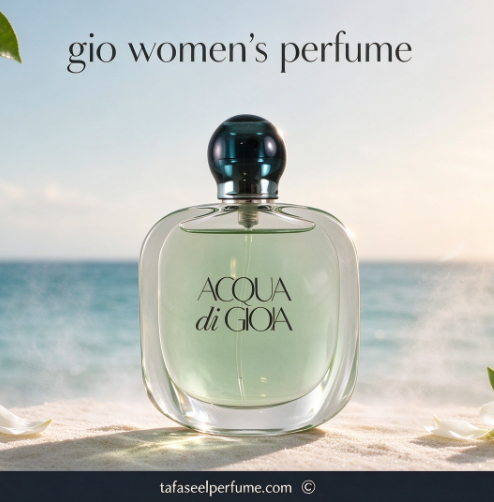
One of the most common points of confusion around Giò is its relationship to Acqua di Giòia, the 2010 release that became the better-known Armani women’s fragrance in many markets. The names are similar, and both belong to the same house, but they represent opposite directions in style. Acqua di Giòia is a fresh, airy, mint-and-lemon-inflected aquatic floral—bright, transparent, and designed for heat and casual daily wear. Giò, by contrast, is a dense, spicy, tuberose-centered floral amber with a vintage sensibility and a much heavier footprint. A Fragrantica reviewer captures the distinction bluntly: Giò is “much better than Armani’s ‘modern’ sister, Acqua di Giòia,” while another notes that Giò was “sadly eclipsed” by its fresher successor. These are not interchangeable fragrances; they serve different purposes and different palates.
The confusion is understandable because both fragrances carry the “Gio” name and both are marketed to women. But the lineage is clearer when you separate the concepts: Giò is the original 1992 floral amber, while Acqua di Giòia is a later aquatic-fresh interpretation released nearly two decades afterward. Acqua di Giòia has spawned numerous flankers and remains widely available; Giò has become increasingly difficult to source in its original form. For wearers who love the idea of a “Gio” fragrance but prefer freshness, Acqua di Giòia is the logical choice. For those who want the vintage tuberose-amber experience—dense, spicy, and tenacious—Giò is the only option, and its relative scarcity is part of its appeal. If you are comparing the two in the context of a broader collection, the Perfume Ranking and Top Lists section can help situate both within the wider landscape of Armani releases and classic florals.
There is also a practical difference in wearability. Acqua di Giòia is forgiving, easy to apply, and difficult to overdo; Giò requires restraint and benefits from testing. Acqua di Giòia is a warm-weather default for many wearers; Giò is a deliberate choice for cooler weather and more formal settings. Neither is “better” in absolute terms, but they are not substitutes. A wearer who blind-buys Giò expecting the freshness of Acqua di Giòia will likely be surprised by the clove, tuberose, and resinous amber; a wearer who seeks the richness of Giò will find Acqua di Giòia too sheer and fleeting. Understanding this distinction is essential for anyone navigating the Armani women’s range without a direct sniff.
5. Sourcing and Buying Advice for a Discontinued Gem
Giò is widely described as discontinued or extremely difficult to find in mainstream retail channels, and this shapes both its price and the buying experience. Longtime wearers report hunting bottles through eBay, international sellers, and estate sales; one reviewer describes finally acquiring a half-used bottle after a twenty-five-year search, while another mentions purchasing a 100 ml bottle from eBay and confirming that the scent remained intact. Availability varies dramatically by region, and bottles that do appear are often vintage, partially used, or sold at collector prices. This is not a fragrance you can reliably sample at a department store counter; acquiring it usually requires patience and a willingness to navigate secondary markets.
When buying, prioritize evidence of storage conditions over box condition. Giò’s amber and resinous base is relatively robust, but prolonged exposure to heat and light can flatten the florals and turn the top notes sharp. Ask sellers for batch codes, photos of the bottle and liquid, and any information about storage history. Decants and samples from reputable fragrance splitters are the safest way to test the fragrance before committing to a full bottle, especially because vintage juice may have lost some of its original brightness. If you are purchasing for the first time and want to avoid the risks of a full blind buy, the Mini Size & Gift Sets category may occasionally include discovery formats or smaller allocations from classic lines, though availability of Giò specifically should be confirmed before ordering.
Price expectations should be realistic. Giò is not a cheap fragrance in the secondary market, and sealed or full bottles command a premium. Partial bottles and miniatures are more accessible but carry the risk of degradation. For wearers who fall in love with the scent profile but cannot justify the cost or scarcity of Giò, exploring similar tuberose-forward floral ambers—such as vintage-style white florals with spicy and resinous bases—can provide a comparable experience. The Perfume Articles and Reviews archive includes discussions of classic and discontinued fragrances that can help identify alternatives. Ultimately, Giò is a fragrance that rewards informed buying: sample first when possible, buy from sellers with clear provenance, and accept that the chase is part of the experience.
Frequently Asked Questions About Gio Women’s Perfume
Is Giò by Giorgio Armani still in production?
Giò is widely regarded as discontinued or severely limited in distribution. It is no longer a standard counter presence in most markets, and new bottles are difficult to find through official retail channels. The secondary market—eBay, specialist fragrance forums, and estate sales—is the primary source for many buyers, but availability fluctuates and prices reflect scarcity.
What does Giò actually smell like?
Giò is a dense, spicy, tuberose-forward floral amber. The opening is bright but quickly turns creamy and spicy, with prominent clove, gardenia, and orange blossom over a resinous base of amber, sandalwood, styrax, vanilla, and musk. It is often described as “old-school” in the best sense: rich, layered, and tenacious, with a honeyed and slightly powdery drydown rather than a clean or fresh character.
How long does Giò last, and how strong is the sillage?
Longevity is exceptional, often described as all-day or longer on skin and fabric. Sillage is strong to heavy; a single spray can project noticeably, and multiple sprays can overwhelm a room. Wearers consistently recommend conservative application and caution when spraying on clothing, as the fragrance can survive laundering.
Is Giò the same as Acqua di Giòia?
No. Giò (1992) is a tuberose-centered floral amber, while Acqua di Giòia (2010) is a fresh, aquatic, mint-and-citrus floral. They share part of a name and belong to the same house, but they are entirely different fragrance families and serve different wearing contexts. Giò is denser, spicier, and more vintage in character; Acqua di Giòia is brighter, sheerer, and more casual.
What is the safest way to buy a bottle of Giò today?
Sample or decant first whenever possible. When buying a full bottle, prioritize sellers who provide batch codes, clear photos of the liquid and bottle, and information about storage conditions. Vintage juice can be excellent, but heat and light exposure can degrade the top notes. Expect to pay a premium for sealed or full bottles, and treat partial bottles as a higher-risk but more accessible entry point.


