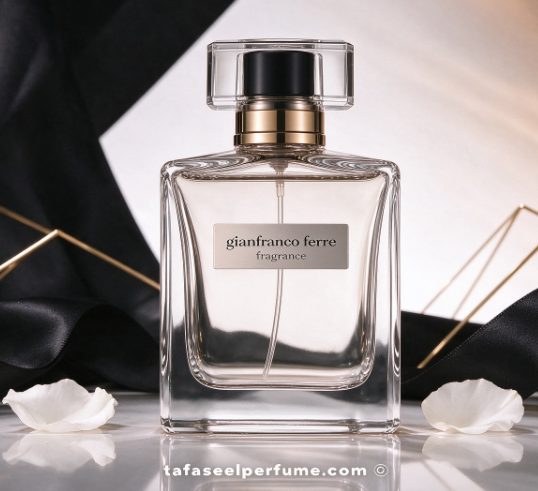
- Gianfranco Ferré Fragrance: The Architect of Scent Who Built Beauty in Structure: A short introduction. Gianfranco Ferré is a name that belongs simultaneously to the runway and the drafting table. Before he dressed women in sculptural white shirts and sharp suits, Ferré trained as an architect at the Politecnico di Milano. That architectural eye—obsessed with balance, foundation, and superstructure—did not stay confined to fabric.
A short introduction. Gianfranco Ferré is a name that belongs simultaneously to the runway and the drafting table. Before he dressed women in sculptural white shirts and sharp suits, Ferré trained as an architect at the Politecnico di Milano. That architectural eye—obsessed with balance, foundation, and superstructure—did not stay confined to fabric. When he entered perfumery in 1984, he brought the same discipline to scent: compositions built with clean lines, deliberate volumes, and a quiet, unshakable dignity that separates a Ferré fragrance from the decorative noise around it.
A larger introduction. The story of Gianfranco Ferré fragrance is a story of translation. Ferré did not treat perfume as an afterthought or a licensing convenience. He approached it the way he approached a garment: as a structure that must stand on its own, hold its shape on the skin, and reveal its intelligence slowly rather than all at once. His first women's fragrance arrived in 1984, followed by a men's scent in 1986 and the landmark Ferré by Ferré in 1991. Over the decades, the house produced a remarkably coherent body of work—Gieffeffe, Pontaccio 21, Bergamotto Marino, In the Mood for Love, Ferré Eau de Parfum, and more—without ever abandoning its core signature: clarity over clamor, architecture over ornament. To wear a Gianfranco Ferré fragrance is to wear a piece of design thinking, not merely a pleasant smell. This article maps the house across its key chapters, from its founding principles to the bottles that still define its legacy.
Table of Contents
1. The Architect’s Nose: How Milanese Structural Thinking Shaped a Fragrance House
2. From 1984 to the 1990s: The Founding Fragrances That Built the Ferré Olfactory Code
3. Ferré by Ferré (1991): The Aldehydic Floral That Became the House’s Gold Standard
4. Gieffeffe and the Unisex Question: When a Designer Refuses to Choose a Gender
5. Pontaccio 21: A Street Address Turned Into a Masculine Signature
6. In the Mood for Love: The Romantic Chapter of a Rational House
7. Ferré Eau de Parfum and the Iris Principle: Softness With a Spine
8. Building a Gianfranco Ferré Wardrobe: Bottles, Gifting, and the Collector’s Approach
1. The Architect’s Nose: How Milanese Structural Thinking Shaped a Fragrance House
Gianfranco Ferré was called “the architect of fashion” so often that the phrase risks becoming a cliché. But in perfumery, the architectural analogy is unusually literal. Ferré’s training taught him to think in terms of load-bearing elements: what holds a composition up, what gives it tension, what allows it to move without collapsing. In a Ferré fragrance, the top notes are not merely “pretty”—they are the entry portal, clear and purposeful. The heart is not a vague floral cloud—it is the structural core, often built around a single material (iris, jasmine, rose, or oakmoss) that carries the scent’s identity. The base is the foundation, weighted and deliberate, designed to remain legible hours after application. This is why so many Ferré scents feel simultaneously classic and modern: they obey old rules of construction while refusing to be fussy. If you respond to fragrances that feel “designed” rather than “decorated,” this house belongs on your radar alongside other iconic perfume brands with a genuine design philosophy.
2. From 1984 to the 1990s: The Founding Fragrances That Built the Ferré Olfactory Code
The house entered perfume in 1984 with Gianfranco Ferré for Women, a debut that announced a designer’s sensibility rather than a marketing brief. Two years later, a men’s fragrance followed, establishing the brand’s early commitment to Men’s Perfume as a serious category rather than an accessory line. But the pivotal moment arrived in 1991 with Ferré by Ferré, the second women’s scent and the one that crystallized the house’s olfactory signature: sparkling aldehydes, a grand floral heart, and a warm, velvety base that feels less like a “trend” and more like a piece of couture in liquid form. During this same period, Ferré was also leading Christian Dior as artistic director, absorbing the codes of French haute couture while maintaining his own Milanese discipline. The 1980s and 1990s were therefore not a “warm-up” for the Ferré fragrance story—they were the story: a designer proving that a fashion house could produce scents with the same intellectual backbone as its clothing. For those who prefer to explore a house through its women’s lineage first, the Women’s Perfume archive is the natural starting point.
3. Ferré by Ferré (1991): The Aldehydic Floral That Became the House’s Gold Standard
If one fragrance must stand as the ne plus ultra of Gianfranco Ferré perfumery, it is Ferré by Ferré. Its opening is a masterclass in restraint and impact: aldehydes create a cold, shimmering sparkle; bergamot and green leaves add lift; neroli and peach introduce a rounded, almost couture-like softness. The heart expands into a densely woven bouquet—rose, jasmine, ylang-ylang, carnation, violet, and lily of the valley—without ever becoming a shapeless floral soup. The base is where the architecture reveals itself: oakmoss, sandalwood, vanilla, amber, vetiver, and musk form a foundation that is warm but never sweet, powdery but never old-fashioned. Ferré by Ferré is the scent equivalent of a perfectly cut white shirt: it looks simple, but the engineering is invisible and absolute. Collectors and vintage enthusiasts consistently rank it among the most accomplished Italian designer fragrances of its era, and its influence can be felt in the “structured floral” genre that later houses would attempt—usually with less discipline. If you are building a Perfume Gift Set for someone who values timeless elegance over fleeting trends, a bottle of Ferré by Ferré is a statement of taste that requires no explanation.
4. Gieffeffe and the Unisex Question: When a Designer Refuses to Choose a Gender
Long before “genderless fragrance” became an industry talking point, Gianfranco Ferré released Gieffeffe in 1995 as an explicitly unisex eau de toilette[reference:14]. The composition is a textbook of balanced contrast: coriander, bergamot, osmanthus, lemon, orange, mandarin, and peach in the opening; a heart of nutmeg, freesia, cardamom, iris root, jasmine, and rose; and a base of cedar, musk, sandalwood, patchouli, and amber. What makes Gieffeffe remarkable is not merely that it was unisex, but that it was unisex without being neutralized. It retains a citrus-aromatic freshness that reads as classic cologne, while the floral-spicy heart and woody-ambery base give it a texture that feels complete on any skin. Ferré understood that true unisex design is not about removing gender markers—it is about building a structure that does not need them. In an era when many “shared” fragrances feel like compromises, Gieffeffe remains a quiet argument for the opposite: that the best unisex scent is simply a great scent that refuses to apologize for its complexity. Explore more genuinely Unisex Perfume options if this philosophy resonates with you.
5. Pontaccio 21: A Street Address Turned Into a Masculine Signature
Pontaccio 21 is named after the Milanese address associated with the Ferré house, and the fragrance functions almost like a postal code in olfactory form: precise, rooted, and unmistakably Milanese. Released in 2000 as a men’s fragrance, it belongs to the aromatic-fougère family but refuses the loud, shower-gel simplifications that often plague that genre. The opening is rosemary, lime, cardamom, neroli, and yellow mandarin—herbal, bright, and faintly culinary. The heart introduces rose, sage, cypress, narcissus, and jasmine, a combination that gives Pontaccio 21 an unusual dignity: floral enough to be sophisticated, green enough to remain masculine in the traditional sense. The base of leather, myrrh, angelica, musk, and patchouli provides the kind of textured, slightly smoky foundation that feels “built” rather than blended. Pontaccio 21 is not a crowd-pleaser in the conventional sense; it is a connoisseur’s fougère, the kind of scent that rewards repeated wear and reveals its architecture over months rather than minutes. For a deeper dive into how men’s fragrances are constructed and evaluated, the Perfume Articles and Reviews section offers useful context.
6. In the Mood for Love: The Romantic Chapter of a Rational House
At first glance, In the Mood for Love seems like a departure: a collection explicitly framed around romance, with four variations (the original, Pure, Tender, and Man) that explore different textures of intimacy. But look closer, and the Ferré discipline remains intact. The original In the Mood for Love is described as a rich floral-woody signature—romantic, yes, but structured rather than diffuse. Pure lightens the composition with crisp fruits and cherry blossom, creating an airier interpretation without losing the line. Tender introduces an aquatic-floral freshness driven by citrus and lotus, a transparent architecture of water and light. In the Mood for Love Man rounds out the quartet with a spicy-oriental blend of lavender and tonka bean, proving that the collection is not a single idea repeated but a family of related structures. For anyone who assumes that “romantic” and “rigorous” are opposites, this collection is the counterargument. It is also a reminder that Gianfranco Ferré fragrance, even at its most emotionally direct, never abandons its architectural spine.
7. Ferré Eau de Parfum and the Iris Principle: Softness With a Spine
The core Ferré Eau de Parfum is, in many ways, the purest distillation of the house’s feminine codes. Its heart is built around iris, jasmine, and freesia—materials that can easily become powdery or nostalgic in lesser hands—anchored by a warm, woody base of amber and vanilla. The magic lies in the iris. Iris is one of perfumery’s most expensive and structurally demanding materials: it can read as cold, rooty, or even melancholic if not handled with precision. In Ferré Eau de Parfum, the iris functions as a load-bearing note: it gives the florals a cool, mineral clarity that prevents them from collapsing into sweetness, while the amber-vanilla base provides the warmth that makes the composition wearable rather than austere. The accompanying Eau de Toilette offers a brighter, airier interpretation, lifting the iris with luminous citrus top notes and green accents for a fresher daily experience. Together, the two concentrations demonstrate a principle that runs through the entire house: softness is not the absence of structure—it is structure executed with restraint. This is the same principle that makes Ferré’s white shirts legendary, and it is the reason his fragrances endure when louder releases from the same era have long since faded. If you are exploring the house through its women’s offerings, begin with the Women’s Perfume category and read the notes with attention to how the base is built.
8. Building a Gianfranco Ferré Wardrobe: Bottles, Gifting, and the Collector’s Approach
Because Gianfranco Ferré fragrance is a coherent body of work rather than a random series of releases, it lends itself exceptionally well to a “wardrobe” approach. A simple Ferré wardrobe might begin with Ferré by Ferré for formal or evening wear—its aldehydic floral structure carries the same authority as a tailored jacket. Gieffeffe serves as the shared, unisex daytime option, equally at home on any wearer and in any season. Pontaccio 21 covers the masculine, herbal-leather register for those who want a fougère with intellectual weight. In the Mood for Love Tender adds a lighter, aquatic-floral option for warm weather, while Ferré Eau de Parfum provides the iris-driven, softly powdery elegance that many wearers reserve for moments when they want to feel composed and quietly luminous. For gift-giving, this coherence is an advantage: a Perfume Gift Set built around a single house tells the recipient that you have thought about taste, not merely price. Collectors, meanwhile, are drawn to the discontinuations and vintage formulations—Pontaccio 21 and early Gieffeffe batches in particular—because they represent a period when designer fragrances were still allowed to be structurally ambitious. Whatever entry point you choose, the house rewards attention: the more you wear Gianfranco Ferré, the more its architectural logic becomes legible on the skin. If you want to compare this house against other designer and niche structures, the Perfume Ranking and Top Lists can help you locate it within the broader landscape.


