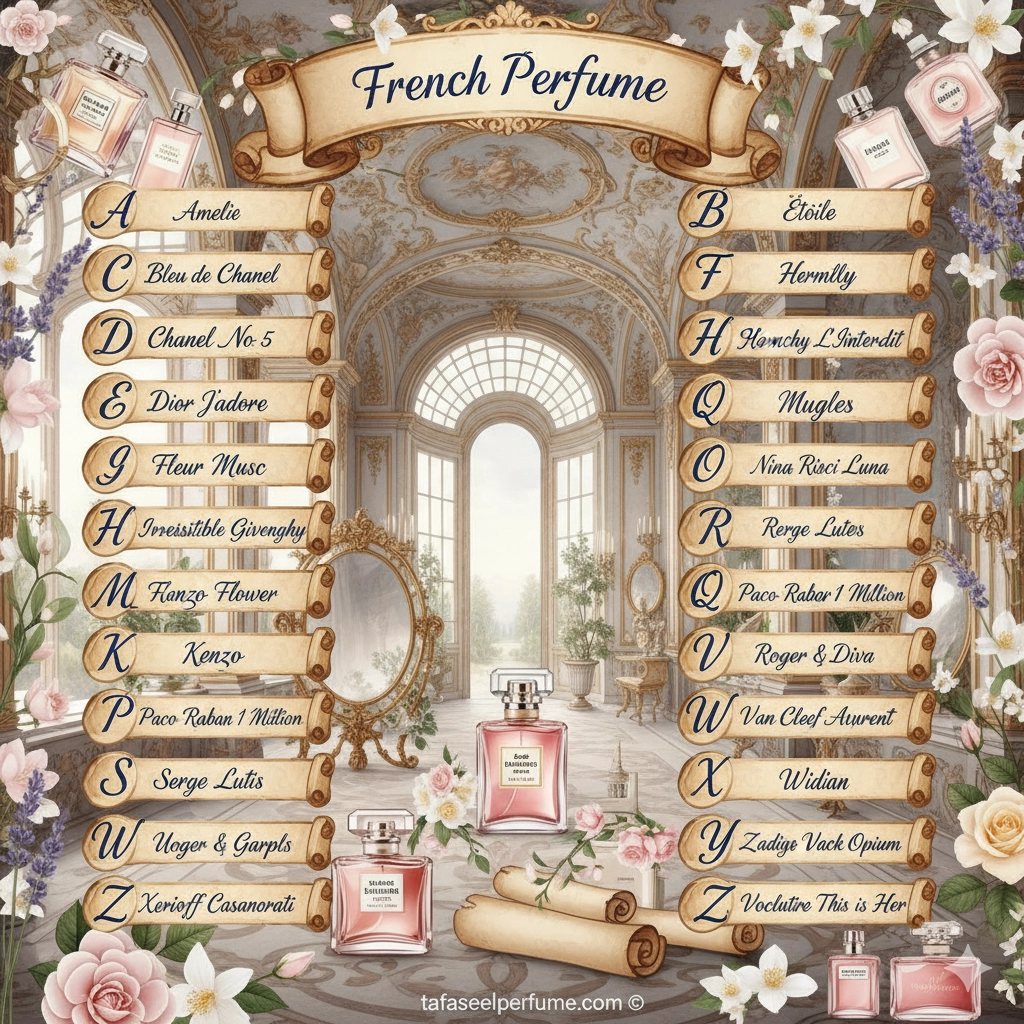
- French Perfume Names A-Z: A Complete Guide to Elegant and Iconic French Fragrances: French perfume names are renowned worldwide for their elegance, sophistication, and timeless appeal. From classic luxury houses to modern niche brands, exploring French perfume names A-Z offers fragrance enthusiasts a deeper appreciation of the artistry behind perfumery.
France has long been considered the heart of the perfume industry, producing some of the most celebrated fragrances ever created. Whether you are discovering legendary classics, searching for gift ideas, or expanding your fragrance collection, understanding French perfume names from A to Z can help you navigate the rich world of scent. Many fragrance lovers explore categories such as Women s Perfume, Men s Perfume, and Unisex Perfume when researching iconic French scents. This guide covers the history, naming traditions, fragrance families, and notable perfume houses that have shaped the global perfume market.
Contents
1. Why French Perfume Names Are Famous Worldwide
Discover the cultural influence and luxury heritage behind French fragrance names.
2. Understanding French Perfume Naming Traditions
Learn how French brands create memorable and elegant perfume names.
3. Popular French Perfume Names from A to Z
Explore examples of famous French fragrance names across the alphabet.
4. French Perfume Families and Scent Categories
Understand the fragrance styles associated with French perfumery.
5. Luxury French Perfume Houses You Should Know
Meet the brands that have defined perfume excellence for generations.
6. Choosing the Right French Perfume
Tips for selecting a fragrance that matches your personality and lifestyle.
Why French fragrances remain among the most popular gift choices worldwide.
8. The Future of French Perfumery
How innovation and sustainability are shaping modern French fragrances.
1. Why French Perfume Names Are Famous Worldwide
French perfume names carry an aura of luxury that few other fragrance traditions can match. For centuries, France has been associated with craftsmanship, refinement, and artistic expression. Cities such as Grasse became centers of fragrance production, helping establish France as the global capital of perfumery.
The names themselves often evoke romance, elegance, mystery, and sophistication. A French perfume name can instantly create an emotional connection, transporting the wearer to Parisian streets, blooming gardens, or luxurious fashion houses. This emotional storytelling is one of the reasons French perfumes remain highly desirable across generations.
Many fragrance enthusiasts regularly browse Brands to discover French perfume houses and learn about their unique naming styles and fragrance philosophies.
2. Understanding French Perfume Naming Traditions
French perfume names are often inspired by emotions, locations, artistic concepts, historical figures, flowers, precious materials, and romantic themes. Unlike purely descriptive names, French fragrance names frequently focus on creating intrigue and imagination.
Names such as "La Vie Est Belle," "J'adore," and "Mon Paris" demonstrate how French branding emphasizes emotion and lifestyle rather than simply listing fragrance notes. This approach allows consumers to connect with a story and identity rather than just a scent profile.
These naming traditions have influenced perfume brands around the world and continue to inspire both luxury and niche fragrance creators.
3. Popular French Perfume Names from A to Z
Exploring French perfume names alphabetically reveals the diversity and creativity of the fragrance industry. Examples include:
A – Ambre Sultan
B – Bois d'Argent
C – Coco Mademoiselle
D – Diorissimo
E – Eau Sauvage
F – Féminité du Bois
G – Guerlinade-inspired creations
H – Habit Rouge
I – Idôle
J – J'adore
K – Kelly Calèche
L – La Vie Est Belle
M – Mon Paris
N – Narcisse Noir
O – Opium
P – Paris
Q – Quelques Fleurs
R – Rive Gauche
S – Shalimar
T – Trésor
U – Un Jardin Sur Le Nil
V – Vol de Nuit
W – White-inspired niche creations
X – Xerjoff collaborations influenced by French perfumery
Y – Yvresse
Z – Zeste-inspired citrus fragrances
This alphabetical approach makes it easier for fragrance collectors and newcomers to discover iconic creations across different generations.
4. French Perfume Families and Scent Categories
French perfumery encompasses a wide variety of fragrance families. Floral fragrances showcase roses, jasmine, iris, and lily-of-the-valley. Oriental fragrances combine amber, vanilla, spices, and resins. Chypre fragrances balance citrus freshness with earthy moss and woods.
Modern French perfumers also excel in gourmand, aquatic, woody, and leather compositions. Many fragrance lovers expand their collections by exploring categories such as Mini Size & Gift Sets to sample multiple French fragrances before committing to full bottles.
Understanding fragrance families helps consumers identify scents that match their preferences and lifestyle.
5. Luxury French Perfume Houses You Should Know
Several French perfume houses have achieved legendary status in the fragrance industry. These brands combine tradition with innovation, continuously releasing perfumes that influence global trends.
Many luxury houses have existed for more than a century, refining their techniques while maintaining their signature identities. Their perfume names often become cultural icons recognized far beyond the fragrance community.
Consumers frequently consult fragrance reviews, rankings, and Ranking articles when comparing famous French perfumes and discovering new favorites.
6. Choosing the Right French Perfume
Selecting a French perfume involves more than choosing a pleasant scent. Personal style, climate, occasion, and fragrance concentration all influence the ideal choice.
Fresh citrus and floral fragrances are often preferred for daytime wear, while amber, oud, and oriental compositions may be better suited for evenings and special occasions. Testing a fragrance on skin is essential because body chemistry can significantly affect how a perfume develops over time.
Exploring different fragrance categories helps individuals build a versatile collection suitable for every season and event.
7. French Perfumes as Gifts
French perfumes have long been regarded as luxurious and thoughtful gifts. Their beautiful packaging, sophisticated branding, and premium ingredients make them ideal presents for birthdays, anniversaries, holidays, and special celebrations.
Many shoppers prefer curated Perfume Gift Sets because they offer multiple fragrance options and provide excellent value. Gift sets allow recipients to experience several scents from a brand before selecting a signature fragrance.
The universal appeal of French perfumery ensures that these gifts remain appreciated across different ages and preferences.
8. The Future of French Perfumery
French perfumery continues to evolve through innovation, sustainability, and changing consumer preferences. Modern fragrance houses increasingly focus on ethical sourcing, environmentally friendly packaging, and transparent ingredient practices.
Niche perfumery has also expanded significantly, allowing perfumers greater creative freedom and encouraging the development of unique scent profiles. Consumers interested in fragrance trends often read Perfume articles and educational resources to stay informed about emerging French perfume releases.
As technology and artistry continue to merge, French perfume names will undoubtedly remain symbols of elegance, creativity, and luxury for generations to come.


