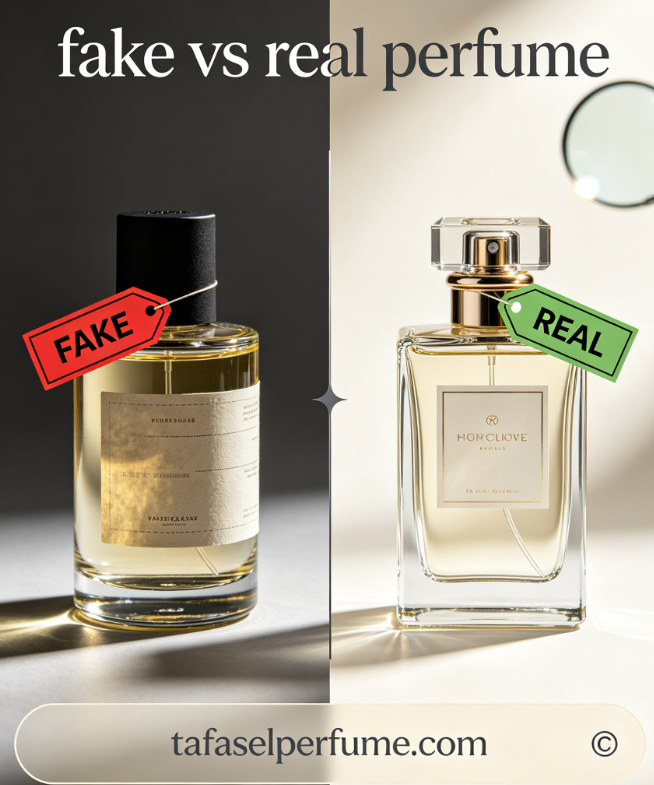
- Fake vs Real Perfume: The Ultimate 2026 Guide to Spotting Counterfeits, Protecting Your Skin, and Buying Authentic Fragrance with Confidence: Fake vs real perfume is one of the most searched fragrance questions in the world — and for good reason. Counterfeit perfume is a multi-billion-dollar industry that tricks millions of shoppers every year. A fake fragrance can smell vaguely similar for the first ten minutes, but it often fades fast, irritates your skin, and wastes your money. This guide gives you everything you need: a quick intro, a deep dive, detailed section-by-section analysis, and a full FAQ so you can tell fake vs real perf
Quick Intro: Real perfume is manufactured under strict quality control with regulated ingredients, consistent batch codes, and authentic packaging. Fake perfume is a copycat product made with cheap alcohol, unregulated oils, and printed boxes that imitate the original. The difference shows up in the scent, longevity, projection, bottle weight, cap fit, sprayer quality, batch code, serial number, and even the font on the label. Learning the difference protects your skin, your wallet, and your signature scent.
Big Intro: The fake vs real perfume debate matters more than ever in 2026. Online marketplaces, social media sellers, and discount websites have made it easier than ever to buy fragrance — and easier than ever to get scammed. A genuine designer perfume goes through years of development: master perfumers blend dozens or hundreds of raw materials, the formula is tested for stability, the juice is macerated, the bottle is engineered to protect the liquid from light and air, and the packaging is printed with security features. A counterfeit skips almost all of that. Instead, it copies the bottle shape, prints a similar box, fills it with a cheap approximation of the scent, and sells it at a “too good to be true” price. The problem is that many fakes are good enough to fool a casual buyer in a photo — but they almost never fool your nose, your skin, or the clock. Real perfume typically lasts 6–12 hours or more depending on concentration; fake perfume often disappears within 30–90 minutes. Real perfume evolves through top, heart, and base notes; fake perfume usually smells flat and alcoholic. Real perfume packaging has consistent batch codes, correct font weights, clean seams, and quality glass; fake perfume often has crooked labels, misspelled text, loose caps, and leaking sprayers. This article breaks down every angle of fake vs real perfume so you can shop smart, whether you are buying a classic like Estee Lauder Super Cologne Spray, a modern signature like Burberry Her London, or a bold designer scent like Versace Perfume Crystal. By the end, you will know exactly what to check before you buy, what to do if you already bought a fake, and how to build a collection you can trust.
1. What Is Fake vs Real Perfume? The Core Definition
2. Price Signals: When a Deal Is Too Good to Be True
3. Packaging and Box Clues: Batch Codes, Fonts, and Seals
4. Bottle and Sprayer Inspection: Glass, Cap, Tube, and Weight
5. Scent Test: Longevity, Projection, and Note Development
6. Where Fakes Are Sold: Online Marketplaces, Street Vendors, and Social Media
7. Skin Safety: Why Fake Perfume Can Cause Rashes and Allergies
8. How to Verify Authenticity: Batch Code Checkers, Serial Numbers, and Receipts
9. What to Do If You Bought a Fake Perfume
10. How to Buy Real Perfume Safely: Authorized Retailers and Trusted Sellers
11. Fake vs Real Perfume by Brand: Common Counterfeit Targets
12. Travel Size and Mini Perfumes: Are They Also Counterfeited?
13. Refills, Testers, and Unboxed Perfumes: Real or Fake?
14. The Business of Counterfeits: Why Fake Perfume Is So Profitable
15. Building a Trustworthy Fragrance Collection in 2026
1. What Is Fake vs Real Perfume? The Core Definition
Fake vs real perfume starts with a simple definition. Real perfume is a fragrance produced by or under license from the original brand, using the brand’s approved formula, ingredients, packaging, and quality standards. It is distributed through authorized channels: brand boutiques, department stores, authorized online retailers, and licensed duty-free shops. Fake perfume is any product that imitates the brand without authorization. It may use the brand’s name, logo, bottle shape, and box design, but it is not made by the brand and is not quality-controlled to the same standard. The counterfeit industry is sophisticated. Some fakes are obvious: misspelled brand names, crooked labels, and a strong alcohol smell. Others are nearly indistinguishable in photos. That is why you cannot rely on a single clue. You need to check price, packaging, bottle, sprayer, batch code, scent, and longevity together. A real perfume will pass all or almost all of these checks. A fake will fail at least one — and usually several. Understanding this definition is the foundation of everything else in this guide.
2. Price Signals: When a Deal Is Too Good to Be True
Price is the first and fastest filter in the fake vs real perfume comparison. Authentic designer perfume has a minimum retail price set by the brand. Even during sales, authorized retailers rarely discount below a certain threshold because doing so damages the brand’s luxury positioning. If you see a 100ml bottle of a popular designer fragrance for 70–90% off retail, that is a massive red flag. Counterfeiters rely on the psychology of a bargain: they know that a $200 perfume listed for $39 feels like a once-in-a-lifetime deal. But real perfume at that price is almost impossible unless it is used, expired, or stolen — and even then, the supply is limited. Be especially careful with “limited time” flash sales, social media ads with countdown timers, and marketplace listings from sellers with no history. Legitimate discounters do exist, but they usually offer 20–40% off, not 80%. They also provide clear return policies, real customer service, and physical business addresses. If the price is dramatically lower than every other seller, assume it is fake until you can verify otherwise. For example, if you are shopping for a well-known scent like Lacoste L’Homme Cologne, compare the price across at least three authorized retailers before buying. The same applies to Tom Ford and other luxury brands. A deal that is too good to be true usually is.
3. Packaging and Box Clues: Batch Codes, Fonts, and Seals
The box is one of the best places to tell fake vs real perfume apart. Real perfume packaging is printed with high-quality materials, sharp fonts, consistent colors, and precise alignment. The cellophane wrap is tight, clean, and often has a brand-specific seal or hologram. The batch code is printed or stamped clearly, and it matches the batch code on the bottle. Fake boxes often have blurry printing, slightly wrong colors, misspelled words, and a loose or wrinkled cellophane wrap. The batch code may be missing, duplicated across many boxes, or printed in a font that does not match the brand’s style. Check the barcode: real barcodes scan to the correct product name and size. Fake barcodes sometimes scan to a different product or do not scan at all. Look at the ingredient list and address: real boxes list the manufacturer’s address, sometimes multiple addresses for different regions, and a full ingredient list that follows local regulations. Fake boxes often omit these details or contain grammatical errors. Also check the “e” mark, recycling symbols, and any brand-specific security features such as holograms, QR codes, or embossed logos. If you are buying a fragrance like Philosophy Pure Grace, compare the box to photos on the brand’s official website. Small differences matter. A missing accent mark, a wrong shade of pink, or a slightly different font weight can be the clue that saves you from a counterfeit.
4. Bottle and Sprayer Inspection: Glass, Cap, Tube, and Weight
The bottle is where fake vs real perfume becomes physical. Real perfume bottles are made from high-quality glass with even thickness, no bubbles, and a flawless finish. The cap fits snugly, often with a satisfying magnetic click or a precise friction fit. The sprayer is smooth, produces a fine mist, and does not drip or leak. The dip tube inside the bottle is usually straight, thin, and reaches the bottom cleanly. Fake bottles often have uneven glass, visible seams, bubbles, or a slightly different shape. The cap may be loose, made of cheap plastic, or missing the brand’s embossed logo. The sprayer may be stiff, sputter, or spray a stream instead of a mist. The dip tube may be thick, coiled, or too short. Weight is another clue: real perfume bottles often feel heavier and more solid because of thicker glass and a heavier cap. Fake bottles can feel surprisingly light. Check the label on the bottle: real labels are centered, straight, and firmly attached. Fake labels may be crooked, peeling, or printed on cheap paper. If the bottle has a metal plaque, engraved name, or embossed logo, inspect the depth and sharpness. Counterfeiters often cut corners here. For a fragrance like Emporio Armani Diamonds, the bottle shape and cap are iconic — and fakes rarely get them exactly right.
5. Scent Test: Longevity, Projection, and Note Development
The scent is the ultimate test in fake vs real perfume, but it is also the most misunderstood. Real perfume is designed to evolve. You should smell the top notes first — bright, fresh, or citrusy — then the heart notes after 15–30 minutes, and the base notes after an hour or more. Fake perfume often smells like a single flat note, usually a cheap approximation of the original, and it may smell strongly of alcohol when first sprayed. Real perfume’s alcohol smell fades within seconds; fake perfume’s alcohol smell can linger for minutes. Longevity is the clearest difference. Real eau de parfum typically lasts 6–10 hours on skin and longer on clothing. Real eau de toilette lasts 3–6 hours. Fake perfume often disappears within 30–90 minutes, or it leaves a faint, unpleasant residue. Projection is another clue: real perfume creates a scent bubble that others can notice without being overwhelmed. Fake perfume may project strongly for ten minutes and then vanish, or it may not project at all. Note development is also important. If a fragrance is supposed to have a complex drydown of vanilla, musk, and amber, but the fake smells like sweet alcohol and nothing else, that is a fail. Test on skin, not just paper. Skin chemistry reveals more. And always test from a sample or a trusted decant before buying a full bottle from an unfamiliar seller. For a scent like Perfume Bonbon, the sweet, playful development is part of the experience — a fake will miss it.
6. Where Fakes Are Sold: Online Marketplaces, Street Vendors, and Social Media
Knowing where fakes are sold is half the battle in fake vs real perfume. Counterfeit perfume is common in open-air markets, small independent shops with no brand authorization, and online marketplaces that allow third-party sellers. Social media is a growing channel: Instagram, TikTok, and Facebook ads often promote “authentic” perfume at unrealistically low prices. These ads may use stolen photos, fake reviews, and urgent language like “only 3 left” or “flash sale ends in 10 minutes.” Be cautious with sellers who only accept bank transfers, cryptocurrency, or gift cards. Legitimate retailers accept credit cards and offer buyer protection. Also be wary of “testers” sold as retail bottles. Real testers are meant for display and are usually marked “tester” or “not for sale.” Some testers are genuine, but many fakes are sold as testers to explain missing boxes or caps. Duty-free shops, brand boutiques, and authorized department stores are the safest places to buy. If you are shopping online, buy directly from the brand’s official website or from a retailer the brand lists as authorized. For specialized categories like Women’s Perfume or Men’s Perfume, check the retailer’s about page, return policy, and contact information. If anything feels vague, walk away.
7. Skin Safety: Why Fake Perfume Can Cause Rashes and Allergies
Fake vs real perfume is not just about smell and money — it is about safety. Real perfume uses ingredients that are regulated and tested for skin safety. The brand follows IFRA standards, which limit or ban certain allergens and photosensitizing ingredients. Fake perfume often uses industrial-grade alcohol, unregulated oils, and unknown additives. These can cause contact dermatitis, redness, itching, burning, and allergic reactions. Some counterfeit perfumes have been found to contain harmful substances such as diethyl phthalate, which can irritate skin and may have long-term health concerns. Others contain high levels of methanol or other impurities. If you have sensitive skin, asthma, or allergies, the risk is even higher. Real perfume is not hypoallergenic for everyone, but it is at least produced under quality control. Fake perfume has no such oversight. If you experience a reaction after using a new perfume, stop using it immediately, wash the area with mild soap and water, and consult a doctor if symptoms persist. Keep the bottle and receipt if you plan to report the seller. For body products like Children & Baby’s Perfume, the stakes are even higher — never buy these from unauthorized sellers.
8. How to Verify Authenticity: Batch Code Checkers, Serial Numbers, and Receipts
Verification is a practical skill in the fake vs real perfume world. Most real perfumes have a batch code printed on the box and stamped or etched on the bottle. The batch code usually contains letters and numbers that indicate the production date and factory. You can enter this code into online batch code checkers, though not all brands support every checker. If the code on the box does not match the code on the bottle, that is a major red flag. Real perfume also often has a serial number or a unique identifier on the packaging. Check the receipt: authorized retailers provide a receipt with the store name, date, and product details. If you buy online, keep the order confirmation and tracking information. Some brands offer authenticity verification through their website or app. Others use holograms, QR codes, or NFC chips. If the brand has an official authenticity page, use it. Also compare the product to the brand’s official photos. Look at the bottle shape, cap, label, font, and box design. If you are buying a fragrance like Abbott The Cape, check the brand’s website for packaging details. When in doubt, contact the brand’s customer service and ask them to verify the batch code. They can often tell you if the product is authentic.
9. What to Do If You Bought a Fake Perfume
If you realize you bought a fake perfume, act quickly. First, stop using it, especially if you notice skin irritation or an unusual smell. Second, gather evidence: photos of the bottle, box, batch code, receipt, and listing. Third, contact the seller and request a refund. If the seller refuses, escalate to the platform where you bought it. Most major marketplaces have buyer protection policies for counterfeit goods. If you paid by credit card, you may be able to file a chargeback. If you paid by bank transfer or cryptocurrency, recovery is much harder. Fourth, report the seller to the brand’s anti-counterfeiting team. Brands like Perfume Brands often have a dedicated email or form for reporting fakes. Fifth, report the listing to the platform and, if applicable, to your local consumer protection agency. In some countries, selling counterfeit goods is a criminal offense. Finally, leave a review to warn other buyers. Be factual and specific: include photos and the batch code. This helps others avoid the same mistake. If you bought the fake from a physical store, you may have stronger rights depending on local law. Keep the receipt and any communication with the seller. For a fragrance like Paris Corner Fire Your Desire, report the fake to the brand so they can track the counterfeit network.
10. How to Buy Real Perfume Safely: Authorized Retailers and Trusted Sellers
The best way to win the fake vs real perfume battle is to buy from trusted sources. Authorized retailers include brand boutiques, official brand websites, department stores, and licensed duty-free shops. These sellers buy directly from the brand or from authorized distributors. They can provide proof of authenticity, receipts, and returns. If you buy from a discounter, choose one with a long history, a physical address, and a clear return policy. Read reviews, but be skeptical of reviews that are all five stars and posted on the same day. Check the seller’s social media presence and customer service responsiveness. Avoid sellers who use stock photos only, who have no contact information, or who pressure you to pay outside the platform. For online shopping, look for HTTPS, secure checkout, and buyer protection. If you are buying a gift set like Perfume Gift Sets, buy from the brand’s official site or a major retailer. If you are buying a travel size like Women’s Travel Size Perfume, check that the seller is authorized for that specific product. When in doubt, ask the brand. A quick email to customer service can confirm whether a seller is authorized. It takes five minutes and can save you hundreds of dollars.
11. Fake vs Real Perfume by Brand: Common Counterfeit Targets
Some brands are counterfeited more than others. Popular designer and luxury brands are the biggest targets because they have high demand and high margins. Common counterfeit targets include well-known fashion houses and celebrity fragrances. If you are buying a scent like Rivoli Perfume or 226 Club Fragrance, check the brand’s official list of authorized retailers. Some brands use unique security features: holograms, QR codes, batch code systems, or tamper-evident seals. Others rely on packaging details that are hard to copy. Learn the specific clues for the brand you are buying. For example, Versace Perfume Crystal has a distinctive bottle and cap that fakes often get wrong. Burberry Her London has specific font and packaging details. Tom Ford is heavily counterfeited, so buy only from authorized sellers. The more you know about the brand, the easier it is to spot a fake.
12. Travel Size and Mini Perfumes: Are They Also Counterfeited?
Yes — travel size and mini perfumes are counterfeited too, and sometimes even more than full bottles. Counterfeiters know that buyers are less cautious with smaller purchases. A fake 10ml travel spray may cost $10–$20, and buyers may not bother to verify it. But the same rules apply. Real travel sizes have the same batch code system, the same packaging quality, and the same scent development as full bottles. Fake travel sizes often have misspelled labels, cheap plastic sprayers, and a strong alcohol smell. If you are buying a travel size like Travel Size Women’s Perfume or a mini set like Mini Size & Gift Sets, buy from authorized retailers. Check the batch code, the sprayer, and the box. If the price is far below retail, be suspicious. Some brands sell travel sizes exclusively through their own website or specific retailers, so check the brand’s official list. If you are buying a Women’s Travel Size Perfume as a gift, buy from a trusted source. A fake travel size is not a bargain — it is a waste of money and a potential skin risk.
13. Refills, Testers, and Unboxed Perfumes: Real or Fake?
Refills, testers, and unboxed perfumes are a gray area in the fake vs real perfume debate. Real testers are produced by the brand for display purposes. They are usually marked “tester” or “not for sale” and may come in a plain box. Some testers are sold legitimately by authorized retailers when they are no longer needed for display. However, many fakes are sold as “testers” to explain missing boxes, caps, or cellophane. Real refills are produced by the brand and are designed to refill a specific bottle. Fake refills may contain a different formula or a lower concentration. Unboxed perfumes can be real, but they are risky because you cannot verify the batch code on the box or confirm that the bottle has not been tampered with. If you buy a tester or refill, buy from an authorized retailer or a trusted discounter with a return policy. Check the bottle, sprayer, batch code, and scent. If the price is too low, or if the seller has no explanation for why the product is unboxed, walk away. For a fragrance like Eau de Parfum vs Cologne, the concentration matters — a fake refill may be much weaker than the original.
14. The Business of Counterfeits: Why Fake Perfume Is So Profitable
Counterfeit perfume is profitable because the ingredients are cheap and the brand name does the selling. A fake perfume may cost $2–$5 to produce, including the bottle, box, and liquid. It can then be sold for $30–$100, especially if it imitates a luxury brand. The profit margins are enormous, and the risk of getting caught is relatively low in many jurisdictions. Counterfeiters often operate across borders, making enforcement difficult. They may use the same factories, suppliers, and distribution networks as other counterfeit goods. Some fakes are sold through legitimate-looking websites that are here today and gone tomorrow. Others are sold through social media influencers who may not even know the product is fake. The best defense is awareness. The more consumers know about fake vs real perfume, the harder it is for counterfeiters to succeed. Brands invest in anti-counterfeiting technology, but they cannot do it alone. Buyers who verify, report, and refuse to buy fakes help protect the entire fragrance community. If you are shopping for a niche or luxury scent like Emporio Armani Diamonds or Abbott The Cape, remember that the real product supports the perfumers, the brand, and the quality you expect.
15. Building a Trustworthy Fragrance Collection in 2026
Building a trustworthy fragrance collection in 2026 means making fake vs real perfume awareness a habit. Start by buying from authorized retailers. Keep your receipts and batch codes. Store your perfumes correctly: away from heat, light, and humidity. Rotate your collection and use your fragrances so you know how they should smell and perform. Join fragrance communities where members share tips on spotting fakes and recommend trusted sellers. Use resources like Perfume Ranking and Top Lists and Perfume Articles and Reviews to learn more about specific brands and products. If you are exploring new categories, such as Unisex Perfume, Spa & Fragrance, or Beauty, apply the same verification rules. When you find a seller you trust, stick with them. When you find a fake, report it. Over time, your collection becomes not just a set of bottles, but a curated, authentic fragrance wardrobe that reflects your taste and your standards. Real perfume is an investment in craftsmanship, art, and personal expression. Fake perfume is a shortcut that never delivers. Choose real, every time.
Frequently Asked Questions About Fake vs Real Perfume
How can I tell fake vs real perfume by the smell?
Real perfume smells layered and evolves over time. It opens with top notes, develops into heart notes, and settles into base notes. Fake perfume often smells flat, strongly alcoholic, or like a single cheap note. It may also fade within 30–90 minutes. If the scent disappears quickly or smells harsh, it is likely fake.
Is fake perfume dangerous for my skin?
Yes, fake perfume can be dangerous. It may contain unregulated ingredients, industrial alcohol, and allergens that cause rashes, itching, burning, and allergic reactions. Real perfume follows IFRA safety standards. If you have sensitive skin, never use fake perfume.
Can fake perfume be identical to real perfume?
No. A fake can imitate the scent for a short time, but it cannot replicate the exact formula, concentration, and quality of real perfume. The longevity, projection, and note development will always be different. Packaging and batch codes will also reveal inconsistencies.
Why is fake perfume so cheap?
Fake perfume is cheap because it uses low-cost ingredients, cheap alcohol, and low-quality packaging. Counterfeiters do not pay for research, development, quality control, or brand licensing. They also avoid taxes and regulations, which lowers their costs further.
What should I do if I bought a fake perfume online?
Stop using it, gather evidence (photos, receipt, listing), and contact the seller for a refund. If the seller refuses, file a claim with the platform, your credit card company, or your local consumer protection agency. Report the seller to the brand’s anti-counterfeiting team.
Are testers and unboxed perfumes safe to buy?
Real testers and unboxed perfumes can be safe if they come from an authorized retailer or a trusted discounter. However, many fakes are sold as testers or unboxed. Check the batch code, bottle, sprayer, and scent. If the price is too low or the seller is vague, avoid it.
Do batch code checkers work for all brands?
No. Batch code checkers work for many brands, but not all. Some brands use proprietary systems or do not support third-party checkers. If the checker cannot verify the code, contact the brand’s customer service directly with the batch code and photos.
Is it illegal to buy fake perfume?
In many countries, buying counterfeit goods is illegal, though enforcement varies. Even if buying is not prosecuted, selling counterfeit perfume is illegal. Buying fakes supports criminal networks and can put your health at risk. It is always better to buy authentic.
How can I avoid fake perfume when shopping online?
Buy from the brand’s official website or an authorized retailer. Check the seller’s return policy, contact information, and reviews. Avoid prices that are 70–90% below retail. Use secure payment methods with buyer protection. Verify the batch code and packaging when the product arrives.
What are the most counterfeited perfume brands?
Popular designer and luxury brands are the most counterfeited, including well-known fashion houses, celebrity fragrances, and high-end niche brands. If a brand is in high demand and has a high price point, it is likely a target for counterfeiters.
Can I return a fake perfume?
Yes, if you bought it from a retailer with a return policy. If the seller refuses, escalate to the platform or your payment provider. Keep all evidence, including the original packaging, receipt, and photos. Some brands may also help you verify and report the fake.
Does real perfume last longer than fake perfume?
Yes. Real perfume typically lasts 6–12 hours or more depending on concentration. Fake perfume often lasts only 30–90 minutes. Longevity is one of the clearest differences between fake and real perfume.
Why does fake perfume smell like alcohol?
Fake perfume uses cheap, industrial-grade alcohol and lacks the balanced formula of real perfume. The alcohol smell does not fade as quickly because the fragrance oils are low quality or insufficiently blended. Real perfume’s alcohol smell disappears within seconds.
Can I test perfume before buying to avoid fakes?
Yes. Always test on skin, not just paper. Ask for a sample or a decant from a trusted seller. If you are buying online, order a small decant first. Testing helps you learn the real scent profile, longevity, and projection before committing to a full bottle.
What is the best way to store real perfume?
Store real perfume in a cool, dark, dry place, away from direct sunlight and heat. Keep the bottle tightly closed. Avoid bathrooms, where humidity and temperature changes can degrade the fragrance. Proper storage helps your perfume last for years.
Are perfume gift sets more likely to be fake?
Perfume gift sets are often counterfeited because they contain multiple items and seem like a good value. Buy gift sets from authorized retailers or the brand’s official website. Check the batch codes on each item and inspect the packaging carefully.
How do I report a fake perfume seller?
Report the seller to the platform where you bought the product, the brand’s anti-counterfeiting team, and your local consumer protection agency. Provide photos, the listing URL, the receipt, and the batch code. Your report helps protect other buyers.
Can fake perfume damage my clothes?
Yes. Fake perfume may contain oils, dyes, or chemicals that stain or damage fabric. Real perfume is tested for fabric safety, but fake perfume is not. If you spray fake perfume on clothing, it may leave a permanent stain or a lingering unpleasant smell.
Is it worth buying a fake perfume if I cannot afford the real one?
No. Fake perfume is a waste of money, can harm your skin, and does not deliver the scent experience you want. Instead, save for a smaller size, buy a decant, or explore affordable authentic brands. There are many excellent real perfumes at every price point.
What should I look for first when checking fake vs real perfume?
Start with the price. If it is too good to be true, be suspicious. Then check the batch code on the box and bottle. Next, inspect the packaging, bottle, cap, and sprayer. Finally, test the scent on skin for longevity and development. If any check fails, do not buy.


