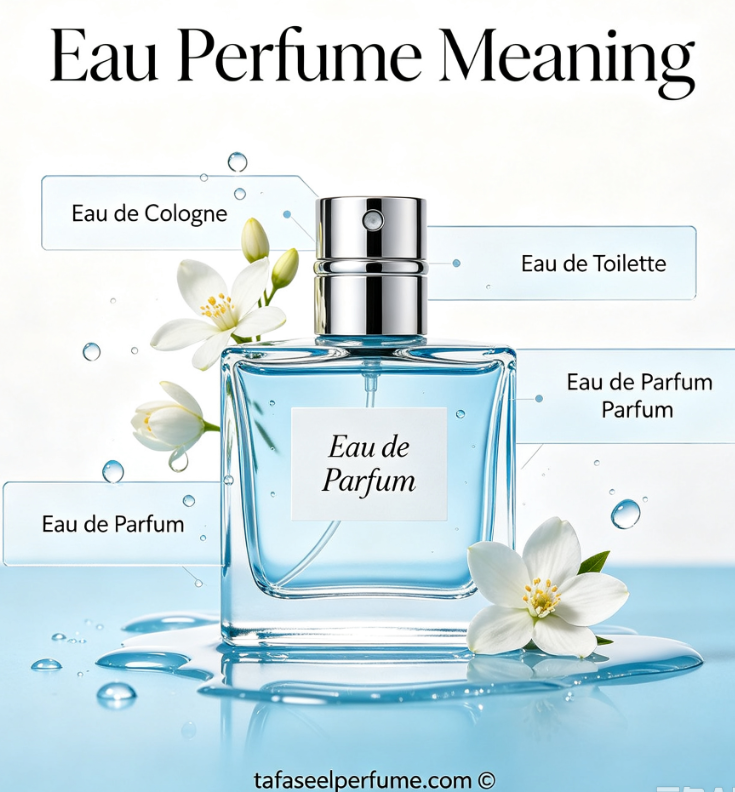
- Eau Perfume Meaning · The Velvet Architecture of Sillage & Unspoken Grandeur: Eau perfume meaning isn’t just about concentration — it’s the poetry of presence. Whether it’s Eau de Parfum, Eau de Toilette, or Eau de Cologne, each eau tells a story of longevity, radiance, and the silent architecture of scent that lingers like a velvet whisper.
What does “eau” truly mean in perfume? Beyond the French word for “water,” eau defines the very soul of a fragrance — its strength, its sillage, and its relationship with time. In perfumery, the term “eau” is the gateway to understanding concentration levels: Eau de Parfum (EDP) holds 15–20% aromatic compounds, offering depth and endurance; Eau de Toilette (EDT) dances with 5–15%, lighter and more effervescent; while Eau de Cologne (EDC) whispers with 2–5%, fresh and fleeting. But the meaning of eau extends beyond percentages — it’s the velvet architecture of how a fragrance unfolds, how it carves space around you, and how it becomes an invisible signature of your presence. In this guide, we unravel the layers of eau perfume, from its historical roots to its modern interpretations, and explore why every eau carries a distinct character — sometimes bold, sometimes tender, but always unforgettable.
Join us as we decode the lexicon of eau, and discover how the right eau can transform a fleeting moment into an eternal impression. Whether you’re a connoisseur or a curious soul, the meaning of eau is the key to unlocking the poetry of perfume.
⋮ contents · the eau lexicon
1. The Alchemy of Concentration: EDP, EDT, EDC 2. Sillage & The Architecture of Eau 3. Eau de Parfum vs. Eau de Toilette – The Eternal Debate 4. The History of Eau: From Cologne to Contemporary 5. How to Choose Your Eau: Skin, Season, Soul 6. The Velvet Sillage: Why Eau is More Than a Scent 7. Eau and Memory: The Unspoken Grandeur of Fragrance 8. Decoding Eau Labels: What the Bottle Really Tells You1. The Alchemy of Concentration: EDP, EDT, EDC
The term “eau” in perfumery is the first clue to a fragrance’s concentration and character. Eau de Parfum (EDP) typically contains 15–20% perfume oil, making it the most potent and long-lasting among the classic eaux. Its sillage is rich, often lasting 6–8 hours on skin, with a deep, velvety dry-down. Eau de Toilette (EDT) sits at 5–15% concentration, offering a lighter, more effervescent presence — perfect for daytime or warmer weather, with a lifespan of 3–5 hours. Eau de Cologne (EDC), the lightest, contains 2–5% oil, traditionally citrus-based, refreshing and fleeting, lasting 1–2 hours. But concentration is only the beginning; the quality of raw materials, the artistry of the perfumer, and the molecular structure of each note determine how an eau performs. Understanding this alchemy is the first step to mastering the meaning of eau.
Beyond the numbers, each eau tells a story of balance. EDPs are often more complex, with a heavier base of woods, resins, or musks, while EDTs shine with bright top notes like bergamot, neroli, or green accords. EDCs, historically linked to the city of Cologne, evoke a sense of cleanliness and immediacy. The concentration not only affects longevity but also the intensity of sillage — the trail a fragrance leaves behind. For those seeking a bold signature, EDP is the natural choice; for a whisper of elegance, EDT or EDC may be the perfect companion.
2. Sillage & The Architecture of Eau
Sillage — the French term for the “wake” or “trail” of a fragrance — is the invisible architecture of eau. A perfume with powerful sillage creates an aura around the wearer, announcing its presence before a word is spoken. The meaning of eau is deeply intertwined with sillage, as the concentration of aromatic compounds directly influences how far and how long a scent projects. Eau de Parfum, with its higher oil load, tends to have a more substantial sillage, while Eau de Toilette offers a softer, more intimate projection. However, sillage is not merely about strength; it’s about the quality of diffusion. A well-crafted eau will unfold in layers — top notes shimmering, heart notes blooming, base notes grounding — creating a three-dimensional experience that moves with the wearer. This velvet architecture is what makes eau an art form, a silent conversation between fragrance and space.
In modern perfumery, sillage is often enhanced by the use of fixatives and molecular enhancers, but true elegance lies in the natural evolution of the ingredients. A citrusy Eau de Cologne may have a bright, fleeting sillage, while an oriental EDP leaves a warm, resinous trail that lingers for hours. The choice of eau is, therefore, a choice of presence — whether you wish to fill a room or leave a subtle, memorable whisper.
3. Eau de Parfum vs. Eau de Toilette – The Eternal Debate
The distinction between Eau de Parfum and Eau de Toilette is one of the most discussed topics in fragrance circles. While both are “eaux,” their differences go beyond concentration. EDP is designed for endurance and richness, often featuring a heavier base of vanilla, patchouli, or sandalwood, which anchors the fragrance for hours. EDT, on the other hand, is built for freshness and immediacy, with a higher proportion of top and heart notes that dance on the skin before gradually fading. The debate is not about which is superior, but about context: an EDP is ideal for evenings, colder months, or occasions where you want your scent to be remembered; an EDT is perfect for daily wear, warmer climates, or a more understated approach. Many fragrance houses offer both versions of their iconic scents, allowing wearers to choose their preferred intensity. Ultimately, the meaning of eau lies in this versatility — the same fragrance can tell two different stories depending on its concentration.
It’s also worth noting that the same perfume name in EDP and EDT may smell slightly different due to the varying proportions of notes. The EDT might highlight citrus and florals, while the EDP emphasizes the woody or amber undertones. This duality is a beautiful aspect of perfumery, inviting exploration and personal connection.
4. The History of Eau: From Cologne to Contemporary
The word “eau” has been part of perfumery since the 14th century, but its modern meaning took shape in 18th-century Germany with the creation of Eau de Cologne — a light, citrus-based fragrance that became a sensation across Europe. Originally used as a refreshing tonic, Eau de Cologne laid the foundation for the concentration hierarchy we know today. As perfumery evolved, the 19th and 20th centuries introduced Eau de Toilette and Eau de Parfum, each catering to different desires for longevity and intensity. The 20th century also saw the rise of iconic eaux like Chanel No. 5 (initially a parfum, later available in EDP and EDT) and Guerlain’s Shalimar, which redefined what an eau could be. Today, the meaning of eau is more nuanced than ever, with niche brands pushing boundaries with extraits, absolutes, and eaux that blur the lines between categories. Yet, the essence remains: eau is the marriage of water, alcohol, and aromatic soul, a liquid poem that has captivated humanity for centuries.
The historical context also explains why Eau de Cologne is often associated with masculine freshness, though modern perfumery has transcended such gender norms. The evolution of eau reflects our changing relationship with scent — from functional hygiene to emotional expression, from simple refreshment to complex storytelling.
5. How to Choose Your Eau: Skin, Season, Soul
Choosing the right eau is a deeply personal journey, influenced by your skin chemistry, the season, and your emotional landscape. Skin type plays a crucial role: oily skin tends to hold fragrance longer, making EDTs last surprisingly well, while dry skin may benefit from the richness of an EDP. Seasonality is another factor — light, citrusy eaux (like EDC or EDT) shine in spring and summer, while warm, spicy, or woody EDPs are perfect for autumn and winter. But beyond the practical, the meaning of eau is about resonance: a fragrance that makes you feel empowered, serene, or nostalgic. When testing an eau, wear it on your skin for at least an hour to experience its full evolution — from the bright top notes to the deep dry-down. Don’t be afraid to layer different eaux or to revisit a fragrance you once dismissed; our perception of scent changes with time and experience. Ultimately, the best eau is the one that feels like an extension of your soul, a velvet signature that is uniquely yours.
Consider also the occasion: a sophisticated EDP for a gala, a fresh EDT for a casual brunch, or a classic EDC for a timeless, clean appeal. The versatility of eaux allows you to curate a fragrance wardrobe that adapts to every facet of your life.
6. The Velvet Sillage: Why Eau is More Than a Scent
Eau is not just a scent; it is an aura, a velvet architecture that defines your presence. The sillage of an eau is the invisible bridge between you and the world — a soft, lingering whisper that speaks of elegance, mystery, or warmth. The meaning of eau, therefore, transcends its chemical composition; it becomes a tool for self-expression and connection. A well-chosen eau can elevate your mood, evoke memories, and even influence how others perceive you. The beauty of eau lies in its transience — it is meant to be experienced in the moment, to evolve with your body heat, and to leave a fleeting impression that lingers in the memory of those who cross your path. This ephemeral quality is what makes fragrance so poetic, a liquid art that exists only in the interplay of skin, air, and time. Embracing the velvety sillage of eau is embracing the art of being present, of leaving a gentle mark without saying a word.
In a world that often demands permanence, eau teaches us to appreciate the beauty of the ephemeral. It is a reminder that some of the most profound experiences are those that pass gracefully, leaving a trace of wonder.
7. Eau and Memory: The Unspoken Grandeur of Fragrance
Few things are as evocative as a familiar scent, and eau holds a unique power to unlock memories and emotions. The meaning of eau is deeply tied to the limbic system — the part of the brain responsible for emotion and memory. A single whiff of an eau de parfum can transport you to a summer garden, a childhood home, or a long-lost love. This is why so many of us seek out the fragrances our parents wore, or why a particular floral note can evoke a rush of nostalgia. The grandeur of eau is in its ability to capture time and place in a bottle, to freeze a moment and release it with each spray. When you wear an eau, you are not just wearing a scent; you are wearing a story, a piece of your own history, or a vision of who you aspire to be. This emotional dimension is what elevates eau from a simple cosmetic to a profound personal artifact.
Many perfumers design their creations to evoke specific memories — a seaside breeze, a forest floor, a bustling spice market. Understanding the memory-making power of eau can help you choose fragrances that resonate with your own life narrative.
8. Decoding Eau Labels: What the Bottle Really Tells You
Walking through a fragrance boutique, you’ll encounter a myriad of labels — Eau de Parfum Intense, Eau de Toilette Sport, Eau de Cologne Absolue — and each variation carries a specific meaning. Beyond the classic EDP, EDT, and EDC, modern perfumery has introduced terms like “Extrait de Parfum” (20–40% oil concentration), “Eau de Parfum Intense” (a richer version of EDP), and “Eau de Soin” (skincare-infused fragrances). The label also often indicates the alcohol content, which affects the fragrance’s diffusion and longevity. Additionally, terms like “natural spray” or “vaporisateur” refer to the atomizer type, not the concentration. When decoding an eau label, look for the percentage of perfume oil (often listed as “vol. %”) and the presence of specific ingredients that hint at the scent profile. Understanding these nuances empowers you to make informed choices, whether you’re seeking a subtle everyday scent or a bold statement piece. The bottle, like a book, tells a story — but only if you know how to read it.
It’s also helpful to recognize that some brands use their own nomenclature; for example, “Eau de Parfum” from one house may be closer to an EDT from another. Familiarizing yourself with the brand’s philosophy and the perfumer’s intent can deepen your appreciation of each eau.
❋ frequently asked questions · eau perfume meaning
In perfumery, “eau” is the French word for “water,” but it signifies a dilution of perfume oils in alcohol and water. It indicates the concentration level — e.g., Eau de Parfum, Eau de Toilette, Eau de Cologne — which determines the scent’s strength and longevity.
Yes, Eau de Parfum (EDP) has a higher concentration of perfume oil (15–20%) compared to Eau de Toilette (5–15%), resulting in a richer scent, longer lasting power (6–8 hours), and more pronounced sillage.
Eau de Cologne (EDC) typically lasts 1–2 hours on the skin due to its low concentration (2–5%). It is designed for a refreshing, fleeting burst of fragrance, often with citrus or herbal notes.
Absolutely. Many fragrance houses offer both versions, allowing you to choose based on occasion or season. The EDP will be deeper and more persistent, while the EDT will be lighter and more effervescent.
Parfum (or Extrait) has the highest concentration of perfume oil (20–40%), making it the most intense, long-lasting, and often the most expensive. Eau de Parfum is a step down in concentration but still offers excellent performance.
Yes, significantly. Higher concentrations (EDP, Parfum) emphasize base and heart notes, giving a fragrance depth and warmth. Lower concentrations (EDT, EDC) highlight top notes, resulting in a fresher, more vibrant character.
the velvet architecture of eau · sillage & unspoken grandeur


