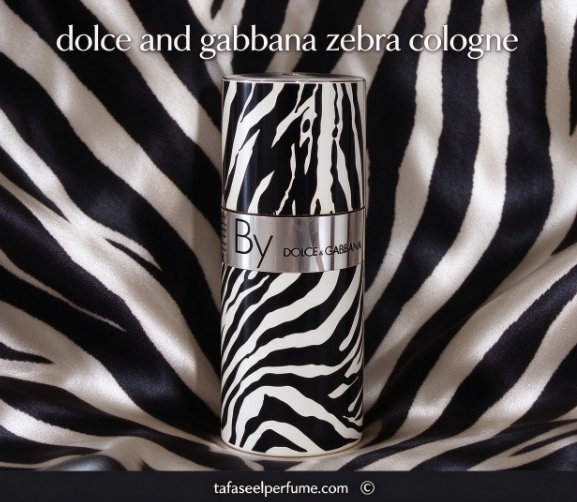
- Dolce & Gabbana Zebra Cologne: The Complete Guide to By Man, the Barbershop Oriental That Refuses to Be Tamed: Dolce & Gabbana Zebra Cologne is not a phrase you will find on the brand’s current official price list. It is the nickname the fragrance community gave to By Man, a men’s scent launched in 1997 inside a bottle wrapped in black-and-white zebra stripes. For years it sat on shelves as a strange, dressy, spicy-aromatic outlier; then it vanished, prices on the secondary market climbed, and the zebra became a cult object.
Dolce & Gabbana Zebra Cologne is not a phrase you will find on the brand’s current official price list. It is the nickname the fragrance community gave to By Man, a men’s scent launched in 1997 inside a bottle wrapped in black-and-white zebra stripes. For years it sat on shelves as a strange, dressy, spicy-aromatic outlier; then it vanished, prices on the secondary market climbed, and the zebra became a cult object. In 2026 Dolce & Gabbana brought it back as By Man Re-Edition 1997, an Eau de Parfum that keeps the stripes and the barbershop heart but asks collectors a uncomfortable question: is it still the same animal?
This guide traces the scent from its 1990s origins through its discontinuation, its reputation as a “rare zebra” among vintage hunters, and the 2026 re-edition. It is written for anyone who has searched “Dolce and Gabbana Zebra Cologne,” landed on a listing with a three-digit price tag, and wondered whether the juice inside justifies the mythology.
Short Introduction: By Man — the cologne behind the zebra bottle — is a spicy-aromatic oriental built around nutmeg, black pepper, lavender, artemisia, amber, and guaiac wood. It smells like a barbershop that has been quietly trading in warm resins after hours: clean enough for a dress shirt, dark enough for a cold evening, and never loud enough to announce itself before you do. The original is discontinued and expensive; the 2026 Re-Edition is the closest thing to an official second chance.
Long Introduction: The story of the “Zebra Cologne” is inseparable from the story of 1990s Dolce & Gabbana. In that decade the house was not yet synonymous with the polished, mass-market flankers that would later dominate its fragrance catalogue. It was still willing to put animal prints on glass, release a men’s scent that leaned more barbershop than aquatic, and trust the public to keep up. By Man arrived in 1997, composed by Alberto Morillas, and it was never designed to be a crowd-pleaser in the modern sense. Its opening is dry spice — nutmeg and black pepper — rather than citrus brightness. Its heart is lavender and artemisia, which gives it a shaving-soap texture, but underneath that cleanliness sits amber and guaiac wood, warm and slightly smoky. The result is a fragrance that behaves like a well-groomed contradiction: polite at close range, vaguely animalic in its silhouette, and far more memorable than its modest distribution suggested.
When By Man was discontinued, it did what many great discontinued fragrances do: it became more desirable precisely because it was no longer available. Community reviews began describing it as a “rare black-and-white striped D&G Zebra,” a species “no longer seen in the wild” and “strongly threatened with extinction”. Sealed bottles commanded prices that had little to do with the original retail tag, and the zebra print — once a quirky design choice — became a visual shorthand for insider knowledge. The 2026 Re-Edition did not erase that history. It reframed it. The question for a new generation of wearers is whether the re-edition captures the scent’s peculiar balance, or whether the zebra now exists mainly as a very beautiful bottle with a familiar name on the label.
Paco Rabanne XS for Him: The Sharp, Green, Woody Signature That Still Cuts Through the Noise
1. What Does Dolce & Gabbana Zebra Cologne Smell Like?
2. The Zebra Bottle: Design, History, and the 1997 Original
3. By Man Re-Edition 1997: Is the New Zebra the Same Animal?
4. Performance, Occasion, and Who Should Wear It
5. Buying the Zebra: Discontinued Prices vs. the Re-Edition
Cologne Aeropostale: A Complete Guide to Affordable, Everyday Masculine Fragrance
1. What Does Dolce & Gabbana Zebra Cologne Smell Like?
The first thing to understand about the scent behind the zebra stripes is that it does not open like a conventional “cologne.” There is no burst of lemon or bergamot to reassure you. Instead, By Man begins with nutmeg and black pepper, and the effect is closer to dry spice cabinet than fresh citrus. The pepper is not sharp or sneezy; it reads more translucent, almost powdery, while the nutmeg brings a warm, rounded spiciness that sets the tone for everything that follows. This opening can feel slightly old-fashioned to noses trained on blue aquatic masculines, and some wearers even find the first few minutes lean a touch feminine or androgynous — not because the scent is floral, but because the spice is soft rather than aggressive.
Within twenty to thirty minutes, the composition shifts into what reviewers consistently describe as a “masculine spicy barbershop style” softened by a creamy sweetness. The barbershop association comes from lavender and artemisia: lavender gives that clean, shaving-foam familiarity, while artemisia adds a green, slightly bitter herbal edge. But this is not a simple “clean” fragrance. Beneath the lavender sits a current of Hedione-like softness and a warm, ambery glow that prevents the scent from smelling like soap. One long-time reviewer describes the drydown as “warm, ambery, powdery, slightly floral goodness,” a phase in which the fragrance stops smelling like a traditional barbershop and starts smelling like a quiet oriental. The official base notes are amber and guaiac wood, and guaiac is important: it gives the finish a subtle smoky-woody texture, dry rather than sweet, so the fragrance never collapses into vanilla or syrup. Older formulations are also remembered for sandalwood, tobacco, and a hint of leather in the base, and it is precisely those darker materials that give vintage By Man its reputation for depth.
If you want a one-sentence scent profile: spicy nutmeg and pepper up top, a lavender-artemisia barbershop heart, and an amber-guaiac drydown that is warm, slightly powdery, and far more refined than the zebra print might suggest. It is not a fresh fragrance, and it is not a sweet fragrance in the modern gourmand sense. It belongs to the same general universe as barbershop orientals — clean and dirty at the same time, familiar and slightly strange, the kind of scent that makes people lean in rather than step back.
2. The Zebra Bottle: Design, History, and the 1997 Original
The zebra pattern is not a marketing afterthought. In the 1990s, animal prints were part of Dolce & Gabbana’s visual vocabulary, and By Man and By Woman were released as a matched pair: zebra stripes for him, leopard print for her. The original By Man bottle was a cylinder wrapped in black-and-white zebra stripes, housed in a silver canister that made it look like a piece of fashion packaging rather than a traditional perfume flacon. Some observers have noted the cylinder’s resemblance to Jean Paul Gaultier’s sailor-striped torso bottles, but where Gaultier’s design was playful and pop, the D&G zebra was colder, more graphic, and arguably more excessive. It looked like something that belonged in a Helmut Newton photograph, not on a dressing table.
The original By Man was composed by Alberto Morillas, one of the most prolific perfumers of the modern era, and it was released into a market that was increasingly divided between clean aquatics and richer orientals. By Man chose the latter path, but with a barbershop twist. It was never a bestseller in the way that, say, Light Blue would become for the brand. It sat in department stores, was overlooked by many shoppers, and developed a quiet following among people who appreciated its unusual combination of lavender and amber. When it was discontinued, the zebra bottle became a collector’s object almost by accident. The scent’s scarcity did the rest.
By the early 2020s, community discussions around By Man were dominated by two themes: reformulation anxiety and price. A poster on Basenotes noted that the original “smelled great but never lasted more than three hours on me,” while others wondered whether any re-release would remain faithful to the 1997 formula. Parfumo reviews described the original as “not loud, but always present in the right measure with good longevity,” a characterization that sits somewhere between the “three hours” complaint and the more generous memories of vintage wearers. This disagreement is useful context for anyone approaching the Re-Edition: the original was never a beast-mode fragrance. Its appeal was in its texture and its balance, not in projection that filled a room.
3. By Man Re-Edition 1997: Is the New Zebra the Same Animal?
The 2026 By Man Re-Edition 1997 is an Eau de Parfum, and it arrives with a bottle that has been redesigned from the original cylinder into a more sculptural rectangular flacon. The zebra motif remains — wrapped around the glass, with a black textile label embroidered in silver and a black cap with silver detailing — but the overall presentation is more “understated luxury” than “1990s club-kid provocation”. Dolce & Gabbana’s own copy frames it as part of the Re-Edition Collection, a project that revisits archival fragrances “with a contemporary eye”. That phrase, “contemporary eye,” is doing a lot of work. It signals both continuity and revision.
The official note pyramid for the Re-Edition is: Top — nutmeg, black pepper; Heart — artemisia, lavender; Base — amber, guaiac wood. Compare that to the original, which is commonly documented with the same top and heart notes but a richer base that included sandalwood, tobacco, leather, amber, and guaiac wood. Tobacco, leather, and sandalwood are no longer explicitly listed in the new pyramid. This does not automatically mean they have been removed; published pyramids are selective, and a perfumer can create leathery or creamy-woody impressions without naming those materials. But the omission is worth noticing. Those darker base notes are part of why vintage By Man is described as having depth and a slightly “dusty and dry” quality alongside the amber warmth. If the Re-Edition leans more heavily on amber and guaiac alone, it may read cleaner, woodier, and perhaps less “vintage” than the original.
Dolce & Gabbana’s decision to reissue By Man is part of a broader pattern in the fragrance industry: discontinued scents acquire cultural value, and brands eventually respond to that value with archival re-releases. The risk is that the re-release becomes a tribute to the idea of the fragrance rather than a faithful reconstruction of it. For someone who never smelled the 1997 original, the Re-Edition may simply smell like a very good spicy-aromatic Eau de Parfum — lavender, amber, a touch of smoke, and a dry spice opening. For someone who did, the comparison will be unavoidable, and the missing tobacco and leather will be the first place the nose goes. The honest position is that the Re-Edition is the only officially sanctioned way to experience the zebra scent today without paying collector prices. Whether it is the “same” fragrance is a question that only a side-by-side test can answer, and even then memory and batch variation will complicate the verdict.
4. Performance, Occasion, and Who Should Wear It
On Fragrantica, the original By Man holds a user rating of 4.51 out of 5 from more than 760 votes, with the majority of longevity voters choosing “long lasting” or “eternal” and the majority of sillage voters choosing “moderate” or “strong”. That data tells a more nuanced story than either the “three-hour” complaint or the “beast mode” hype. The original was capable of lasting a full workday on many skins, but it was not a projection monster. It sat close enough to be a personal scent, with enough radiance to be noticed by someone leaning in. The Re-Edition, being an Eau de Parfum, is positioned to deliver at least comparable longevity, though the absence of the heavier tobacco-leather-sandalwood base may make it feel slightly less dense than vintage bottles.
In terms of occasion, the zebra scent is dressy and subtle rather than casual and loud. It pairs naturally with a shirt, a jacket, and cool weather. It is not a gym fragrance, and it is not a beach fragrance. It works in professional settings because the lavender keeps it clean, and it works in the evening because the amber and guaiac keep it warm. Some wearers find the opening slightly androgynous, which makes it more versatile than a strictly “masculine” barbershop scent; it can be worn by anyone who enjoys lavender-spice-amber structures. The fragrance’s biggest limitation is also its signature: it is not refreshing. If you reach for cologne to feel cold and citric, By Man will feel like the wrong tool. If you reach for cologne to feel composed, textured, and quietly distinctive, it will feel exactly right.
Best Citrus Fragrance for Men: 7 Picks That Prove Fresh Can Have Depth
5. Buying the Zebra: Discontinued Prices vs. the Re-Edition
The original By Man is no longer in production, and the secondary market reflects that. A 100 ml bottle has been observed selling for around €270, with €300–400 described as “often common prices” in collector circles. Basenotes users reported a private-collection release at $350 for 100 ml in New York boutiques, and even before the Re-Edition, the fragrance’s scarcity made blind buys risky: vintage bottles can lose their top notes, turn sour, or arrive as counterfeits. Paying collector prices for a 1990s bottle is an act of faith. The zebra may be beautiful, but the juice inside is almost thirty years old, and lavender-forward fragrances are not always graceful agers.
The Re-Edition changes the calculation. It is the only version you can buy new, with a known provenance, a return policy, and a batch code that does not require a forum thread to decode. It will not satisfy someone who is chasing the exact smell of a 1999 batch, and it may not satisfy someone who remembers the original’s tobacco-leather base with more affection than accuracy. But it gives new wearers a legitimate entry point into one of Dolce & Gabbana’s strangest and most characterful masculine releases. If you have never smelled the zebra, the Re-Edition is the sensible first stop. If you have, treat the comparison as an experiment rather than a verdict. The original was a species adapted to its moment; the Re-Edition is a captive-bred relative released into a different climate. Both can be worth knowing.
Versace Eros for Men 3.4 oz: A Complete Guide to the Iconic Aromatic Fougère
Frequently Asked Questions About Dolce & Gabbana Zebra Cologne
Is Dolce & Gabbana Zebra Cologne still available?
The original By Man is discontinued, but Dolce & Gabbana released By Man Re-Edition 1997 in 2026 as an Eau de Parfum. The Re-Edition is the current production version and the only official way to buy the scent new. Original bottles are available through resale markets, but prices are high and authenticity/condition are concerns.
Why is it called “Zebra Cologne”?
Because the bottle is wrapped in black-and-white zebra stripes. The fragrance’s official name is By Man, but the community nickname “Zebra” stuck because the print is the most recognizable thing about the packaging. The 2026 Re-Edition keeps the zebra motif on a redesigned sculptural flacon.
What does the Re-Edition smell like compared to the original?
The published pyramids share the same top notes (nutmeg, black pepper) and heart (artemisia, lavender), but the Re-Edition’s base lists only amber and guaiac wood, while the original is commonly documented with additional sandalwood, tobacco, and leather. The Re-Edition may therefore feel slightly cleaner and woodier, with less of the vintage “dusty” depth that collectors associate with older batches. A side-by-side test is the only way to know how your nose reads the difference.
Is By Man / Zebra Cologne unisex?
Dolce & Gabbana markets it as a men’s fragrance, and community voting skews masculine, but the lavender-amber-spice structure is wearable by anyone. Some reviewers note that the opening can lean slightly androgynous or feminine, and the drydown is more “warm and powdery” than aggressively macho. Wear it if you like the notes, not because of the gender label on the box.
What is a good alternative to the discontinued Zebra Cologne?
If you want the barbershop-lavender-meets-amber structure, the Re-Edition is the closest official option. In the wider market, fragrances that combine lavender, spice, and a warm base — such as aromatic fougères with an oriental twist — occupy similar territory. Community comparison pages link By Man to scents like Valentino Very Valentino Pour Homme and Parfums Vintage Intrigo Devastante, though none are exact substitutes. The practical answer is to sample the Re-Edition first and use it as your reference point before chasing vintage bottles.
Is the original zebra bottle worth collecting?
It is worth collecting if you value the object as much as the juice: the cylinder, the zebra print, and the 1990s D&G design language are genuinely distinctive. But from a wearability standpoint, vintage bottles are a gamble. Top notes can degrade, and the price premium is driven by scarcity rather than guaranteed quality. A sealed bottle with a known batch code is the safest vintage purchase; an opened bottle should be bought with the expectation that the opening may have softened. The Re-Edition lets you enjoy the idea of the zebra without taking that risk.


