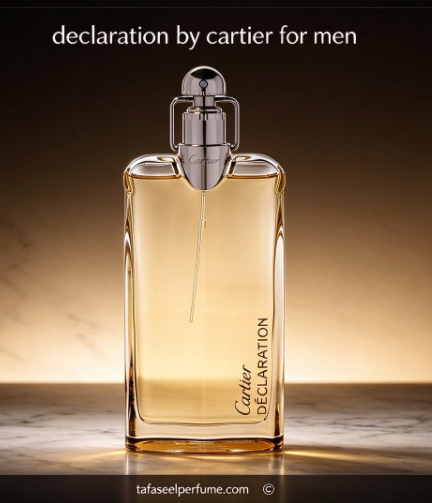
- Declaration by Cartier for Men: A Spicy-Woody Signature That Still Speaks Volumes After 25 Years: Some fragrances chase trends. Declaration by Cartier for Men set one. Launched in 1998 and composed by Jean-Claude Ellena, this bitter-orange-and-cedar construction redefined what a “fresh” masculine could smell like—earthy, transparent, and quietly assertive.
Some fragrances chase trends. Declaration by Cartier for Men set one. Launched in 1998 and composed by Jean-Claude Ellena, this bitter-orange-and-cedar construction redefined what a “fresh” masculine could smell like—earthy, transparent, and quietly assertive. If you have ever wondered why a single scent has survived reformulations, flankers, and shifting tastes without losing its core identity, the answer is written into Declaration’s DNA: it does not try to please everyone, and that is precisely why it endures.
Declaration by Cartier for Men sits at a rare intersection: it is widely recognized as a modern classic, yet it never became a generic crowd-pleaser. Its skeleton is deceptively simple—bitter orange and bergamot up top, a spiced heart of cardamom and coriander, and a dry base of cedar, vetiver, oakmoss, and leather. What Ellena did with that skeleton, however, was revolutionary for designer perfumery in the late 1990s: he made woods feel transparent, spices feel airy, and a “mature” structure feel effortlessly wearable. The result is a fragrance that reads as clean without being sporty, spicy without being heavy, and formal without feeling stiff. Across its EDT, EDP, and Parfum concentrations, Declaration has become a reference point for anyone who wants a signature that projects competence rather than cologne. And while it is filed under Men’s Perfume, its bitter-citrus-wood clarity has earned it a devoted unisex following—a fact that says more about its balance than any marketing copy ever could.
Article Contents
1. The Scent DNA: Bitter Orange, Cardamom, and Dry Cedar
2. Jean-Claude Ellena’s Quiet Revolution
3. EDT vs. EDP vs. Parfum: Finding Your Declaration
4. Performance and Longevity: What to Expect on Skin
5. How It Wears Across Seasons and Dress Codes
6. Who Should Wear It—and Who Might Not
7. The “Shared” Appeal: Why It Crosses the Gender Line
8. Where It Sits in the Fragrance Landscape
1. The Scent DNA: Bitter Orange, Cardamom, and Dry Cedar
The opening of Declaration by Cartier for Men is often described as a “bitter citrus blast,” but that shorthand undersells its precision. Bitter orange and bergamot arrive with a pithy, almost green sharpness, while caraway and artemisia add a dry, herbal shadow that keeps the citrus from feeling like a glass of juice. Within minutes, cardamom and coriander push forward—not as a sweet chai accord, but as a cool, slightly peppery spice that feels structural rather than gourmand. The base is where Declaration truly separates itself from its peers: Tahitian vetiver and cedarwood form a lean, mineral-tinged woodiness, with oakmoss and a whisper of leather supplying an earthy, old-school backbone. There is no amber overload, no vanilla cushion, and no “blue” freshness to soften the edges. What remains is a scent that smells like a well-pressed shirt on skin that has spent the morning outdoors—clean in a way that has nothing to do with soap.
2. Jean-Claude Ellena’s Quiet Revolution
To understand why Declaration matters, you have to understand what Ellena was doing in the late 1990s. He had already composed Bvlgari Eau Parfumée au Thé Vert (1992), a fragrance that treated tea and citrus with a transparency that felt almost Japanese. Declaration applied that same watercolor logic to a woody-spicy masculine structure. Where conventional men’s woods relied on density and sweetness to project, Ellena used Iso E Super and a calibrated dose of aromatics to make the scent radiate without weight. It was a quiet revolution: the fragrance felt present without being loud, distinctive without being theatrical. That approach would reach an even wider audience with Terre d’Hermès (2006), which shares Declaration’s mineral-cedar DNA and is often discussed in the same breath by fragrance communities. For collectors who care about authorship, Declaration is not just a Cartier release; it is a pivotal chapter in the career of one of the most influential perfumers of the modern era. Browsing Brands with an eye for this kind of lineage reveals how few designer releases carry this level of authorial signature.
3. EDT vs. EDP vs. Parfum: Finding Your Declaration
The Declaration line is not a single scent but a family of concentrations, and the differences matter. The original Eau de Toilette (1998) is the brightest and sharpest: citrus-forward, with a pronounced cardamom-cumin spice and a dry cedar-vetiver finish that sits close to the skin after the first hour. The Eau de Parfum (2024) pushes cardamom and cinnamon to the foreground, trading some of the EDT’s bitter-citrus clarity for a warmer, smokier, tea-like richness; it also extends longevity well beyond the EDT’s already respectable 6–7 hours. The Parfum (2018) is the heaviest and most leathery expression, with a denser amber-balsamic backbone that some veterans find less faithful to the original’s airy architecture. If you want the reference version—the one that earned Declaration its reputation—start with the EDT. If you love cardamom and want a longer-wearing, more autumnal interpretation, the EDP is the sweet spot. The Parfum is best approached as a distinct fragrance that happens to share a name, not as an “upgrade” in the conventional sense. Travel-friendly formats and discovery options often sit alongside Mini Size & Gift Sets, which is a low-risk way to audition the concentrations before committing to a full bottle.
4. Performance and Longevity: What to Expect on Skin
Declaration is not a “beast mode” projector, and that is by design. On average skin, the EDT delivers 6–7 hours of wear with a couple of hours of noticeable projection before settling into a skin-close spicy-woody veil. The EDP pushes into the 8+ hour range with moderate sillage, making it a safer choice for long workdays or cool-weather evenings. The Parfum can exceed 10–12 hours on some wearers, but its density means a lighter trigger is advisable. Across all versions, the dry-down is where Declaration becomes most intimate: the tea and vetiver notes emerge, the spice softens, and what lingers is a dry, slightly earthy woodiness that feels like a second skin rather than a cloud of perfume. This trajectory makes it an excellent office fragrance—present enough to be noticed in conversation, polite enough not to announce itself from across the room.
5. How It Wears Across Seasons and Dress Codes
One of Declaration’s quiet advantages is its seasonal range. The EDT’s bitter-citrus opening and transparent woods make it more than capable in spring and early summer, especially in climates where heavy ambers feel suffocating. The cardamom-cumin heart and dry cedar base give it enough texture for autumn, and the EDP’s cinnamon-tea warmth extends the line comfortably into winter. In terms of dress code, Declaration is unusually versatile: it works with a button-down and blazer, but it also does not feel out of place with a plain crewneck and jeans. It is not a beach fragrance, and it is not a black-tie statement, but for the vast middle ground of daily life—meetings, dinners, commutes, weekends—it behaves like a well-cut wardrobe staple. If you are building a rotation around Spa & Fragrance or looking for a signature that does not demand a specific occasion, Declaration is a strong candidate.
6. Who Should Wear It—and Who Might Not
Declaration rewards wearers who prefer structure over sweetness and texture over sheer freshness. If your taste runs toward dry woods, bitter citrus, and restrained spice—think Terre d’Hermès, Eau d’Hermès, or even certain tea fragrances—Declaration will feel immediately legible. It also suits people who want a masculine-leaning scent that does not rely on aquatic “blue” accords or sweet amber-woods. On the other hand, if you are looking for a compliment magnet with a gourmand edge, a loud club fragrance, or a scent that smells overtly “youthful” in the current designer sense, Declaration may come across as too austere, too spicy, or simply too mature. Some reviewers also note that the cumin and caraway can read as “sour” or “body-odor-adjacent” on certain skin types, especially in the first hour. That is not a flaw in the composition; it is the price of a fragrance that chooses character over universal likability. Sampling on skin—not paper—is essential here.
7. The “Shared” Appeal: Why It Crosses the Gender Line
Bloomingdale’s describes Declaration as “made for men, but loved by women,” and that phrasing is more than marketing. The fragrance’s lack of heavy sweetness, its bitter-citrus top, and its dry, almost tea-like base make it feel gender-agnostic in practice. Many women who prefer woody-spicy structures over floral or gourmand profiles wear Declaration as a signature, and the EDT in particular has a transparency that reads as effortlessly unisex on skin. This crossover is not an accident of contemporary “genderless” marketing; it was built into the scent’s architecture from the beginning. For households that share a fragrance wardrobe, or for anyone exploring Unisex Perfume beyond the usual citrus-musk templates, Declaration is a reference point worth knowing.
8. Where It Sits in the Fragrance Landscape
Declaration does not dominate “top 10” lists the way some louder designer icons do, but its influence is visible across the woody-spicy category. It arrived at a moment when masculine perfumery was split between aquatics and sweet orientals, and it offered a third path: dry, transparent, and intellectually satisfying. Twenty-five years later, that path has been refined by Ellena’s own Terre d’Hermès, by niche houses that treat spice and woods with similar restraint, and by a generation of wearers who discovered Declaration as an “entry point” into more textured masculines. In the context of Ranking conversations, it occupies a specific niche: not the most complimented, not the loudest, but one of the most respected. And for anyone assembling a collection around Perfume Gift Sets or looking for a fragrance that feels like a tool rather than a costume, that respect is precisely the point.
Final Verdict:
Declaration by Cartier for Men is not a fragrance that asks to be loved at first sniff. It asks to be understood—and then, gradually, it becomes difficult to replace. Its bitter-orange opening, cardamom-spiced heart, and dry cedar-vetiver base form a structure that feels as relevant in a modern wardrobe as it did in 1998. If you value clarity, restraint, and a scent that smells like a person rather than a product, Declaration is still one of the most articulate answers designer perfumery has ever produced. For those who prefer to explore through Perfume writing and firsthand sampling rather than hype cycles, it remains an essential reference.


