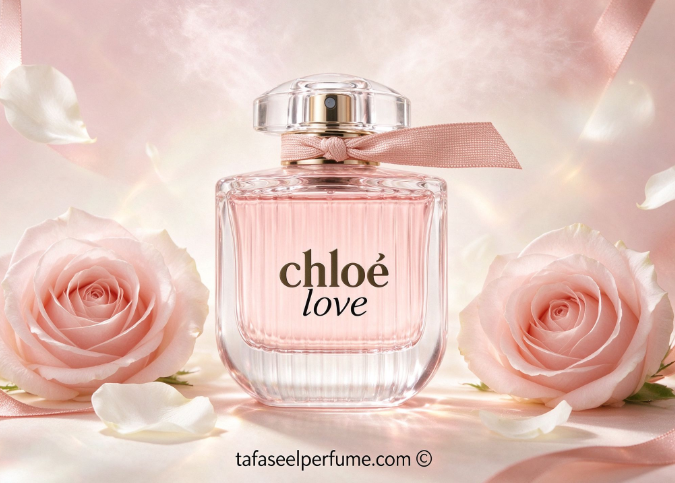
- Chloé Love — The Powdery Iris That Refused to Disappear: Chloé Love is not the Love Story you see on every shelf. Released in 2010 and now discontinued, it is a powder-forward iris floral that smells like warm rice, soft violets, and clean skin — intimate, strange, and quietly unforgettable.
Long Intro: There are discontinued fragrances that fade into footnotes, and then there is Chloé Love. Launched in 2010, composed by Louise Turner and Natalie Gracia-Cetto, and pulled from production years later, Love sits at a strange intersection: too powdery for the mass market, too distinctive to be forgotten. It opens with a peppery orange blossom that feels almost edible, then collapses into a bouquet of iris, lilac, wisteria, and hyacinth, all resting on a base of basmati rice, talc, and musk. The result is not a “fresh floral” or a “date-night gourmand.” It is the smell of clean linen folded into a wooden drawer, of cosmetic powder pressed against warm skin, of a presence that is felt before it is named. Love has become a cult reference for people who want a powdery floral that does not shout — and a cautionary tale for anyone who discovers it too late. The sections below break down what it actually smells like, why it is so often confused with Love Story, how it behaves on skin, and what it takes to own a bottle in 2026.
Jump to Section:
1. The Anatomy of Chloé Love: Iris, Rice, and the Art of Powder
2. Chloé Love vs. Love Story: Two Very Different Kinds of “Romance”
3. Who Chloé Love Is For — and When It Actually Works
4. The Discontinued Reality: Why Love Still Has a Cult Following
5. Layering Chloé Love: What Works and What Ruins It
6. Buying Chloé Love in 2026: Bottles, Batches, and Blind Buys
1. The Anatomy of Chloé Love: Iris, Rice, and the Art of Powder
Chloé Love is built on a contradiction that should not work but does: it is both clean and edible-adjacent, both floral and starchy. The opening is brief but bright — orange blossom arrives with a citrusy sweetness, cut by a spark of pink pepper that keeps the top from feeling syrupy. Within fifteen minutes, the composition shifts. Iris absolute takes the center, and it is not the cold, metallic iris of niche perfumery; this is warm, violet-soft iris, the kind that smells like the inside of a makeup compact. Around it, lilac and wisteria add a green-floral whisper, while hyacinth contributes a lifted sweetness that borders on the nostalgic.
The real signature, however, is the base. Basmati rice, talc, and powdery musks create a drydown that is genuinely unusual in feminine perfumery — starchy, skin-like, almost tactile. It does not project like a cloud; it settles into the skin and radiates in a tight, warm radius. One wearer describes it as “a pure warm, creamy embrace,” while another calls it a “powder bomb,” and both are correct depending on your tolerance for iris and rice powder. If you want a reference point, think of the powderiness in Dolce & Gabbana Light Blue Lotion — not in scent, but in the soft-focus, skin-finish effect Love creates. The difference is that Love replaces citrus freshness with floral powder and starchy warmth, making it far more intimate and far less “safe” for a blind buy.
The arc of the wear is gentle: no dramatic morphing, no loud transition. The florals soften over four to six hours, the rice and talc become more pronounced, and the musk holds the drydown in place without turning it into a laundry detergent finish. What remains at hour eight is not a “perfume smell” but a skin smell with a powdered shadow — which is precisely why people who love it tend to describe it in emotional terms rather than note lists.
2. Chloé Love vs. Love Story: Two Very Different Kinds of “Romance”
The confusion is understandable and almost universal. Chloé released Love in 2010, then launched Love Story in 2014, and the shared word “Love” has led countless shoppers to buy the wrong bottle. They are not flankers. They are not variations. They are two different fragrances with two different temperaments, and the difference matters if you are trying to replace one with the other.
Love Story is built around neroli, orange blossom, and stephanotis jasmine, with a cedar base that gives it a soapy, lifted, almost “clean-laundry” quality. It is pretty, hyper-feminine, and more outgoing — the kind of fragrance that announces itself politely but clearly. Love, by contrast, is drier, powderier, and far less interested in being noticed. Its orange blossom is softened by pepper and iris; its heart is violet-soft and rice-powdered; its drydown is closer to the skin than to the air. As one Fragrantica reviewer puts it, Love Story lacks “the dry, powdery aspect” of Love and smells “much more pleasant and softer” — which is a diplomatic way of saying that Love is the stranger, more specific, more acquired taste.
If you are shopping for the floral, fresh, orange-blossom-forward Chloé that appears in most department-store displays, you want Love Story. If you are chasing the powdery, iris-led, rice-and-musk scent that people describe as “warm,” “creamy,” and “like skin,” you want Love — and you will likely have to hunt for it. This distinction is the single most important thing to understand before spending money on either name.
3. Who Chloé Love Is For — and When It Actually Works
Chloé Love is not a signature-scent candidate for everyone, but for a specific kind of wearer it becomes deeply habitual. The community data points in a clear direction: it is worn most heavily in winter (52%) and fall (29%), most often at night (57%) and on dates (32%), and the dominant vibes people tag are sexy, elegant, and bold rather than “fresh” or “office-safe”. That does not mean you cannot wear it at 9 a.m. in April, but the fragrance itself has a weight and a warmth that feel more natural when the air is cool and the context is intimate.
The powder is the dividing line. If you already love iris-forward scents, rice-powder drydowns, or the cosmetic softness of certain vintage florals, Love will feel like a discovery. If your taste runs toward crisp citruses, clean musks, or high-projection gourmands, the same powder will read as “old-fashioned” or “overwhelming.” This is not a fragrance that rewards a quick spray on the wrist at a counter; it needs a full wear, ideally on skin, over several hours, to reveal whether the rice-and-iris base feels like comfort or clutter.
Where it excels is in low-light, close-quarters situations: a dinner that runs long, a cold-weather evening, a day when you want to smell “finished” without smelling “perfumed.” The moderate-to-intimate sillage is a feature, not a flaw — it means the fragrance stays in your own orbit rather than filling a room. If you are building a wardrobe around presence rather than performance, Love fits alongside Vince Camuto Femme as a quiet-confidence floral, though Love is powderier and less chypre-driven. It is also a natural companion to the kind of women’s perfume curation that prioritizes texture and skin-feel over loud projection.
4. The Discontinued Reality: Why Love Still Has a Cult Following
Chloé Love was discontinued, and that fact shapes everything about how it is discussed, bought, and worn today. On one perfume review site, the verdict reads: “Love by Chloé is either a divine, unique scent or an overpowering powder bomb, but almost everyone agrees it’s a tragedy it was pulled from shelves”. That sentence captures the paradox. The same quality that made Love commercially vulnerable — its uncompromising powder, its refusal to be a “pretty fresh floral” — is exactly what made it irreplaceable for the people who connected with it.
Discontinuation has not erased Love; it has concentrated its audience. The fragrance now lives in a secondary economy of partial bottles, backstock, and careful decants, and the conversation around it has become more archival than promotional. People do not stumble onto Love at a mall counter anymore. They read about it in a forum thread, buy a sample from a stranger, and then spend months deciding whether the powder is a revelation or a mistake. That slower, more deliberate discovery process is part of the fragrance’s identity now. It is not a crowd-pleaser; it is a reference point for a particular taste.
There is also a quieter cultural argument for why Love persists. It belongs to a lineage of feminine fragrances that treat powder as a material rather than a byproduct — not “powdery” as a vague descriptor, but iris, rice, talc, and musk used deliberately to create a skin-like finish. That approach has become rarer in a market tilted toward fruit, sweetness, and immediate projection. Love is a reminder that a fragrance can be quiet, strange, and still worth keeping. If you want to understand where it sits in the broader landscape, browsing a perfume ranking or brand archive makes the contrast visible: Love is not a top-seller, but it is a permanent footnote in the conversation about powdery florals.
5. Layering Chloé Love: What Works and What Ruins It
Layering a discontinued powder bomb is a risky move, but Love is more flexible than its reputation suggests — provided you respect its two non-negotiables: do not add sweetness, and do not add sharp citrus. The rice-and-iris base is already a complete composition; it does not need a “boost.” What it can use, in the right context, is a textural partner that either extends the skin-like quality or adds a controlled contrast.
The safest layering is with clean, low-sweetness musks. A single spray of a white musk or a skin-scent musk on the chest, with Love applied to the wrists and neck, stretches the powder into a softer, more lived-in finish without changing the fragrance’s character. Woody ambers can also work in cold weather: a light cedar or a dry amber in the base adds warmth and a trace of darkness that complements the rice-powder drydown. What fails, almost universally, is fruit-forward or gourmand layers. Vanilla, caramel, berry, and peach all collide with the starchy powder and turn Love into something muddled and sweet — the opposite of what makes it distinctive.
If you are experimenting with layering, treat Love as the base or the anchor, not the top note. Apply it first, let it settle for ten minutes, then decide whether the second fragrance is actually adding something or simply covering the powder. The goal is not to make Love “last longer” — it already lasts six to ten hours on most skin — but to shift its mood. A unisex perfume with a dry, woody profile can push Love toward something more austere; a body art or spa & fragrance product with a neutral base can extend the skin-scent effect without introducing competing notes.
6. Buying Chloé Love in 2026: Bottles, Batches, and Blind Buys
Buying Chloé Love in 2026 requires a different mindset from buying a current release. The fragrance is no longer reliably available through mainstream retail, and the secondary market is the primary market. That means batch codes, bottle condition, and seller transparency matter more than the box. Before you buy, ask for a photograph of the batch code etched or printed on the bottle (not just the box), confirm whether the bottle has been stored upright and away from light, and treat any listing that describes the scent as “rare” or “vintage” without specifics as a risk rather than a selling point.
For a first experience, a decant or a partial bottle is almost always the smarter move. Love is a fragrance with a strong, specific point of view, and the powder-to-floral ratio varies noticeably across skin types. A 5ml or 10ml decant lets you wear it three or four times in different weather and contexts before committing to a full bottle. If you do buy full-size, prioritize sellers who offer returns or who have a documented history in fragrance communities. The mini size & gift sets category is sometimes a legitimate route to authentic older stock, but it is not a guarantee — always verify the batch code and the bottle’s condition.
One final caution: do not blind-buy Love based on the name alone. The “Love” in the title suggests romance, sweetness, and accessibility; the actual fragrance is powdery, starchy, and intimate, with a powder intensity that a significant minority of wearers find overwhelming. If you already enjoy iris-forward or rice-powder fragrances, the risk is low and the reward is a genuinely unusual skin scent. If you are looking for the fresh orange-blossom romance of Love Story, Love will feel like a different fragrance entirely — because it is. For broader context on how discontinued and niche-adjacent bottles are priced and sourced, the perfume articles archive is a useful starting point before you spend.
Frequently Asked Questions About Chloé Love
1. Is Chloé Love discontinued?
Yes. Chloé Love was discontinued, and it is no longer part of the brand’s regular lineup. It is available primarily through secondary market sellers, partial bottles, and decants.
2. Is Chloé Love the same as Chloé Love Story?
No. They are entirely different fragrances. Love (2010) is a powdery iris-and-rice composition; Love Story (2014) is a neroli-and-orange-blossom floral with a soapy, lifted character. The shared word “Love” is the source of constant confusion.
3. How long does Chloé Love last on skin?
Most wearers report 6 to 10 hours of longevity, with moderate to intimate sillage. On very dry skin it may fade faster; on moisturized skin it can last through a full workday.
4. What season is Chloé Love best for?
It is most often worn in winter and fall, and most frequently at night. The powder and rice notes feel natural in cool air, though some wearers use it year-round in the evening.
5. Is Chloé Love too powdery?
That depends entirely on your tolerance for iris, talc, and rice powder. Love is a powder-forward fragrance; people who dislike cosmetic or starchy textures often find it overwhelming, while powder-lovers describe it as warm, creamy, and skin-like.


