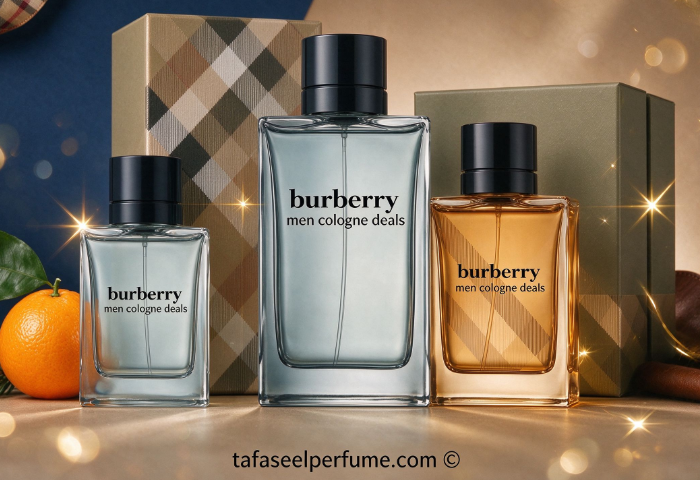
- Burberry Men Cologne Deals: A Buyer's Guide to Paying Less Without Getting Burned: The realistic range: a legitimate discount on Burberry men's cologne usually means paying $55–$75 for 100 ml of the core Mr. Burberry line, or $70–$95 for Hero and its heavier concentrations, against full retail of roughly $100–$130. Anything under $45 for a sealed 100 ml is not a deal — it is either an old batch, an unauthorised seller, or a counterfeit.
The realistic range: a legitimate discount on Burberry men's cologne usually means paying $55–$75 for 100 ml of the core Mr. Burberry line, or $70–$95 for Hero and its heavier concentrations, against full retail of roughly $100–$130. Anything under $45 for a sealed 100 ml is not a deal — it is either an old batch, an unauthorised seller, or a counterfeit. The deals that genuinely exist come from gift sets, off-price chains, duty-free, and seasonal promotions, in roughly that order of reliability.
Burberry is an unusual case in the discount landscape. It is a prestige designer brand with real distribution control, which means the authorised channels rarely discount deeply and almost never below a floor. But it is also a brand whose older releases have cycled into off-price inventory in enormous volumes, and whose gift sets get liquidated every January at prices that make single bottles look expensive. The result is a market with a wide spread between the best real price and the standard shelf price — wide enough that knowing where to look is worth more than any coupon.
This guide maps that spread. It covers what each bottle in the men's range actually costs at a fair price, where the genuine discounts cluster by product and by calendar, which releases are worth chasing and which are simply old stock being cleared, and how to tell a legitimate bargain from a counterfeit or a stale batch. One recommendation up front: buy gift sets in January, off-price bottles of the classics year-round, and never pay full retail for Mr. Burberry Indigo.
1. What Actually Counts as a Burberry Deal — the four legitimate discount channels, and the ones that are traps.
2. Price Floors: What Every Bottle Should Cost — a fair-price reference for the whole men's range.
3. The Mr. Burberry Line: Where the Deals Cluster — the heart of the men's business and its discount behaviour.
4. Burberry Hero: The New Pillar and Its Price Curve — why the newest releases are the worst deals.
5. The Classics: London, Brit, Touch, Weekend — where the deepest legitimate discounts live.
6. Gift Sets: The Single Best Value Play
— the arithmetic that makes a box cheaper than a bottle.
7. Off-Price Chains and Discounter Channels
— how to shop them without buying stale stock.
8. Duty-Free, Coupons, and Seasonal Timing — the calendar that determines your best price.
9. Counterfeit Risk and How to Verify a Bargain
— three checks before you pay.
1. What Actually Counts as a Burberry Deal
There are exactly four legitimate ways the price comes down. Gift sets bundle a bottle with a body product or a second smaller spray, and after the holiday season they are liquidated at a fraction of their original combined value — frequently less than the standalone bottle cost. Off-price retail absorbs overstock and discontinued lines and sells them at 30–50% below retail with genuine stock and intact codes. Duty-free removes point-of-sale taxation and typically lands 10–20% under high street. Seasonal promotions at major beauty retailers occasionally apply a sitewide percentage that technically covers the brand, and those are the deepest authorised cuts most shoppers will ever see.
Everything else deserves suspicion. Marketplace listings at 60% off, "wholesale" sites, social sellers with stock photos, and auctions with no batch code are not deals — they are the counterfeit market, and Burberry is heavily targeted because the check pattern is easy to fake and the brand carries enough recognition to make a bargain feel plausible. There is no legitimate supply chain that delivers a current-season 100 ml Mr. Burberry to your door for $40. If a seller claims otherwise, the bottle is not what the box says.
The distinction matters because the counterfeit problem is not evenly distributed across the range. The bestselling, most recognisable bottles — Mr. Burberry EDT, Hero, London — are the most faked. The slower, older releases are less attractive to counterfeiters and correspondingly safer to buy at a discount, which is one reason the classics represent the best genuine value in this brand.
For a sense of how Burberry's men's releases compare with the wider field before you spend, our Men s Perfume index covers the competition at every price point.
2. Price Floors: What Every Bottle Should Cost
Knowing the floor is the whole game. Full retail for the Mr. Burberry core line runs roughly $100–$120 for 100 ml and $75–$85 for 50 ml; a fair discount price is $55–$75 for the 100 ml. Hero launched higher, around $110–$130 for 100 ml, with the Eau de Parfum and Parfum concentrations pushing to $140–$170 — and the discount curve on those is much shallower because they are current. The classic releases — London, Brit, Touch, Weekend — sit lower at retail and can legitimately be found for $35–$55 at off-price.
Those floors are useful in both directions. If a price is above them, wait or shop elsewhere; Burberry almost always comes down eventually. If a price is far below them, stop and verify. The most common tell of a counterfeit is not a low price in isolation but a low price combined with unlimited availability of a current bestselling scent — because the actual inventory that would make such a discount possible does not exist.
One structural note: Burberry's pricing varies substantially by region. UK pricing on the same 100 ml bottle often converts meaningfully below the US figure, and Gulf and Asian travel retail frequently undercuts both. If you have any international exposure — a trip, a friend travelling, a family member abroad — that is often a better route to a genuine saving than any domestic promotion.
3. The Mr. Burberry Line: Where the Deals Cluster
The Mr. Burberry family is the commercial centre of the men's business, and it has four distinct expressions. The original Eau de Toilette (2016) is a fresh, green-woody composition built around grapefruit, cardamom, birch leaf and sandalwood — clean, slightly herbal, and very wearable. The Eau de Parfum (2017) deepens it with amber and vetiver and lasts considerably longer. Mr. Burberry Indigo (2018) pivots to a cool aquatic-woody profile, and Mr. Burberry Element goes greener and more mineral.
Where the deals sit is predictable once you understand the lifecycle. The original EDT is the volume seller and is discounted most often, but also most often counterfeited — buy it from authorised channels only. The EDP is the best-balanced of the four and the one most worth paying a fair price for; it appears in gift sets constantly and is frequently the cheapest route to 100 ml of it. Indigo is the weak link commercially: it never found a large audience, it gets cleared at steep discounts, and it is widely available at off-price for $50–$65. That is a genuine bargain if you like cool aquatic-woody scents, and a waste of money if you do not — so test it on skin before ordering at a discount you cannot smell first.
Element is the rarest of the four in discount channels and the least reliably stocked, which means the deals are sporadic rather than dependable. If you see it at a good price, verify the batch code and take it; if you do not, do not chase it.
If you want to browse the wider set of options these releases compete against, the Perfume article library reviews comparable green-woody and aquatic compositions across houses.
4. Burberry Hero: The New Pillar and Its Price Curve
Hero, launched in 2021, is the brand's modern pillar: a warm, woody-amber composition built around pine needles, bergamot, juniper and a trio of cedar facets at different intensities. It was heavily marketed, sits at the higher end of the men's range, and has since been extended into an Eau de Parfum and a Parfum concentration, each warmer and denser than the last.
Hero is the worst place to look for a deal, and the reason is simple: it is current, it is the brand's marketing focus, and the authorised channels protect its price. Discounts do exist, but they are modest — typically 15–25% during promotions rather than the 40%+ you can find on older lines. The Parfum concentration in particular holds its price and is rarely discounted at all, because the volume is small and the margin is high.
What does work is the gift-set route. Hero appears in holiday sets that pair the bottle with a travel spray or a body product, and those sets get liquidated in January at prices that undercut the standalone bottle. If you want Hero and can wait, that is the efficient path. If you want it now, expect to pay close to retail and treat the purchase as a full-price buy rather than a bargain hunt.
The concentration question is worth settling before you shop. Hero EDT is fresher and lighter, the EDP is the balanced centre, and the Parfum is the densest and sweetest. The EDP is the one most buyers should target, and it is also the one most likely to appear in a discounted set.
5. The Classics: London, Brit, Touch, Weekend
This is where Burberry deals are genuinely reliable. Burberry London for Men (2006) is a spicy-woody composition with cinnamon, lavender, port wine and tobacco — warm, slightly festive, and widely regarded as one of the best designer releases of its era. Brit for Men (2004) is a soft woody-aromatic with almond and tonka, comfortable and easy. Touch for Men is a clean violet-leaf and cedar composition, and Weekend for Men is a light citrus-aromatic built for warm weather.
All four cycle through off-price retail continuously, because they are older releases with large production volumes and a steady but modest demand. Finding London for $35–$50 for 100 ml is entirely normal and does not indicate anything shady — it indicates a line that has been in the catalogue for two decades. Brit and Weekend land in a similar band. Touch varies more, because its distribution is less consistent.
The trade-off with old stock is age. Fragrance oxidises slowly, and a bottle that has sat in a warehouse for four or five years may have lost some top-note brightness even if it was never opened. Check the batch code for the production date before buying, and prefer sellers who move inventory quickly. A 2022 batch of London at $45 is a better buy than a 2018 batch at $35, because the difference in quality is larger than the difference in price.
For anyone comparing these older compositions against newer releases in the same genre, the Ranking section is organised by real-world wearability rather than launch recency, which is useful given how much of Burberry's best work sits in the back catalogue.
6. Gift Sets: The Single Best Value Play
Run the arithmetic and gift sets win almost every time. A holiday set containing a 100 ml bottle plus a 10 ml travel spray plus a shower gel often retails at or slightly above the price of the standalone bottle — and then gets liquidated in January at 30–50% off. At that point you are paying less for three items than you would have paid for one, and the bottle inside is identical to the one on the shelf.
The timing is the entire strategy. Gift sets are priced for the November–December gifting window and then cleared in the weeks after, when retailers want the shelf space back. Late December through the end of January is the window; by February the good configurations are gone and what remains is the odd unsold body lotion. If you know you want a Burberry bottle in the coming year, buying it in a January set is the cheapest legitimate path in the entire market.
The Perfume Gift Sets category is a reasonable place to see how these configurations are typically assembled, and the Mini Size & Gift Sets section covers the smaller formats, which are useful if you want to test a scent before committing to the large bottle in next year's set.
One caution: gift sets are the single most counterfeited format in the fragrance market, because the box offers more surface area to fake and buyers assume a bundled product must be genuine. Buy them from department stores, major beauty retailers, and reputable off-price chains only — never from marketplace sellers, regardless of how good the price looks.
7. Off-Price Chains and Discounter Channels
Off-price retail is the most underrated route to legitimate Burberry. These chains buy overstock, discontinued lines, and seasonal leftovers directly from authorised distributors and sell them at 30–50% below retail. The stock is genuine, the codes are intact, and the only real risk is age — which is manageable if you check the production date.
What you will find there is predictable: the classics (London, Brit, Touch, Weekend) appear continuously, the Mr. Burberry line appears in waves tied to seasonal resets, and Hero appears rarely and usually only in gift-set form. Selection is inconsistent by store and by week, which is why checking in person rather than online is often the only way to know. The stores do not list full inventory and the best finds are discovered rather than searched.
Reputable online discounters operate on the same principle with better logistics — they carry overstock and last-season inventory, publish batch information, and accept returns. The distinguishing feature between them and the counterfeit market is not price but behaviour: they cannot offer unlimited stock of a current bestseller, they have a return policy, and they have a track record longer than a single season.
If you are building a collection rather than buying one bottle, the Perfume Brands hub lets you see how Burberry's discount behaviour compares with other houses — some protect pricing far more aggressively, and some discount even deeper than Burberry does.
8. Duty-Free, Coupons, and Seasonal Timing
The calendar matters more than any single coupon. January is gift-set liquidation. Spring and early summer bring beauty-retailer promotions that occasionally cover the brand. Black Friday and the preceding weeks produce the deepest authorised single-bottle discounts of the year, though rarely more than 20–25%. Late summer is when off-price chains reset and Burberry overstock reappears. If you are willing to wait three months, you can almost always beat the current price.
Duty-free is the wildcard. Airport retail on Burberry men's fragrance typically runs 10–20% below high street, and multi-bottle bundles are the format most likely to be discounted further — a two-bottle pack at duty-free frequently beats two separate purchases by a comfortable margin. The constraints are obvious: you must be travelling, the range is limited to bestsellers, and you cannot compare prices in advance. But if a trip is already happening, it is one of the few genuinely reliable savings available.
Coupon stacking at department stores is worth understanding because it occasionally produces the best price of all: a store-wide percentage event combined with a gift-with-purchase threshold can effectively cut 30% off a bottle that never officially went on sale. These events are announced rather than advertised, so signing up for retailer notifications is the only way to catch them.
9. Counterfeit Risk and How to Verify a Bargain
Burberry is one of the more heavily counterfeited fragrance brands, and the counterfeiters have gotten good at the packaging in particular. Three checks before paying: first, the batch code stamped on the box should match the one etched or printed on the bottle — a mismatch is disqualifying. Second, the atomiser should depress smoothly and spray evenly rather than dribble, because cheap pumps are the most common cost cut. Third, the cellophane should be tight, evenly shrunk, and machine-finished; hand-wrapped plastic is visible to anyone who looks closely.
The olfactory test is the only definitive one. Spray the suspect bottle next to a tester you know is genuine — a department store tester, or a bottle you bought from an authorised retailer. Counterfeits smell thin, harsh, or simply wrong in the opening thirty seconds, usually with an alcohol-forward blast that the real composition does not have. If you cannot arrange that comparison, buy only from sellers who accept returns, because a return policy is the only guarantee that matters.
The broader rule for this brand is simple: the deeper the discount, the more verification is required, and gift sets require the most scrutiny of all. A $60 saving is not worth a bottle that smells wrong for the two years you own it. For legitimate gift routes and boxed configurations, the Perfume Gift Sets collection is a sensible starting point; for the wider market, the Unisex Perfume section covers the shared compositions that often overlap with Burberry's more gender-neutral releases.


