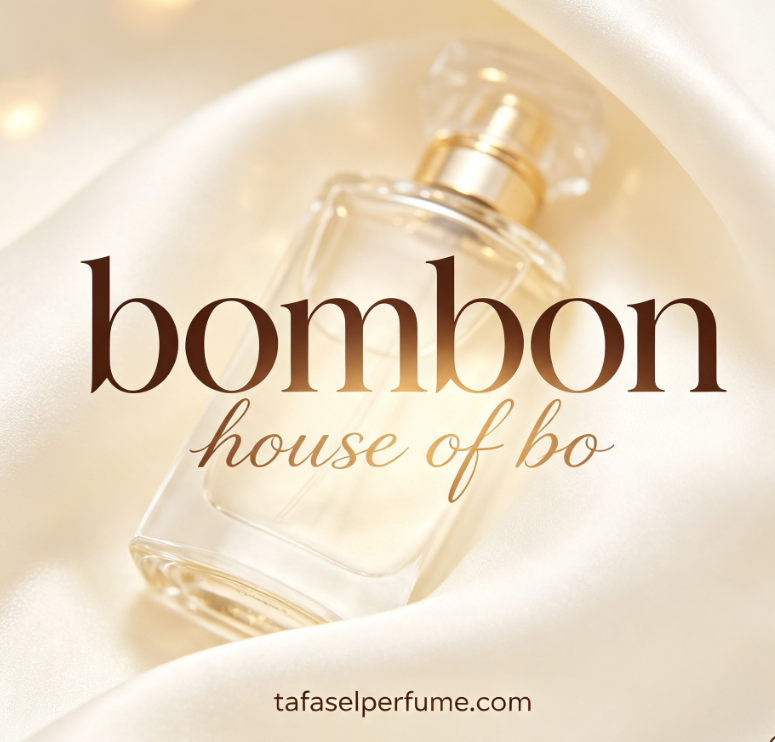
- Bombon House of Bo · The Velvet Architecture of Gourmand Seduction: Bombon House of Bo is not merely a fragrance—it is an olfactive architecture where Spanish gourmand tradition meets contemporary haute perfumery. This is the scent of caramelized light, almond velvet, and the silent poetry of late-night Madrid patisseries.
In the constellation of modern niche perfumery, Bombon House of Bo occupies a singular galaxy. It is a fragrance that does not whisper—it lingers. Created by the visionary House of Bo, this composition redefines gourmand not as a sugary afterthought, but as a structural element of identity. The name itself—Bombon—evokes the Spanish bonbon, a confection of memory and desire. Yet this is no juvenile sweetness. It is a complex interplay of roasted nuts, saffron-dusted vanilla, and a paradoxical freshness that cuts through the richness like a blade of silver light. To wear Bombon is to wear an idea: that pleasure can be intellectual, that indulgence can be architecture, and that a single scent can hold the weight of a century. This article unpacks every facet of this masterpiece—from its olfactory blueprint to its cultural resonance—offering a comprehensive guide for the connoisseur and the curious alike.
Burberry Her · The Velvet Architecture of Modern Femininity & The Sillag
Van Cleef Perfume Gardenia · the white floral whisper of timeless couture
Angel Mugle · The Velvet Architecture of Ethereal Allure & Timeless Radi
Table of Contents
1. The Genesis of Bombon · House of Bo’s Olfactive Philosophy
2. Deconstructing the Pyramid · Notes That Build a Cathedral
3. The Gourmand Revolution · Why Bombon Redefines Sweetness
4. Sillage and Longevity · The Architecture of Presence
5. The Bottle as Art · A Vessel of Light and Shadow
6. Who Wears Bombon? · The Archetype of the Modern Hedonist
7. Layering Bombon · Creating Your Own Olfactive Structure
8. Bombon vs. Other Gourmands · A Comparative Analysis
9. The Cultural Resonance · From Madrid to Manhattan
10. Where to Experience Bombon · The Ritual of Discovery
1. The Genesis of Bombon · House of Bo’s Olfactive Philosophy
The House of Bo was founded on a radical premise: that perfume could be a form of emotional architecture. Bombon, their magnum opus, was conceived during a residency in Madrid, where the perfumer became obsessed with the city’s pastelerías—not for their sugar, but for their geometry. The way light fell on a glazed almond croissant, the mathematical precision of a caramelized crust, the silent tension between butter and air. Bombon is that tension bottled. It opens with a blast of bitter almond and saffron—a Spanish signature—immediately subverting the expectation of cloying sweetness. This is a gourmand for adults, one that understands that pleasure is more profound when it carries a shadow of melancholy. The heart reveals a roasted hazelnut accord, not creamy but almost charred, evoking the wood-fired ovens of Castile. The base is a vanilla absolute that has been aged in bourbon casks, giving it a smoky, almost leathery depth. Every note is chosen not for its isolated beauty, but for its ability to interlock with the others, creating a structure that feels both ancient and utterly new. This is not a perfume you wear; it is a perfume you inhabit.
2. Deconstructing the Pyramid · Notes That Build a Cathedral
To understand Bombon is to understand its olfactive cathedral. The top notes are a triptych of shock: bitter almond, pink pepper, and a ghost of lemon zest. The almond is not marzipan—it is the kernel, the stone fruit’s dark heart. The pink pepper adds a sparkling piquancy, while the lemon is less citrus and more essence of rind, a sharpness that cuts through the impending richness. As this trinity fades, the heart emerges: a duo of roasted nuts—hazelnut and pistachio—bound by a saffron thread that is almost metallic in its purity. This is where the magic happens. The saffron does not smell like spice; it smells like light through stained glass. The base is a triumvirate of darkness: bourbon vanilla, patchouli, and a whisper of leather. The vanilla is not sweet; it is aromatic, almost medicinal, with a boozy undertone that recalls the cellars of Jerez. The patchouli provides a damp, earthy foundation, while the leather is not saddle-like but book-binding—the scent of old libraries and forbidden knowledge. Together, these notes form a pyramid that is not a hierarchy but a symmetry, each element supporting the other in a delicate equilibrium of light and shadow.
3. The Gourmand Revolution · Why Bombon Redefines Sweetness
For decades, gourmand perfumes have been synonymous with adolescent indulgence—cotton candy, caramel, and synthetic strawberry. Bombon is the counter-revolution. It reclaims the genre for intellectual hedonism. The sweetness in Bombon is not a sugar rush; it is a slow burn. It comes from the maillard reaction—the chemical process that browns food and creates complex flavors—rather than from simple sugars. The roasted hazelnut and pistachio offer a nutty umami that balances the vanilla’s opulence. The saffron adds a bitter counterpoint, while the leather and patchouli ground the composition in something almost masculine in its austerity. This is a gourmand that questions the very notion of sweetness, asking: What if pleasure were not about escape, but about presence? It is a scent that pairs as well with a tailored suit as with a cashmere robe, equally at home in a boardroom and a boudoir. Bombon does not seduce; it intrigues. It does not comfort; it challenges. And in doing so, it elevates gourmand perfumery to the realm of high art.
4. Sillage and Longevity · The Architecture of Presence
Bombon is a fragrance that announces itself—not with a shout, but with a slow, deliberate unfolding. Its sillage is what perfumers call velvet: it does not cut through the air but wraps it, leaving a trail that is more memory than mist. On skin, the longevity is exceptional—easily twelve hours, with the base notes lingering into the next day like a dream half-remembered. The secret lies in the molecular weight of the materials used. The bourbon vanilla and patchouli are heavy, anchoring the composition, while the saffron and pink pepper provide volatility without sacrificing staying power. This is not a scent that fades; it transforms. The first hour is a crescendo of nutty brightness; the second, a diminuendo into smoky richness; the final hours are a sustained chord of leather and vanilla, a hum that vibrates just beneath the skin. To wear Bombon is to engage in a dialogue with time—each hour revealing a new facet, a new nuance, a new secret.
5. The Bottle as Art · A Vessel of Light and Shadow
The vessel that holds Bombon is as considered as the juice within. House of Bo collaborated with a Spanish glassblower to create a bottle that is a study in contrast. The glass is thick, opaque at the base and transparent at the shoulders, allowing the amber liquid to catch the light like a cathedral window. The stopper is a geometric marvel—a faceted cube of obsidian-black resin, cool to the touch, heavy with intention. The label is embossed with a golden filigree that mimics the patterns of azulejos, the hand-painted tiles of Andalusia. Every element—the weight, the texture, the way light refracts through the glass—is designed to prepare the wearer for the experience within. This is not a bottle; it is a reliquary. It sits on a vanity not as a accessory but as a presence, a silent guardian of the olfactory mystery it contains. To hold it is to understand that Bombon is not a product but an object of ceremony.
6. Who Wears Bombon? · The Archetype of the Modern Hedonist
Bombon is not for everyone—and it knows it. It is for the individual who seeks depth in pleasure, who understands that sweetness can be complicated. This is the scent of the nocturnal intellectual, the one who reads poetry at 2 AM and prefers the scent of rain on asphalt to fresh flowers. It is worn by women who do not perform femininity and men who are comfortable with opulence. It is unisex in the truest sense—not because it is neutral, but because it is multifaceted, offering different angles to different wearers. On one skin, the almond and saffron may dominate, creating a spicy, almost oriental effect. On another, the vanilla and leather may take center stage, yielding a smoky, boozy warmth. Bombon adapts to the wearer, becoming a collaboration between the fragrance and the individual. It is for the connoisseur, the curious, the one who believes that a scent should be a journey, not a destination.
7. Layering Bombon · Creating Your Own Olfactive Structure
While Bombon is a masterpiece in isolation, its architectural nature makes it a superb candidate for layering. The key is to treat it as a foundation—its rich, nutty-vanilla base can support a variety of topical accents. For a brighter, more citric effect, layer it with a neroli or bergamot fragrance; the contrast between the bitter almond and the floral citrus is electrifying. For a more oriental direction, pair it with a rose-oud composition; the saffron in Bombon will amplify the rose, while the leather will merge with the oud to create a velvety darkness. For a green, fresh twist, layer it with a fig or violet leaf scent; the earthy patchouli in Bombon will ground the fig's milky sweetness, while the pistachio adds an unexpected nutty greenness. The possibilities are endless, but the rule is simple: respect the base. Bombon is the pillar; let other scents be the frescoes that adorn it.
8. Bombon vs. Other Gourmands · A Comparative Analysis
In the pantheon of gourmand fragrances, Bombon stands as a colossus, but how does it compare to its peers? Against Xerjoff Lira (a blood orange and caramel confection), Bombon is darker, more complex—where Lira is a sunlit piazza, Bombon is a moonlit courtyard. Against Kilian Adults (a boozy vanilla and cacao), Bombon is drier, with the saffron and hazelnut replacing the cacao's fudge-like density, resulting in a more austere sweetness. Against Guerlain Spiritueuse Double Vanille, Bombon is more savory, the nutty and leathery notes providing a savory counterpoint to the vanilla's ethereal purity. And against Montale Intense Café, Bombon is less overtly floral, more architectural—the coffee and rose of Montale are replaced by the structural clarity of roasted nuts and saffron. What sets Bombon apart is its refusal to be merely delicious; it is thoughtful, almost severe in its beauty, a gourmand for those who prefer their pleasures with a side of philosophy.
9. The Cultural Resonance · From Madrid to Manhattan
Bombon is more than a perfume; it is a cultural artifact. Its inspiration is Spanish—the almond groves of Andalusia, the saffron fields of La Mancha, the leather workshops of Córdoba. Yet its appeal is global. In Madrid, it smells like a memory of the Belle Époque; in Tokyo, it evokes the wabi-sabi of perfectly roasted tea; in New York, it is the scent of a late-night cocktail at a speakeasy. It has been embraced by the avant-garde—artists, writers, and musicians who see it as a muse. It has been featured in editorial spreads and film soundtracks, its sillage often described as cinematic. Bombon does not just smell good; it tells a story—a story of tradition and transgression, of sweetness and severity, of a world that moves too fast and a fragrance that demands you slow down. It is a postcard from a place that may not exist, but feels achingly familiar.
10. Where to Experience Bombon · The Ritual of Discovery
To truly appreciate Bombon, one must approach it with ritual. Do not spray it carelessly; anoint yourself. The best places to discover it are niche perfumeries that treat fragrance as an art form—spaces where the lighting is dim, the sales associates are knowledgeable, and the experience is unhurried. In the United States, it is carried by Osswald NYC and Twisted Lily in Brooklyn; in Europe, Jovoy Paris and Bloom Perfumery in London. Online, the official House of Bo website offers samples and discovery sets, which is the most respectful way to begin—Bombon is a fragrance that demands to be worn on skin for a full day to reveal its evolution. The ritual of discovery is as important as the discovery itself: spray it on your wrist, walk away, and let it unfold. Check it after 10 minutes, after an hour, after three hours. You will be rewarded with a narrative that changes with each chapter, a story that you become a part of. This is not a perfume you buy; it is a perfume you encounter.
Frequently Asked Questions About Bombon House of Bo
1. Is Bombon House of Bo suitable for all seasons?
Yes, but it truly shines in autumn and winter. Its rich, nutty-vanilla profile provides comfort in cold weather, while the saffron and pepper offer a sparkle that prevents it from becoming cloying. In summer, wear it sparingly—or at night, when the heat gives way to cooler, more mysterious air.
2. How does Bombon compare to other House of Bo fragrances?
House of Bo is known for its architectural approach. While La Mar is oceanic and mineral, and Bleu is aromatic and woody, Bombon is the gourmand pillar—the sweetest of the collection, yet still grounded in the house’s signature structuralism. It is the most opulent and the most comforting.
3. Can men wear Bombon House of Bo?
Absolutely. The leather and patchouli base, combined with the bitter almond top, make it a decidedly unisex scent. It does not lean feminine or masculine; it leans intelligent. Many men find its savory sweetness incredibly wearable, especially in formal or evening settings.
4. What is the longevity of Bombon on skin?
Expect 10 to 12 hours of noticeable sillage, with a skin scent that persists well beyond 24 hours. The base notes—particularly the bourbon vanilla and patchouli—are tenacious and will cling to fabric for days. It is a commitment fragrance.
5. Is Bombon a safe blind buy?
No. Bombon is a niche fragrance with a distinctive profile. The bitter almond and saffron are polarizing notes—some find them mesmerizing, others find them uncomfortable. Always sample first; this is a fragrance that chooses its wearer as much as the wearer chooses it.
6. Does Bombon contain any allergens or animal-derived ingredients?
House of Bo is vegan and cruelty-free. The ingredients are synthetic where necessary to avoid allergens, though the perfume does contain natural isolates like vanilla and patchouli. Always check the ingredient list if you have specific allergies, but it is generally considered safe for most skin types.
7. How should I store Bombon to preserve its quality?
Like all fine fragrances, store it in a cool, dark place, away from direct sunlight and extreme temperatures. The bottle’s opaque base is designed to protect the juice, but it is best to keep it in its original box when not in use to ensure longevity of the top notes.
8. What is the price point of Bombon House of Bo?
It sits in the luxury niche category, typically retailing around $250–$350 for a 50ml bottle. Given its concentration and longevity, it is considered a cost-per-wear investment, as only one or two sprays are needed for a full day of effect.
9. Are there any similar fragrances to Bombon?
While unique, some compare it to Parfums de Marly Pegasus Exclusif (for the almond-vanilla structure) or Xerjoff Ivory Route (for the spicy-nutty profile). However, Bombon’s saffron-leather accord is distinctive, making it a standalone in the gourmand category.
10. Can Bombon be layered with other scents?
Yes, and it is encouraged. Try layering it with a fresh citrus for a daytime brightening, or a dark rose for a more dramatic evening. The key is to use it as a base—its richness supports and elevates lighter or simpler notes, creating a bespoke olfactive structure.


