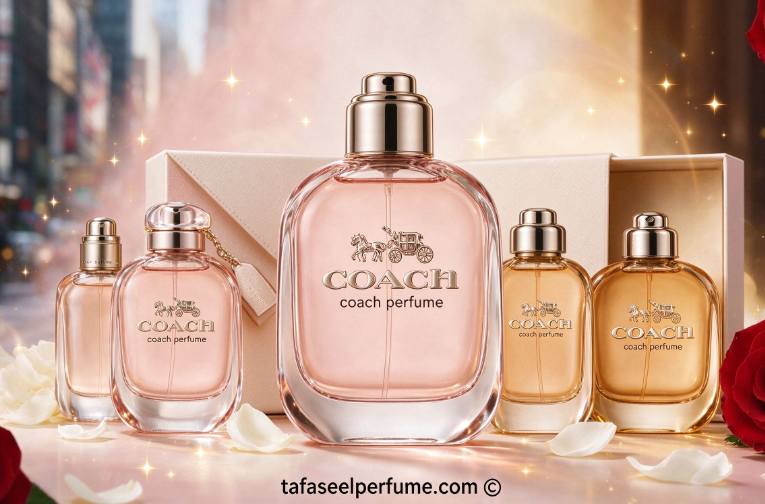
- Best Selling Coach Perfume: The Bestsellers Ranked and Explained: The short answer: the Coach fragrances that consistently top sales charts are Coach Eau de Parfum (the signature rose-and-suede composition), Coach Floral and its Blush flanker, Coach Dreams and Coach Dreams Sunset, and the older Coach Poppy, which still sells strongly on reputation. Prices sit in the accessible-designer band, roughly $75–$120 for 50–90 ml, with gift sets frequently undercutting the standalone bottles.
“Best selling” is a slippery phrase in fragrance, and it is worth unpacking before ranking anything. Sales figures are usually brand-reported, rarely audited, and heavily influenced by which bottle a retailer chooses to promote in a given quarter. A scent that tops the chart this year may be the one that got the biggest holiday gift-set allocation, not the one people rebuy. The most useful definition, and the one this guide uses, is a combination of three things: sustained retail volume over multiple years, repeat purchase behaviour, and the sheer breadth of distribution — the scents that appear on counters in thirty countries rather than three.
Coach is an interesting house for this question because it built its fragrance business on a small number of pillars rather than a sprawling flanker catalogue. That makes the ranking relatively clean: there are perhaps six or seven releases that genuinely matter, and the rest are variations. This guide walks through each of them, explains what they actually smell like, why they sell, and where the sales ranking misleads a buyer who is looking for something specific rather than something popular. One recommendation up front: Coach Eau de Parfum is the safest first purchase, Coach Floral the most universally wearable, and Coach Dreams the one most likely to be discounted.
1. How “Best Selling” Is Actually Measured — the metrics behind the chart, and what they hide.
2. Coach Eau de Parfum: The Signature Pillar — rose, suede, and the composition that defines the house.
3. Coach Floral and Floral Blush — the most universally wearable release in the line.
4. Coach Dreams and Dreams Sunset — the sweet, youthful bestsellers.
5. Coach Poppy: The Legacy That Still Sells
— an older release with lasting commercial weight.
6. Wild Rose and Love: The Newer Contenders — how the recent releases are performing.
7. The Men's Side: Coach for Men, Blue, Open Road
— a smaller catalogue with clear leaders.
8. Price Bands and Where the Value Sits — what each bottle should cost and when to buy.
9. How to Choose When the Chart Misleads — matching the bestseller to your actual need.
1. How “Best Selling” Is Actually Measured
Fragrance sales data comes from a handful of sources, none of them fully transparent. Brand annual reports sometimes disclose category performance without naming individual SKUs. Retail point-of-sale data from department stores and beauty chains covers only the channels that share it. E-commerce bestseller lists reflect a single platform's algorithm and a single month's promotion schedule. When a magazine declares a “bestselling” fragrance, it is usually synthesising two or three of these into a list that is directionally accurate and precisely unverifiable.
What that means for a buyer is that the ranking is a useful signal of popularity and a poor signal of suitability. A scent can top the chart because it is the safest, most giftable, most heavily distributed composition in the line — which is exactly what makes it a mediocre choice for someone with a specific preference. The bestseller is the scent most likely to be acceptable to the most people, and “acceptable to the most people” is a different objective from “right for you.”
The reliable way to use a bestseller list is as a shortlist, not a verdict. Take the top four or five names, read what each actually smells like, and test the two that match your taste. Our Ranking section is organised around real-world wearability rather than launch-month marketing, which makes it a better shortlisting tool than a straight sales chart.
2. Coach Eau de Parfum: The Signature Pillar
Coach Eau de Parfum is the composition the house is built around: a soft rose and suede structure with a fruity opening of raspberry leaf and pear, a heart of Turkish rose and gardenia, and a base of suede, musk and a touch of amberwood. It is a leather-adjacent floral — which sounds like a contradiction and is actually the point. The suede gives the rose a texture and a slightly grown-up weight that keeps it from reading as a straightforward sweet floral.
Commercially it works because it is simultaneously distinctive and safe. The rose-suede idea gives it a signature quality that most designer florals lack, while the fruit and musk keep it approachable enough for everyday wear. It performs respectably — six to eight hours, moderate projection — and it layers well with the matching body products, which is how the house markets it. The criticism that lands is that it is a little quiet; wearers who want projection will find it polite.
The flankers around it — Coach the Fragrance variants, limited editions, and the occasional intense reinterpretation — mostly restate the same idea with more sweetness or more fruit. The original Eau de Parfum remains the best-balanced of the group and the one most likely to be rebought, which is the clearest evidence of genuine bestseller status rather than promoted bestseller status.
If you are shopping the wider designer floral category before committing, our Women s Perfume index lets you compare Coach against its actual shelf neighbours rather than against itself.
3. Coach Floral and Floral Blush
Coach Floral, launched in 2018, is the most universally wearable release in the line: a bright, creamy floral built on pineapple, bergamot, tea rose, jasmine, gardenia and a soft woods-musk base. It is pretty without being cloying, fresh without being sharp, and it is the bottle most often recommended to someone who has never worn Coach before. That breadth is why it sells.
Coach Floral Blush, the follow-up, tilts the composition toward peony and a pinker, sweeter fruit accord. It is the more youthful of the two and the more likely to appeal to a buyer in their twenties, though it sacrifices some of the original's crispness. Neither is a challenging scent. Both are the kind of fragrance that gets compliments because it is pleasant rather than because it is interesting, which is a legitimate objective and worth being honest about.
Where Floral genuinely earns its sales position is versatility. It works in an office, in warm weather, at a lunch, and as a gift for someone whose taste you do not know well. That combination is rare, and it explains why it outsells releases with more personality. If you are buying a first fragrance for someone else, this is the low-risk answer; if you are buying for yourself and you already own three fresh florals, it adds little.
The gift-set route is where Floral is most often bought, and the Perfume Gift Sets category shows how these configurations are typically assembled — a bottle plus a body lotion typically costs no more than the bottle alone during promotional windows.
4. Coach Dreams and Dreams Sunset
Coach Dreams, from 2019, is a soft fruity-floral built around pear, bitter orange, gardenia, cactus flower and a woods-musk base. It is airier and less structured than the signature Eau de Parfum, pitched at a younger audience, and it has become one of the brand's strongest sellers in the gifting and travel-retail channels. Dreams Sunset, released later, warms the idea with vanilla and a softer, more golden character.
The commercial pattern here is instructive. Dreams sells extremely well and is also the release most frequently found at a discount, because it is produced in high volume and appears in nearly every gift set and travel-exclusive configuration. That combination — high sales and high availability — is exactly why it lands on bestseller lists, and it also means a patient buyer rarely has to pay full retail for it.
The honest assessment is that Dreams is a pleasant, easy, unmemorable fragrance. The cactus flower note gives it a slightly unusual green-fresh edge that lifts it above generic fruity florals, but the dry-down is soft to the point of disappearing. If you want a light daytime scent and you find it discounted, it is a reasonable buy. If you are paying full price and choosing between Dreams and Floral, Floral is the stronger composition.
For anyone assembling a light-wear wardrobe rather than a single signature, our Unisex Perfume collection covers the softer shared compositions that overlap with this style without being marketed exclusively to one gender.
5. Coach Poppy: The Legacy That Still Sells
Coach Poppy, launched in 2010, is the release that established the brand's fragrance business as something more than a fashion-label sideline. A bright fruity-floral with cucumber flower, mandarin, jasmine, gardenia and a creamy woods base, it was enormously popular in its moment and remains a consistent seller in discount and international channels long after its launch marketing ended.
Its continuing sales are a useful case study in how reputation outlives promotion. Poppy is not marketed today, it does not appear in current campaigns, and it is not the bottle a sales associate reaches for first — yet it keeps selling because people who wore it in their twenties rebuy it, and because it circulates at prices that make it an easy entry point. That is a different kind of bestseller from the promoted kind, and arguably a more durable one.
The caution is availability and age. Poppy bottles found at discount today may be older stock, and older stock means the top notes may have dulled. Check the batch code for the production date before buying, and prefer sellers who move inventory quickly. A fresh bottle of Poppy is a genuinely good light floral; a five-year-old warehouse bottle is a lesser version of the same thing.
If you are comparing legacy releases like this against current ones, the Perfume review library covers both, which is the only practical way to judge whether a scent from 2010 still holds up against the 2025 shelf.
6. Wild Rose and Love: The Newer Contenders
Coach Wild Rose is a green-rose composition with blackcurrant, rose, jasmine and a soft woody base — fresher and more garden-like than the signature Eau de Parfum, and arguably the most interesting release the house has put out in the women's category since Floral. It has not reached the sales volume of the three pillars, but it has a clearer point of view than most of the flanker catalogue, and it is the release most likely to appeal to someone who found the others too sweet.
Coach Love is a warmer, more gourmand-adjacent composition, sweeter and denser than the house's usual register. Whether it becomes a lasting pillar is genuinely unclear at this stage; it launched into a crowded field and has not yet established the repeat-purchase pattern that defines a real bestseller. Treat it as a scent to test rather than a chart entry to trust.
The broader pattern in this part of the catalogue is that Coach releases new scents regularly and promotes them hard for a season, but only a few survive into permanent distribution. The ones that survive — Floral, Dreams, the signature EDP — are those that were pleasant enough for a wide audience and distinct enough to be rebought. Any new release should be judged against that standard rather than against its launch-quarter sales figures.
7. The Men's Side: Coach for Men, Blue, Open Road
The men's catalogue is smaller and clearer. Coach for Men, launched in 2017, is a fresh-woody composition with bergamot, pear, geranium, suede and amberwood — clean, slightly leathery, and a direct counterpart to the women's signature suede idea. Coach Blue is the aquatic-aromatic variation, fresher and lighter, aimed at warm weather. Coach Open Road and Coach Green extend the line into greener and more aromatic territory respectively.
The clear leader among these is Coach for Men, which has the strongest distribution, the most consistent repeat purchasing, and the most gift-set presence. It is a good everyday fragrance — wearable at work, pleasant in close quarters, unremarkable in a way that serves its purpose. Coach Blue is the seasonal complement, and the two together are the most sensible pairing in the men's range.
Open Road and Green are narrower releases with limited reach. They are worth testing if you find them discounted and you like the profile they target — Open Road is greener and more herbal, Green is more aromatic — but neither has the sales evidence to be called a bestseller. Our Men s Perfume index is a better starting point if you want to compare the whole field rather than one house.
One general note on the men's line: performance is the recurring weakness. Coach for Men lasts around five to six hours with modest projection, which is acceptable for the price but not exceptional. If longevity matters more than brand, there are stronger options at the same price point, and our Perfume Brands hub is organised for exactly that comparison.
8. Price Bands and Where the Value Sits
Coach sits in the accessible-designer bracket. The women's Eau de Parfum runs roughly $85–$115 for 50–90 ml; Floral and Dreams land in a similar band, with Dreams frequently discounted to $55–$75 for 90 ml; the men's releases sit at $70–$100 for 100 ml. Gift sets typically retail close to the standalone bottle price and then get liquidated after the holidays at 30–50% off, which is where the genuine value is.
The discount behaviour is uneven across the line. Dreams is the most discounted, because it is produced in the highest volume. Floral discounts moderately and seasonally. The signature Eau de Parfum holds its price most firmly, which is another indicator of real demand rather than promotional demand. The men's line discounts on roughly the same curve as Floral.
For buyers, the practical advice is to check gift sets before buying a standalone bottle in November through January, and to buy the heavier releases at full price only when they are being purchased as gifts on a deadline. Off-price channels carry Coach regularly, and bottles found there are usually genuine stock with intact codes — but check the batch date, because older inventory circulates in this category as much as in any other.
If value is the objective rather than brand, the Mini Size & Gift Sets category is where a modest budget buys the most variety, and it is the correct way to test two or three Coach scents before committing to a full bottle of any of them.
9. How to Choose When the Chart Misleads
The bestseller is optimised for breadth, and breadth is not the same as fit. A buyer who wants a rose-forward fragrance with some weight should choose the signature Eau de Parfum over the chart-topping Floral, even though Floral sells more. A buyer who wants something for hot weather should choose Dreams or Floral Blush over the heavier signature. A buyer shopping for a teenager should probably skip the suede notes entirely. The chart answers “what do most people accept,” and the right question is “what do I actually want to smell like.”
The most reliable process is to shortlist by reading, then test by wearing. Pick three scents from this guide that match the profile you are after, spray one on each wrist across two visits, and judge at the two-hour and five-hour marks rather than at the opening. Coach compositions tend to open bright and settle soft, so the dry-down is where the decision actually lives. Sales associates will usually give you a sample if you ask, and a sample is worth more than a second paper strip.
Finally, be sceptical of ranking lists that do not disclose their methodology, including this one. What is defensible here is the shape of the conclusion: a small set of pillars carries the brand, the pillars are distinguishable from each other, and the newest releases are usually the least proven. That is enough to shop from. The exact order of the top five is not.
For readers who want to explore beyond Coach before deciding, the Beauty section covers adjacent categories and layering products that change how a fragrance wears — often a more useful purchase than another bottle in a similar register.


