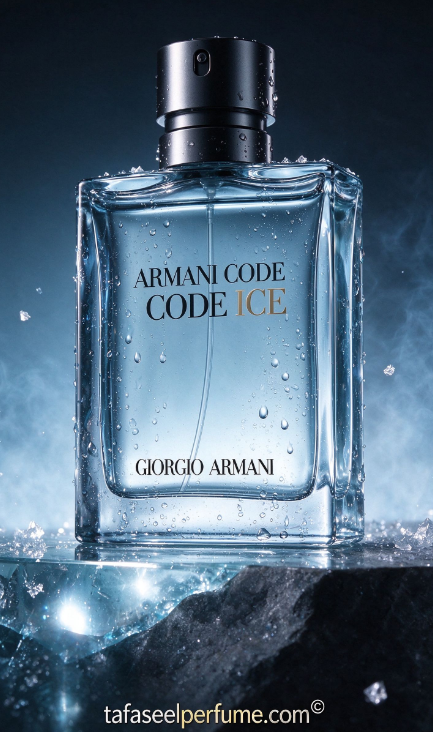
- Armani Code Ice Giorgio Armani: The Chilled Flanker That Turned a Classic Inside Out: Small Intro: Armani Code Ice Giorgio Armani is not a louder version of the original Code — it is a colder, sharper, and more transparent reinterpretation that swaps the warm oriental heaviness of the 2006 classic for a bracing wall of mint, lemon, and ginger. Launched in 2014 and composed by Alberto Morillas, it occupies a strange and fascinating place in the designer fragrance world: a flanker that feels less like an homage and more like a seasonal surgical strike.
Small Intro: Armani Code Ice Giorgio Armani is not a louder version of the original Code — it is a colder, sharper, and more transparent reinterpretation that swaps the warm oriental heaviness of the 2006 classic for a bracing wall of mint, lemon, and ginger. Launched in 2014 and composed by Alberto Morillas, it occupies a strange and fascinating place in the designer fragrance world: a flanker that feels less like an homage and more like a seasonal surgical strike. This article breaks down what it smells like, how it behaves on skin, who it suits, and why its discontinued status has turned a once-affordable eau de toilette into a quietly hunted object.
Big Intro: The Armani Code line has always been about a certain kind of masculine polish — the olfactory equivalent of a well-cut dark suit. The original Armani Code built that reputation on a warm, slightly sweet oriental structure: citrus and bergamot up top, a floral heart with orange blossom and jasmine, and a deep base of tonka bean, leather, and guaiac wood. Armani Code Ice Giorgio Armani takes that architecture and deliberately lowers the temperature. The sugar is gone. The leather is pushed far into the background. What remains is a bright, almost mineral opening of peppermint and spearmint, sharpened by lemon and a ginger note that feels more aromatic than edible. The heart is lavender and geranium with a herbal sage undertone, and the base settles into guaiac wood and tonka bean — but even there, the tonka reads clean rather than creamy, and the wood feels scrubbed and pale rather than dense. The result is a fragrance that smells like cold air moving through a clean, modern space. It was never designed to replace the original Code; it was designed to solve a specific problem: what does a Code wearer put on when the temperature climbs and the original becomes too much? For anyone who has explored the broader Men's Perfume category, Code Ice sits in a very particular pocket — fresher than a classic fougère, cleaner than a woody aromatic, and far less sweet than the amber-spice crowd. It is also a fragrance with a complicated afterlife: officially discontinued, increasingly hard to find at retail, and now discussed as much for its scarcity as for its scent.
Article Contents
1. The Scent Pyramid: What Armani Code Ice Actually Smells Like — A note-by-note breakdown of the mint opening, the lavender-geranium heart, and the pale woody base.
2. The Temperature Arc: Why “Ice” Is a Structural Idea, Not a Gimmick — How the fragrance moves from cold to warm and back again, and why that movement is the point.
3. Armani Code Ice vs. the Original Armani Code: Same DNA, Different Climate — A direct comparison of sweetness, density, and wearability, including what the flanker loses and what it gains.
4. Performance on Skin: Longevity, Projection, and the Chemistry Variable — What the community reports about how long it lasts and how loudly it speaks, with realistic expectations.
5. Best Season and Occasion: When Code Ice Makes Sense — The spring-summer sweet spot, the office-versus-evening question, and the “all-year-round” argument examined.
6. Dressing the Scent: Style, Age, and the Code Ice Wearer — What this fragrance pairs with, from tailored casual to warm-weather smart, and who tends to enjoy it most.
7. The Discontinued Reality: Availability, Pricing, and What to Watch For — Why Code Ice is no longer a shelf staple, what the secondary market looks like, and how to avoid a bad buy.
8. Alternatives and Layering: If You Cannot Find Code Ice — Fragrances that occupy a similar chilled-aromatic space, plus notes on building a warm-weather rotation.
1. The Scent Pyramid: What Armani Code Ice Actually Smells Like
The opening of Armani Code Ice Giorgio Armani is not a polite introduction. Mint arrives first — specifically a combination of peppermint and spearmint that reads sharp, cold, and almost tactile, like biting into a frozen leaf. Within seconds, lemon pushes through, but this is not a dessert lemon; it is clean and slightly bitter, the rind rather than the flesh. Ginger follows, and here the spice performs a very specific function: it does not add sweetness or heat in the way ginger often does in oriental compositions. Instead, it adds a dry, aromatic warmth underneath the cold surface, creating a tension that gives the opening its peculiar energy. The heart is where Code Ice becomes recognizably Code-adjacent. Lavender comes forward with its herbal, slightly soapy character, and geranium adds a green, faintly floral texture that bridges the cold top into the warmer base. Sage is often listed in the pyramid and contributes a dry, savory quality that keeps the heart from becoming too conventional. The base is the most debated part of the fragrance. Guaiac wood provides a pale, slightly smoky woodiness, and tonka bean softens the edges with a clean, almond-like roundness. But Code Ice does not deliver the creamy, vanilla-tinged tonka base that many designer EDTs rely on. The wood feels scrubbed, almost transparent, and the overall drydown has been described as “soapy” or “mineral” rather than rich. This is a fragrance that stays close to the skin in its final stages, leaving a clean, faintly woody trail rather than a heavy amber cloud. For readers building a wardrobe that spans fresh and warm profiles, it can sit comfortably alongside Unisex Perfume options that prioritize transparency and wearability over density.
2. The Temperature Arc: Why “Ice” Is a Structural Idea, Not a Gimmick
Many flankers with a word like “Ice,” “Sport,” or “Fresh” in the name simply take a heavy original and dilute it. Armani Code Ice Giorgio Armani does something more deliberate: it builds a temperature arc into the composition. The opening is cold — genuinely cold, in the sense that the mint and lemon create a sensation of chilled air — but that coldness is not static. As the mint recedes, the ginger and lavender introduce a quiet warmth, and the woody base extends that warmth without ever becoming hot or heavy. Then, in the final stages, the fragrance cools again, settling into a clean, slightly mineral woodiness that feels like the air after a summer storm rather than the inside of a warm room. This arc is why Code Ice can feel surprisingly versatile for a fragrance with such a bright opening. It does not smell like a “winter fragrance” trying to be summery; it smells like a fragrance designed around the movement between cool and warm, which is exactly what happens in real warm-weather settings — air-conditioned interiors, evening breezes, and the shift from daytime heat to nighttime calm. That structural intelligence also explains why some wearers find it more interesting than a straightforward fresh citrus cologne. It has a beginning, a middle, and an end that feel intentional rather than linear. If you enjoy fragrances that tell a small story on skin, this is one of the more quietly clever designer releases of its era. It also pairs naturally with a broader interest in Beauty routines that emphasize texture and contrast rather than a single dominant note.
3. Armani Code Ice vs. the Original Armani Code: Same DNA, Different Climate
The comparison is unavoidable, and it is also the source of most of the disagreement around this fragrance. The original Armani Code is warm, slightly sweet, and built around a creamy tonka-leather-orange blossom axis. Armani Code Ice Giorgio Armani keeps the general silhouette — citrus up top, a floral-aromatic heart, a woody base — but replaces the warm core with a cold one. The mint and ginger opening is the most obvious departure, but the more meaningful difference is in density. The original Code has weight; it sits on skin like fabric. Code Ice has lift; it feels more like a mist than a coating. This is why some longtime Code wearers describe Code Ice as “Code for the months when Code is impossible,” while others dismiss it as a completely different fragrance wearing the same name. Both readings are accurate. Code Ice is not a stronger or weaker version of the original; it is a climate-shifted version. It preserves the polished, slightly formal character of the Code line but removes the sweetness and the heaviness that make the original difficult in heat. The trade-off is that Code Ice loses some of the original’s sensuality and depth. It gains clarity, freshness, and a kind of modern cleanliness that makes it easier to wear in professional settings. For anyone who has tried the original and found it too dense for daytime or warm weather, Code Ice is the logical next test. For anyone who loves the original specifically for its warmth and sweetness, Code Ice may feel like a missing piece rather than a replacement. Exploring the wider Brands landscape shows that this kind of “same silhouette, different temperature” strategy is common in designer flankers, but Code Ice executes it with more conviction than most.
4. Performance on Skin: Longevity, Projection, and the Chemistry Variable
Performance reports for Armani Code Ice Giorgio Armani are consistent in their broad strokes and variable in their details. Most wearers report somewhere between six and ten hours of longevity on skin, with the higher end more common on moisturized or warmer skin and the lower end more common in dry or cold conditions. Projection is generally described as moderate — enough to be noticed at conversational distance but not enough to fill a room. One detailed review notes seven to eight hours of wear with roughly an hour of noticeable projection before the fragrance settles closer to the skin. That profile makes Code Ice a “personal scent” in the best sense: it is present without being invasive. The variable that matters most is skin chemistry. Some wearers find that the mint fades faster than expected, leaving the lavender and wood to carry the mid-section; others find that the citrus holds longer and the fragrance feels brighter for more of its lifespan. The base is the most polarizing element. Reviewers who prefer rich, resinous, or amber-heavy drydowns sometimes describe the base as thin or overly synthetic, while wearers who value clean, transparent woodiness find it exactly right for the fragrance’s concept. For practical purposes, two to three sprays on pulse points is enough for daytime wear, and a fourth spray on clothing can extend the opening’s freshness without making the fragrance louder. If you are comparing it against other fresh EDTs in the Ranking space, Code Ice sits in the “moderate but reliable” tier rather than the “beast mode” tier — and that is appropriate for what it is trying to do.
5. Best Season and Occasion: When Code Ice Makes Sense
Community voting data consistently places Armani Code Ice Giorgio Armani in the spring and summer camp. In one aggregation, summer receives the largest share of votes at roughly thirty-five percent, followed by spring at twenty-nine percent, with autumn and winter trailing behind. This does not mean the fragrance is unusable in cooler weather — a minority of wearers report year-round use, especially in daytime office settings — but the mint-lemon opening is at its most coherent when the ambient temperature is warm enough to support that kind of brightness. The fragrance is also strongly day-leaning: one dataset shows fifty-eight percent of votes for daytime wear versus forty-two percent for night. The occasions where it performs best are warm-weather professional settings, daytime social events, brunch or lunch meetings, and casual outdoor gatherings where a heavy fragrance would feel out of place. It is less suited to cold-weather evening wear, formal winter events, or situations where the wearer expects the fragrance to project strongly across a room. In practical terms, Code Ice works best as part of a small rotation: it covers the warm-weather daytime slot beautifully, leaving the heavier evening and cold-weather slots to warmer compositions. For readers who like to organize their collection by use case, this is a textbook “seasonal specialist” — and that is a strength, not a limitation. It also makes a sensible addition to a Mini Size & Gift Sets collection, where smaller formats allow for seasonal rotation without committing to a full bottle.
6. Dressing the Scent: Style, Age, and the Code Ice Wearer
Armani Code Ice Giorgio Armani does not demand a suit, but it does reward a certain cleanliness of presentation. The fragrance reads as modern, groomed, and slightly formal even at its freshest, which means it sits most naturally with smart-casual and business-casual wardrobes: a crisp shirt without a tie, tailored trousers, clean sneakers or loafers, a lightweight knit over a collared shirt. It is less at home with heavily distressed or aggressively casual styling, not because it clashes, but because the fragrance’s internal polish feels underused. In terms of age range, Code Ice tends to appeal to wearers in their late twenties through forties who want something fresh without smelling like a teenager’s body spray or a generic aquatic. It has a grown-up freshness that comes from the lavender-geranium heart and the pale woody base, and that combination reads as composed rather than playful. The fragrance also works well as a “signature-adjacent” scent for people who want a recognizable but not overpowering presence. Because it stays relatively close to the skin after the first hour, it is appropriate for shared offices, client-facing environments, and any situation where fragrance should be a detail rather than an announcement. If you are building a grooming routine around this kind of clean, composed aesthetic, the Makeup Tools category often contains the kind of precision-oriented accessories that match the same sensibility.
7. The Discontinued Reality: Availability, Pricing, and What to Watch For
The most important practical fact about Armani Code Ice Giorgio Armani today is that it is no longer a mainstream retail product. Multiple retail and secondary-market listings explicitly label it as discontinued, and long-time wearers have noted that the flanker has become increasingly difficult to find at conventional department-store counters. This changes the buying logic entirely. What was once a reasonably priced designer eau de toilette has become a partially collector-driven item, with prices on marketplaces like eBay fluctuating significantly depending on size, condition, and seller location. A 125 ml bottle has been listed in the range of roughly one hundred sixty to one hundred seventy dollars on the secondary market, while smaller sizes and 75 ml bottles can command similar or higher per-milliliter prices depending on availability. The risk profile is also different from buying a current production fragrance. Counterfeits exist, older bottles may have degraded top notes (especially the citrus and mint, which are the most fragile elements), and “new in box” listings from unfamiliar sellers require caution. If you are buying a bottle today, the safest approach is to prioritize sellers with detailed feedback, ask for batch codes when possible, and avoid prices that seem implausibly low for a discontinued designer fragrance. The Perfume articles section is a useful place to cross-check batch-code practices and storage guidance before committing to a secondary-market purchase.
8. Alternatives and Layering: If You Cannot Find Code Ice
Because Armani Code Ice Giorgio Armani is discontinued and increasingly expensive, the alternative question is worth taking seriously. The closest structural relatives are not other Armani Code flankers — Code Sport and Code Ultimate move in different directions — but rather fragrances that combine a cold mint-citrus opening with a clean woody-aromatic base. Hugo Iced by Hugo Boss is frequently cited as a high-similarity alternative, with community comparisons placing the match in the mid-eighties percentage range. Bvlgari Man Extreme has also been discussed as a comparable composition, particularly in its dry, woody-lemon structure, though it leans slightly more bitter and less mint-forward. TUMI Unwind is another option that shares the aromatic-fresh-spicy-woody territory, and some comparison tools rate the similarity as near-total on paper, though real-world wear will differ by skin chemistry. For readers who prefer to stay within the Armani universe, Acqua di Giò occupies an adjacent fresh-aquatic space, though it is more marine and less mint-herbal than Code Ice. Layering is another route. A single spray of a clean, woody-neutral fragrance on the chest underneath two sprays of Code Ice can extend the base without distorting the opening, but the mint and citrus are delicate enough that heavy layering tends to muddy the composition. The more practical strategy is to treat Code Ice as a reference point and build a warm-weather rotation around fragrances that share its temperature logic rather than its exact note list. If you are also exploring Fragrance Gels or lighter formats for hot weather, the same principle applies: prioritize clarity and movement over density. Code Ice remains a fascinating reference because it proved that a designer flanker could be structurally intelligent rather than simply louder — and that is why, more than a decade after its launch, people are still writing about it, hunting bottles of it, and comparing everything else to it.


