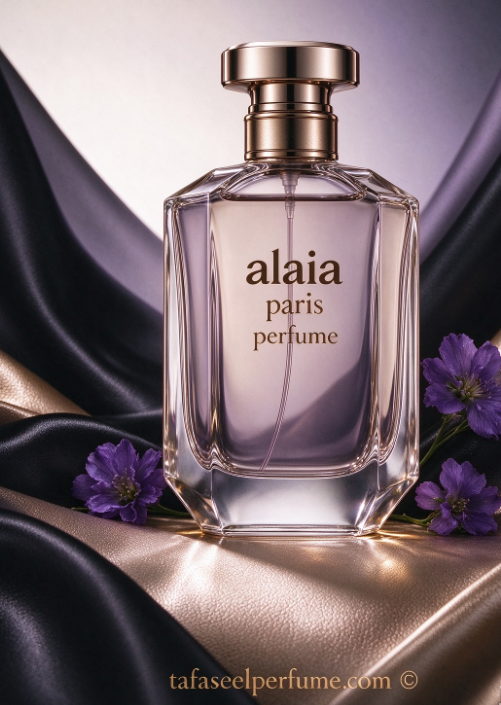
- Alaïa Paris Perfume: The Sensual Architecture of Scent, From Runway to Skin: Quick Intro: Alaïa Paris perfume is not a fragrance born from market research or trend forecasts. It is a scent memory made liquid—the smell of cold water hitting sun-scorched chalk walls in Tunisia, translated into peony, pink pepper, and musk by perfumer Marie Salamagne. For a designer who waited over three decades to enter the olfactory world, the result was never going to be ordinary.
Extended Intro: Azzedine Alaïa built his reputation on sculptural, second-skin silhouettes that hugged the body with architectural precision. When he finally launched his debut fragrance, Alaïa Paris, in 2015, he applied the same philosophy to scent: nothing superfluous, nothing expected, everything deliberate. The fragrance arrived with a brief that read like poetry—“the smell of cold water falling on hot chalk”—and a bottle designed by Martin Szekely that echoed the house’s iconic laser-cut leatherwork. It was a late arrival that felt timeless from the first spray, and it remains a reference point for anyone seeking a musk-floral that feels both intimate and impeccably constructed.
In this guide: Origins & The Scent Memory · The Olfactory Architecture · Blanche & Nude: The Flanker Universe · Who Should Wear It & When · Critical Acclaim & Legacy
Origins: A Fragrance Thirty-Five Years in the Making
Azzedine Alaïa was famously indifferent to the rhythms of the fashion industry. He showed when he was ready, collaborated when the spirit moved him, and refused to bow to the seasonal calendar that governed his peers. So it should surprise no one that he waited thirty-five years after founding his house to release his first fragrance. While other designers treated perfume as a branding exercise to be ticked off within the first decade, Alaïa treated it as an artistic proposition that required the right moment—and the right story.
That story began not in a laboratory in Grasse or a boardroom in Paris, but in his childhood in Tunisia. On scorching days, his grandmother would splash cold water against the sun-baked walls of their home to cool the interior. The sensation—coolness meeting heat, water meeting mineral, freshness carved out of warmth—became the emotional and olfactory blueprint for Alaïa Paris. When he finally approached Beauté Prestige International with the project, he did not hand over a mood board of competitor fragrances. He handed over a memory.
The house’s late entry into fragrance places Alaïa Paris in a curious category: it is a debut that arrives with the confidence of an established classic. If you are exploring the wider landscape of designer debuts and heritage releases, our Perfume Gift Sets collection offers a considered way to sample across houses without committing to full bottles—useful when a first fragrance carries this much expectation.
The Olfactory Architecture: Peony, Pink Pepper, and the Musk That Lingers
Marie Salamagne, the Firmenich perfumer tasked with translating Alaïa’s memory, made an unconventional choice at the top: pink pepper. In lesser hands, pink pepper can read sharp or metallic, a shortcut to “sparkle” that flattens over time. Salamagne used it for its citrus-adjacent vibration, a cool, almost effervescent prickle that mimics the shock of cold water against hot stone without ever smelling like water itself. Beneath that opening, peony and freesia unfold—airy, slightly green, and deliberately abstract. This is not a photorealistic flower; it is the idea of freshness, rendered in floral terms.
What anchors the composition is musk. Not a clean, laundry-sheet musk, but something with animalic warmth and skin-like ambiguity. The drydown of Alaïa Paris is often described as humid, lucid but lingering—a scent that seems to blur the boundary between perfume and the person wearing it. Allure’s review called it “sensual as his clothes,” a musky floral that “inspires serious devotion,” and that devotional quality is precisely the point. The fragrance does not announce itself from across a room. It waits until someone is close enough to feel the heat of the skin beneath it.
For those who prefer to explore musk-forward compositions across gendered categories, the Unisex Perfume section is a natural next step. Alaïa Paris is marketed as a women’s fragrance, but its abstraction and skin-scent quality place it squarely in the unisex conversation—particularly for wearers who find traditional feminine florals too sweet or too loud. If your preference leans toward compositions built around floral sensuality rather than gourmand sweetness, the Women’s Perfume edit provides further context for where Alaïa Paris sits within the broader category.
Blanche & Nude: The Flanker Universe, Briefly Expanded
Alaïa Paris did not spawn an endless parade of flankers. Between 2015 and 2017, the house released two distinct variations—Blanche and Nude—before the founder’s death in 2017 brought the fragrance chapter to a definitive close. That restraint is part of the appeal. Each flanker feels like a genuine variation on a theme rather than a commercial afterthought.
Alaïa Blanche (2016) shifts the original’s cool-hot tension into something softer and more enveloping. Almond opens the composition with a powdery, almost marzipan-like sweetness, while heliotrope in the heart adds a hazy, floral-almond warmth. The base of musk and vanilla absolute creates the sensation the house called “naked skin”—less animalic than the original, more of a creamy, second-skin glow. It is the Alaïa Paris DNA translated into a comfort register, and it wears particularly well in cool weather or evening settings where a fragrance needs to feel like a layer of cashmere rather than a statement.
Alaïa Nude (2017) moves in a woodier direction. Cedar and cashmeran open with a dry, softly spicy hum, while orange blossom in the heart lends a honeyed floral transparency. The base of tonka bean, musk, and a whisper of leather gives Nude a quietly modern coziness—less “dressed up” than the original, more like the olfactory equivalent of an unstructured Alaïa knit. Basenotes reviewers have described it as “lightly musky, slightly woody, a touch powdery and solar,” a fragrance that is easy to wear precisely because it never tries too hard.
If you are building a wardrobe around skin-scent musks and soft woody florals rather than a single signature, browsing Perfume Brands by house can help you trace how different designers approach similar olfactory territory. And for those who enjoy reading comparative assessments before committing to a full bottle, the Perfume Ranking and Top Lists section provides a useful framework for weighing critical consensus against personal preference.
Who Should Wear Alaïa Paris—and When
Alaïa Paris is not a fragrance for everyone, and that is its strength. It rewards wearers who are comfortable with ambiguity: a scent that is floral without being sweet, musky without being dirty, fresh without being aquatic. It sits close to the skin, projecting an aura rather than a cloud, which makes it an excellent choice for intimate settings, creative workplaces, and anyone who prefers their fragrance to be discovered rather than announced.
The original EDP performs best in spring and autumn, when its cool-hot tension feels attuned to transitional weather. Blanche’s almond-vanilla softness makes it a natural companion for cold-weather evenings and quiet weekends. Nude’s cedar-cashmeran opening and tonka-leather base give it a year-round versatility, though it leans toward daytime wear and casual elegance. None of the three are aggressive projectors; if you are accustomed to fragrances that fill a room, Alaïa Paris will require an adjustment in expectation. What it lacks in diffusion, it compensates for in tenacity and intimacy—the scent lingers on skin and fabric long after the initial spray, evolving slowly rather than shouting its arc in the first hour.
For wearers who rotate fragrances based on mood and occasion rather than committing to a single bottle, exploring Mini Size & Gift Sets is a practical way to incorporate Alaïa Paris into a broader rotation without over-investing in a full-size flacon before you have lived with the scent across different seasons and contexts.
Critical Acclaim & the Quiet Legacy of a Fragrance That Refused to Compete
Alaïa Paris arrived with little of the usual fanfare. There was no fragrance-filled room at the launch, no high-tech presentation. Instead, Azzedine Alaïa hosted a dinner at his home in the Marais, served food he liked, and let the perfume speak for itself—eventually. That confidence was vindicated. In Perfumes: The Guide by Luca Turin and Tania Sanchez, the debut fragrance received the top five-star rating, with Turin describing it as “an impeccably smooth, high-quality leather scent, with none of the aggressiveness that pervades the genre.” The leather facet is not always foregrounded in mainstream reviews, which tend to focus on peony and musk, but it is the structural undertow that gives Alaïa Paris its distinctive weight and prevents the florals from floating away into abstraction.
When Azzedine Alaïa died in 2017, the fragrance line ceased. There were no posthumous flankers, no licensed expansions, no attempts to capitalize on the founder’s name after his absence. In an industry where heritage houses routinely pump out new concentrations and limited editions long after the creative force has departed, the finality of Alaïa’s perfume chapter feels almost radical. What remains is a small, self-contained body of work: one original EDP, two carefully considered flankers, and a bottle whose laser-cut pattern and thread-spool cap are as recognizable as the scent inside.
For collectors and enthusiasts who value fragrances with a clear beginning, middle, and end—rather than an endlessly extended franchise—Alaïa Paris occupies a singular position. It is a debut that arrived late, said exactly what it needed to say, and then stopped. In a market obsessed with novelty, that restraint is its own kind of luxury. The Perfume Articles and Reviews archive offers further reading on houses and compositions that share this editorial, less-is-more sensibility, for anyone drawn to the idea that a fragrance collection is defined as much by what it excludes as by what it includes.


